

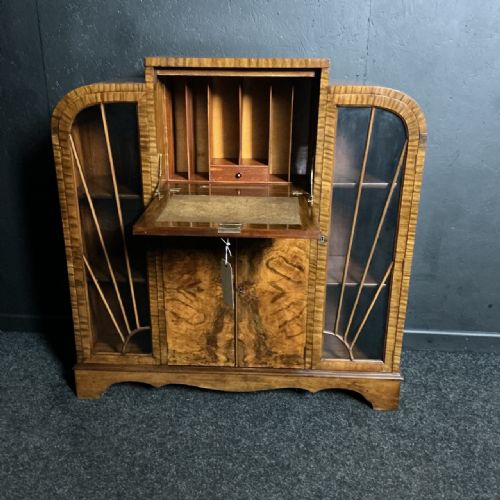
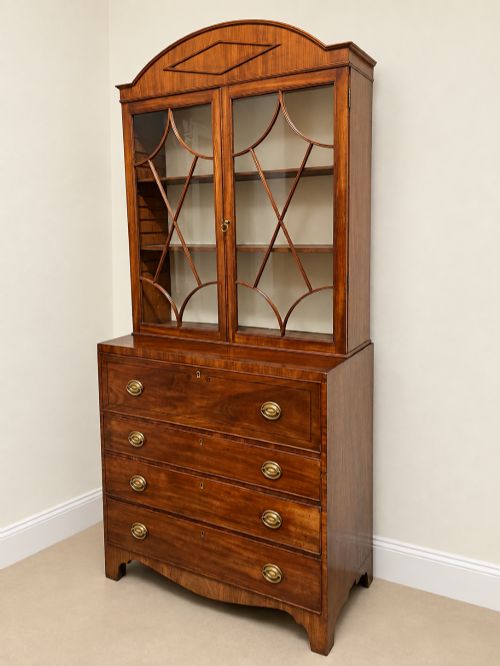
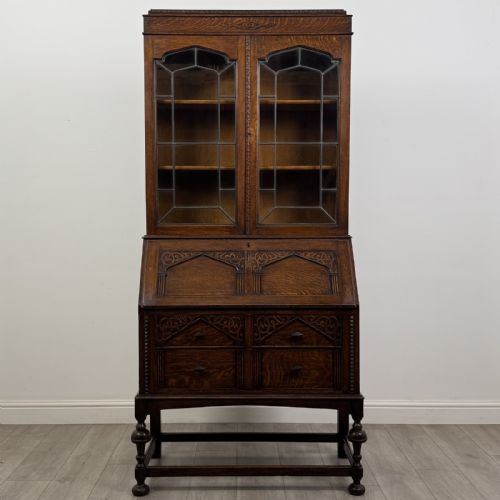
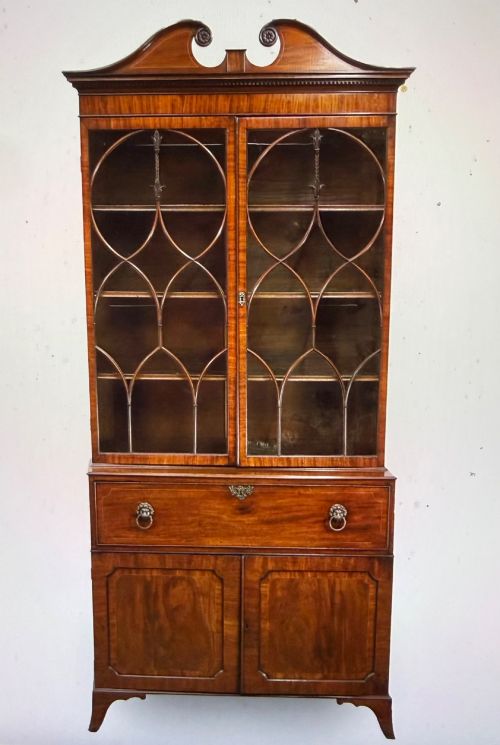

Drop Front Bookcase
A drop front bookcase combines a writing surface with upper display shelves, offering practical storage for books and papers in a single architectural piece.
Drop Front Bookcase
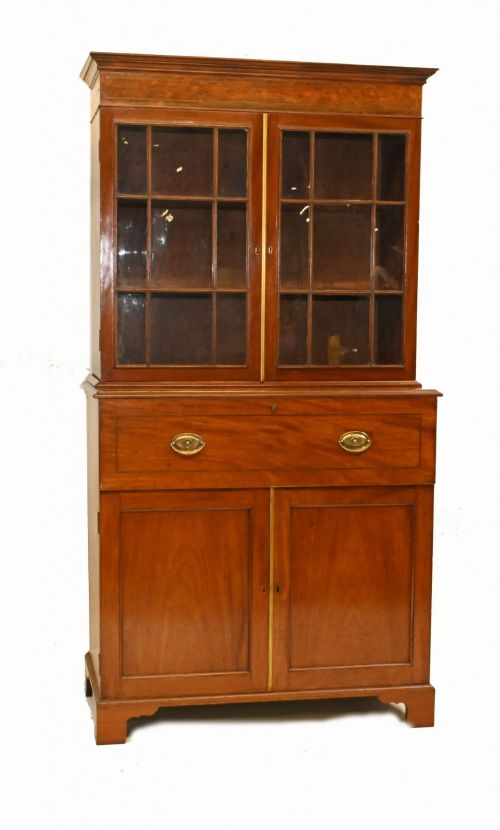
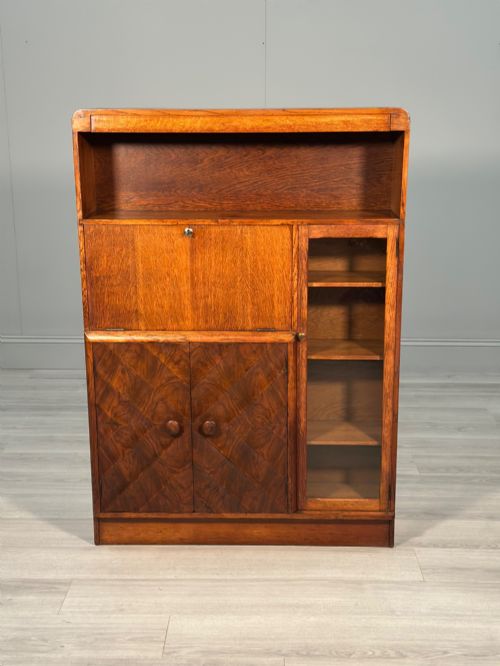
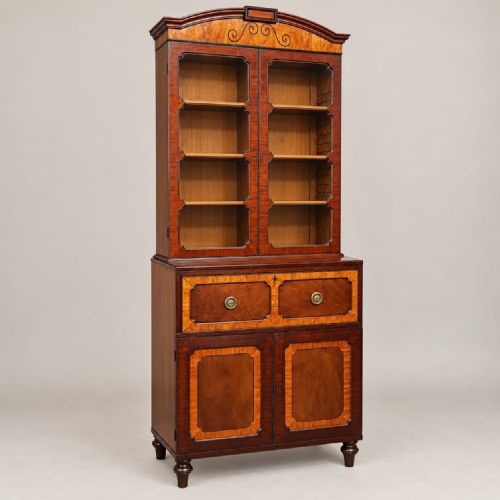
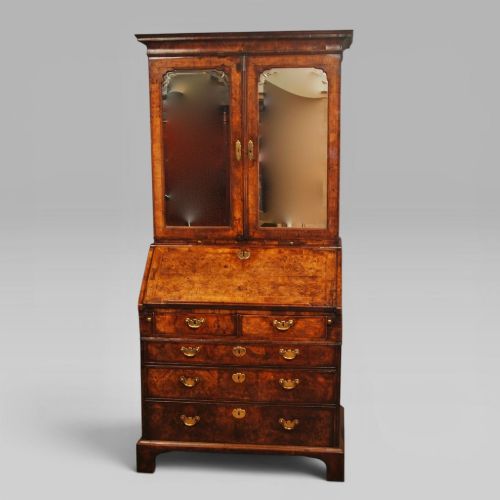
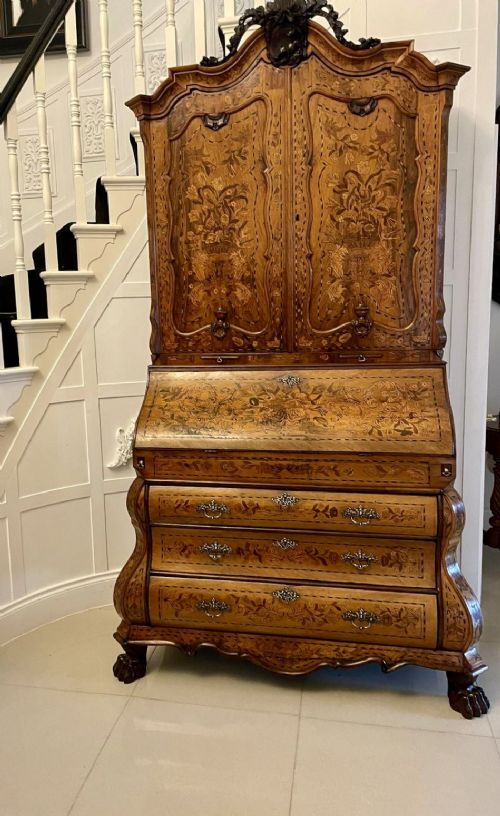
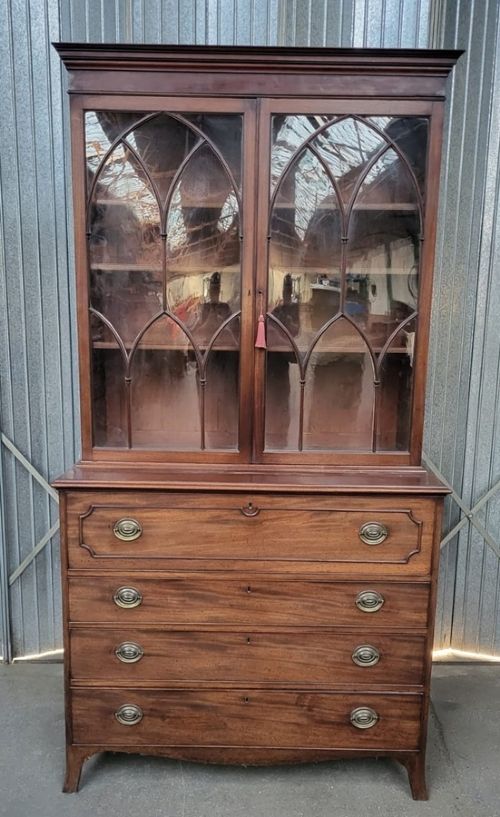
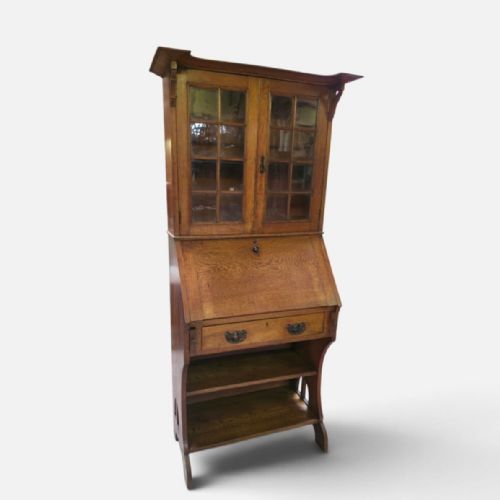
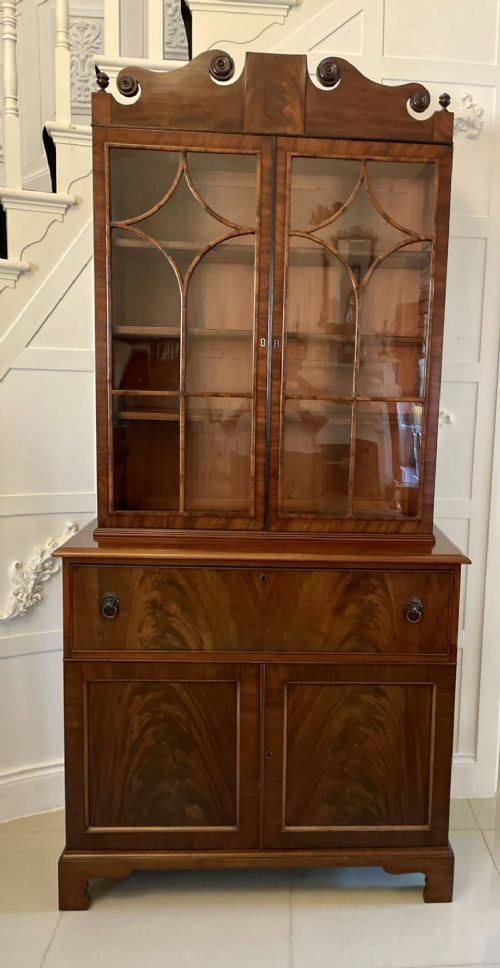
When you search for a drop front bookcase, you encounter tall hybrid furniture designed to store volumes behind glass doors while providing a fold-down desk for correspondence. These pieces span centuries of design, moving from early walnut and oak iterations to later mahogany and satinwood examples.
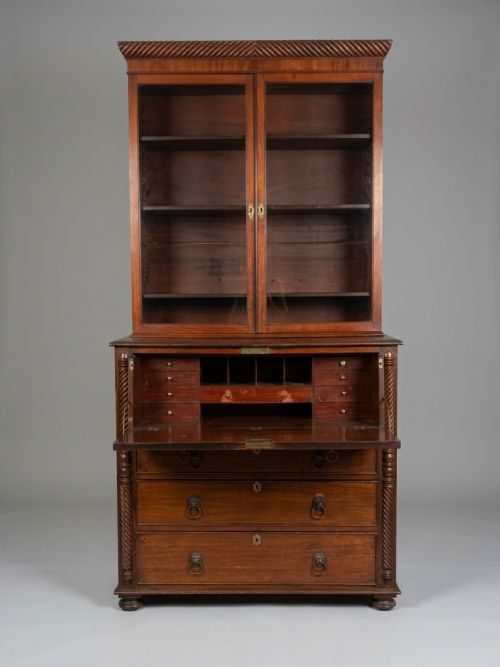
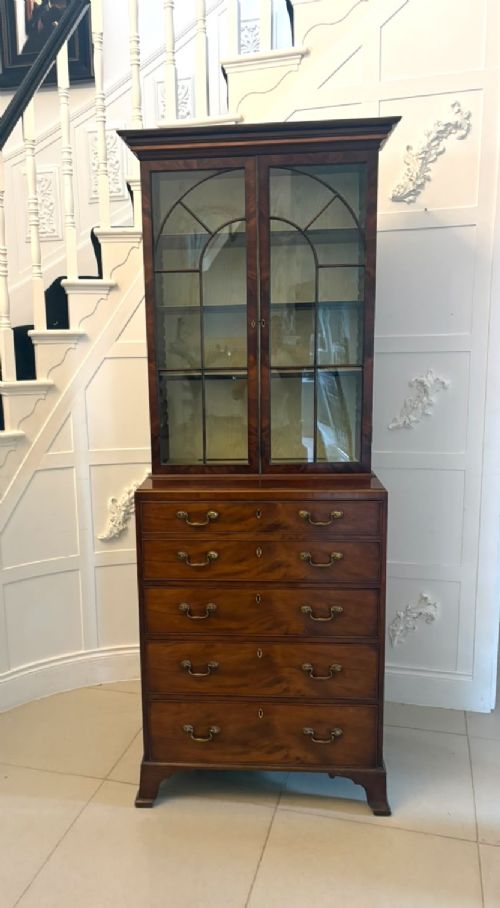
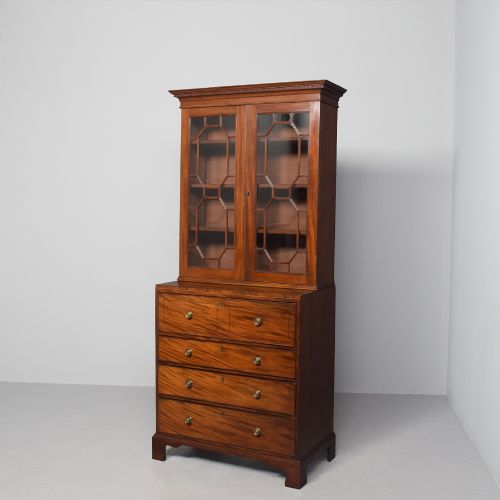
The most common version met on this page is the Georgian mahogany bureau bookcase featuring glazed upper doors and fitted interior compartments. Such examples balance display space with concealed workspace, reflecting the domestic requirements of past libraries and parlours.
Materials and Construction
Cabinetmakers utilised dense timbers like mahogany, walnut, and oak to build the primary carcass and shelving. Selected veneers such as burr walnut and satinwood frequently decorate the fall-front writing flap and interior drawers.
Joinery methods rely on sturdy framing for the heavy upper glazed cabinet and secure hinges or pull-out lopers to support the downward-folding desk surface. Secondary details incorporate brass hardware and fitted leather writing inserts.
Drop Front Bookcase Retail Price Guide 2026
Typical asking prices for drop front bookcase among the pieces listed under this phrase on Sellingantiques today, from the lower quarter to the upper quarter. They describe what is for sale here now, not the wider market.
Common object variations include bureau bookcases, secretaire cabinets, and display units outfitted with glass doors and brass hardware.
Quality Distinctions
The upper tier of craftsmanship appears in the precision of the timber selection and the subtlety of internal partitioning. Superior examples display figured grain matching across the fall front alongside finely executed astragal glazing bars on the cabinet doors.
Lower tiers typically feature simpler construction with plain secondary woods and less elaborate interior fittings. The integration of marquetry inlay or specialised cabinetwork by known makers elevates a piece above standard workshop production.
E Gomme·Gillows·F.H. Marshall & Co Glasgow·George Oakley
The Drop Front Bookcase Glossary
- Secretaire
- A desk or cabinet featuring a pull-out or drop-down writing drawer with internal compartments. This mechanism conceals letters and stationery when closed.
- Astragal
- A small moulded bar dividing panes of glass in a cabinet door. These wooden strips create decorative geometric patterns across the bookcase front.
- Burr walnut
- Timber taken from a tree growth or burl, yielding a swirling and knotted grain pattern. Cabinetmakers prized this veneer for its decorative visual impact.
- Loper
- A wooden slide pulled out from the furniture carcass to support a drop-front desk flap. They prevent strain on the hinges during writing.
- Fall front
- A hinged writing surface that folds down from a vertical position into a horizontal desk. It forms the defining front of a bureau.
Drop Front Bookcase: Frequently Asked Questions
What is a drop front bookcase?
A drop front bookcase is a combination piece featuring upper shelving enclosed by doors above a lower writing desk with a folding flap.
This furniture style served as a compact library and workspace for domestic use throughout the Georgian, Victorian, and Edwardian periods.
How do I use a drop front desk?
You pull out the wooden support lopers and lower the hinged writing flap to reveal an internal arrangement of small drawers and pigeonholes.
Once finished with correspondence, you fold the desk front back into the vertical position to conceal papers and tidy the room.
How do I date an antique bookcase?
Dating relies on examining the timber species, construction joinery, glass manufacturing traits, and prevailing stylistic ornament such as Georgian astragal bars or Arts and Crafts simplicity.
Cabinetry from the eighteenth century typically displays denser mahogany or walnut, while later nineteenth and twentieth-century pieces incorporate different secondary woods and hardware.
Where should I place this in my home?
These tall cabinets suit studies, living rooms, and libraries where vertical wall space allows the combination of book storage and a working desk surface.
Ensure adequate floor clearance in front of the piece so the fall-front desk can open fully without obstruction.