
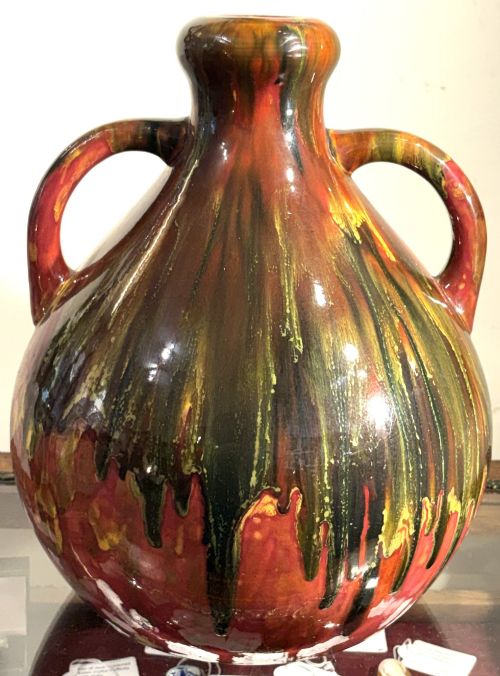
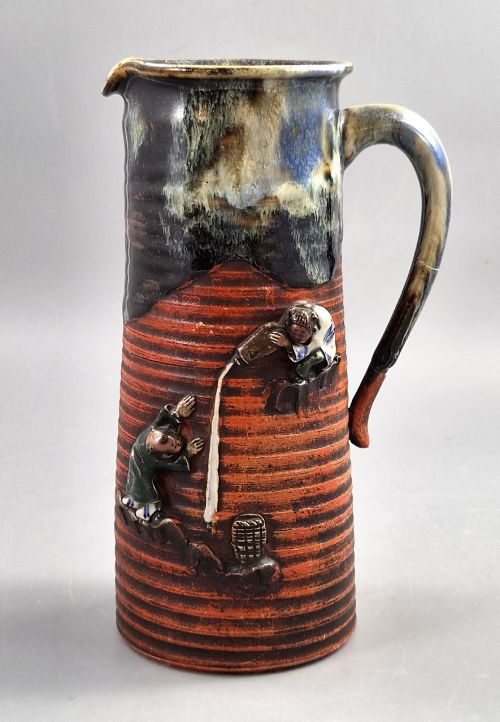
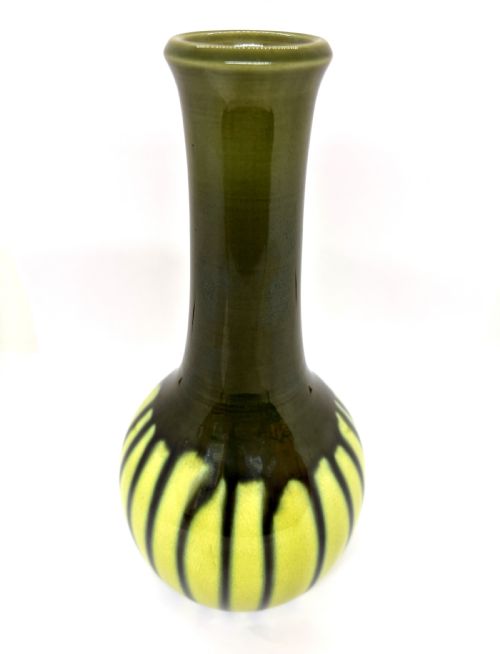
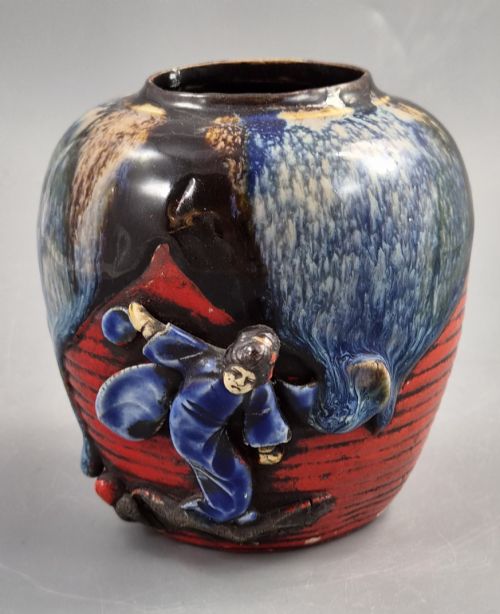
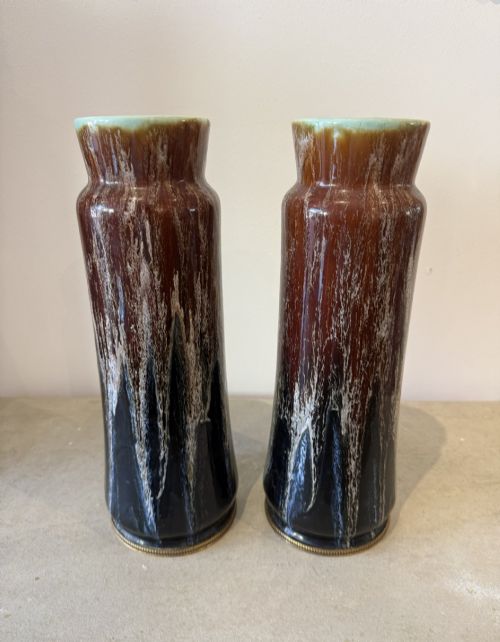
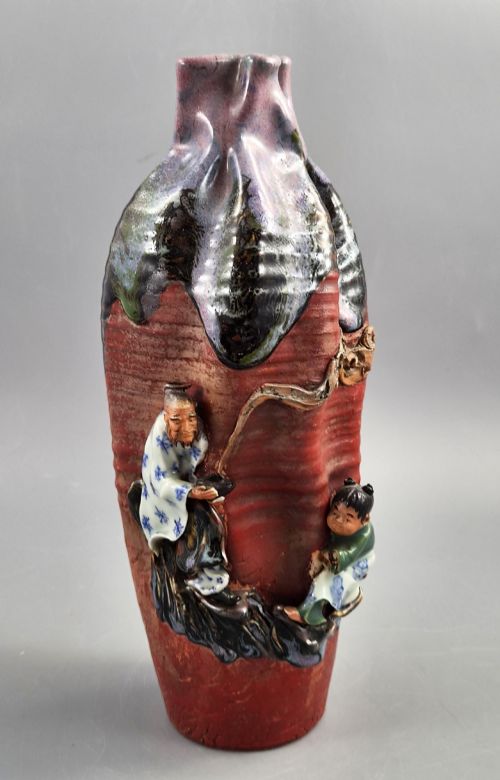
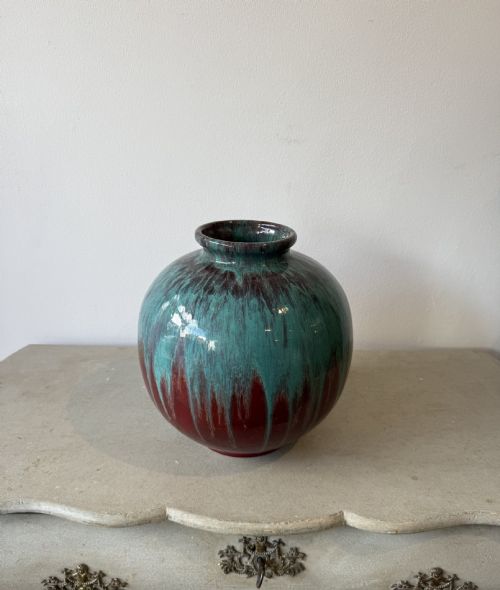
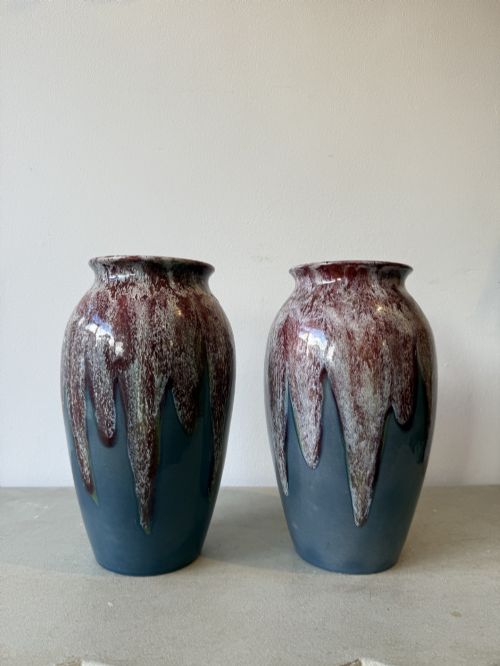
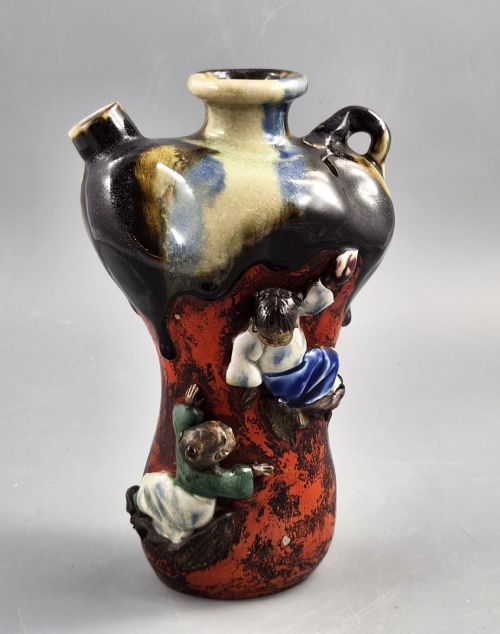


Drip Glaze Vase
These drip glaze vase examples bring flowing colour and texture to a room, ranging from English art pottery to Japanese Sumida Gawa.
Drip Glaze Vase
A drip glaze vase displays a distinctive surface where liquid colours run down the body during firing, creating organic patterns. When looking for a drip glaze vase, buyers encounter various ceramic forms spanning the Victorian era through the nineteen thirties.
The selection ranges from British studio pieces and European earthenware to Japanese terracotta and stoneware vessels. These items function primarily as decorative objects, often featuring handles, twin necks, or bulbous bodies that accentuate the downward flow of the finish.
How they were made
Potters built these vessels using earthenware, stoneware, or terracotta, shaping the clay by hand or on a wheel before applying mineral coatings. The defining characteristic relies on the viscosity of the ceramic glaze, which descends naturally under kiln heat.
Makers controlled the kiln temperature to determine how far the colours would run, producing crystalline effects or thick overlapping bands. This chemical interaction between base clay and liquid surface creates the characteristic pooled rims and streaks.
Listings feature earthenware, stoneware, and terracotta vessels decorated with crystalline and flambé glazes spanning the Victorian era through the nineteen thirties.
What varies in quality
Quality depends on the deliberate control of the running glaze and the crispness of the underlying ceramic form. Superior examples show harmonious colour blending without muddying the contours of the vessel.
The throwing skill of the potter and the depth of the crystalline or flambé finish separate standard production pieces from exceptional studio work. Balance in the weight of the ceramic and the symmetry of the handles also determine the standing of a piece.
Burmantofts·Boch Freres·Doulton·Cranston·Ruskin Pottery·Pierrefonds
The Drip Glaze Vase Glossary
- Earthenware
- Porous pottery fired at lower temperatures, commonly used for British and European art pottery vessels. It requires a glazed surface to hold liquids.
- Stoneware
- Dense, impermeable ceramic fired at high temperatures, offering greater durability than earthenware. It frequently serves as the sturdy base for heavy crystalline glazes.
- Crystalline glaze
- A specialised chemical finish that grows visible zinc silicate crystals during the cooling phase in the kiln. This technique creates star-like patterns across the surface of the vase.
- Terracotta
- Unglazed or glazed brownish-red fired clay utilised for sculptural and traditional pottery forms. It provides a warm earthy tone beneath flowing surface colours.
- Flambé glaze
- A streaky, variegated finish achieved through metallic oxides and controlled kiln atmospheres. It produces mottled blues, reds, and lavenders that mimic traditional Chinese ceramic styles.
Drip Glaze Vase: Frequently Asked Questions
Are these vases waterproof?
Many stoneware and glazed earthenware vessels hold water safely, but older pieces can develop microscopic hairline cracks in the body over time. It is wise to test the vessel on a non-sensitive surface before filling it.
Using a small glass or plastic liner inside the vase protects the antique interior from moisture damage. This prevents mineral deposits from forming inside porous earthenware.
How do I date an art pottery vase?
Examine the base for maker marks, impressed studio stamps, or painted signatures that correspond to known pottery operating dates. Stylistic clues such as Art Nouveau curves or Art Deco geometries also narrow down the period.
The weight of the clay and the specific type of glaze provide further clues regarding the manufacturing era. Comparing the piece to documented examples from factories helps confirm the timeline.
Where should I display my vase?
Place the vessel in a well-lit area where natural light catches the reflective quality of the running glaze. Ensure it sits on a stable, level surface away from heavy foot traffic to prevent accidental knocks.
Keep ceramic pieces away from direct, harsh sunlight for prolonged periods to protect the surface colours. Pairing the vase with complementary wood or metal surfaces highlights the texture of the clay.