


Drinks Cooler Stand
A drinks cooler stand brings centuries of craftsmanship into the dining room, offering both practical elegance and historical presence.
Drinks Cooler Stand
A drinks cooler stand is an essential piece of antique dining room furniture designed to hold ice and chill bottles during meals. The selection available here spans from the Georgian and George III eras through to the Regency period and later nineteenth-century interpretations.
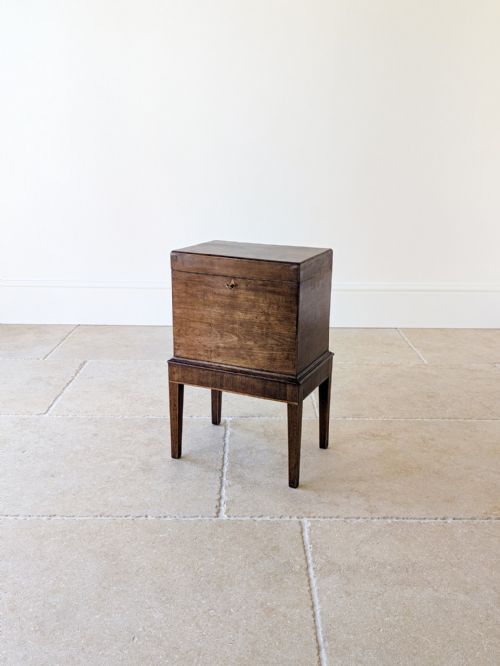
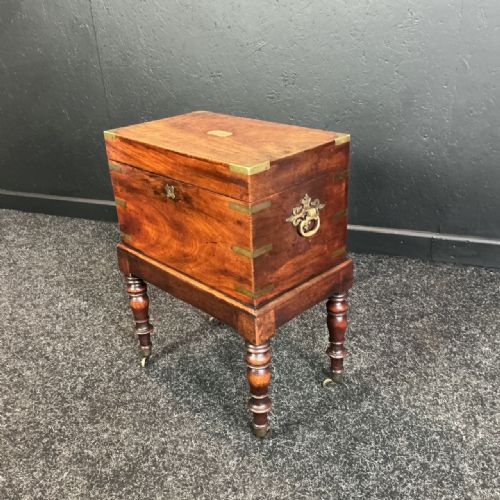
Most examples take the form of cellarettes, wine coolers, and bottle stands constructed in rich timber. Buyers will frequently encounter mahogany pieces, some featuring brass banding or delicate inlay work.
These items originate primarily from the eighteenth and nineteenth centuries, alongside later twentieth-century reproductions in the Regency style. Each variant serves the traditional purpose of keeping wine at the proper temperature beside the dining table.
How they were made
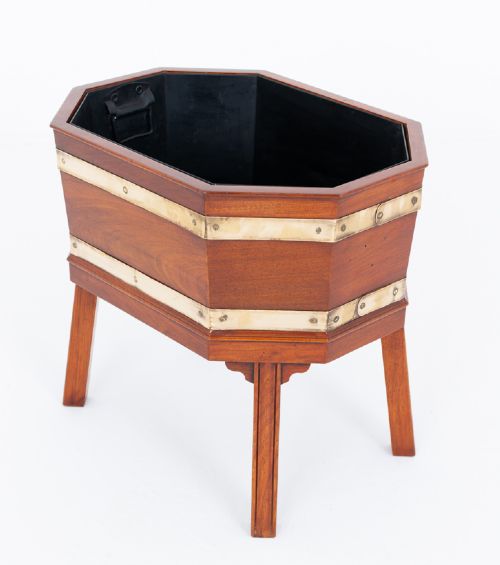
Cabinetmakers utilised solid timber and veneers, predominantly mahogany, shaping the bodies into octagonal, oval, or rectangular forms. Many incorporate fine satinwood inlay to create subtle decorative contrast on the exterior panels.
Metal components played a crucial structural and decorative role in construction, with brass bands securing the staves of oval and octagonal vessels. Zinc linings were also employed internally to hold ice and water without damaging the surrounding wood.
Some nineteenth-century makers cleverly disguised these heavy bottle holders as modest side furniture, hiding the ice within.
What varies in quality
Quality in these items rests upon the crispness of the cabinetwork and the selection of figured mahogany timber. Pieces exhibiting fine patination and well-executed brass work sit firmly at the upper end of the scale.
The sophistication of the internal and external detailing distinguishes standard production from exceptional examples. Finer pieces demonstrate superior joinery in their stands and more harmonious proportions across the body.
Gillows
The Drinks Cooler Stand Glossary
- Cellarette
- A lockable container used for holding bottles of wine near the dining table. They frequently double as wine coolers when fitted with a metal interior.
- Brass bound
- A descriptive term for wooden vessels reinforced with exterior bands of brass. This technique provides structural strength while adding a decorative linear element.
- Inlay
- A decorative technique where contrasting woods, such as satinwood, are inserted into recessed portions of the primary timber surface. It creates geometric or pictorial patterns.
- Patina
- The deep surface sheen and mellow colour developed by aged wood over centuries of handling and exposure. It acts as a visual indicator of authenticity.
- Regency style
- An architectural and decorative style inspired by the British Regency period, often revived in later decades. It draws on classical neoclassical motifs.
Drinks Cooler Stand: Frequently Asked Questions
What is a drinks cooler stand?
A drinks cooler stand is a traditional container designed to hold wine bottles and ice during meals. These pieces combine practical utility with formal dining room decoration.
Historically positioned near the dining table, they ensured wine remained chilled without requiring constant trips to the kitchen.
How were they used?
These items were filled with ice and water to chill wine bottles before and during dinner service. The internal metal lining prevented moisture from rotting the surrounding wood.
Servants would access the bottles easily from the floor-standing or table-height units while guests dined.
How do I spot a Georgian piece?
Georgian examples typically feature solid mahogany construction with hand-cut dovetails and period-correct fixings. Look closely at the timber grain and the depth of the patination.
Construction methods and timber selection provide the clearest physical evidence of eighteenth-century origin.
How do I live with one?
These pieces integrate well into modern interiors as side tables or decorative storage units for living areas. Their rich timber tones complement both traditional and contemporary spaces.
Maintenance involves regular polishing with appropriate wax to preserve the finish of the mahogany.