
Dressing Table Perfume Bottle
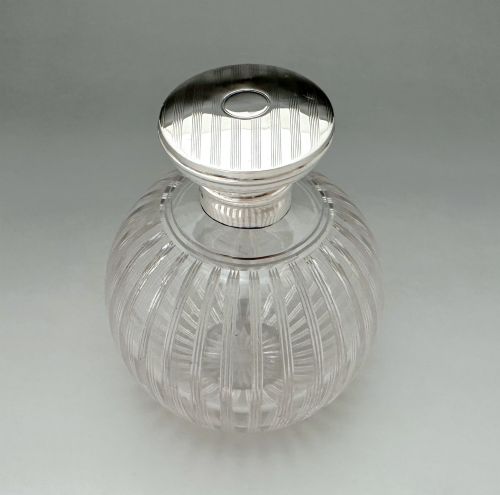
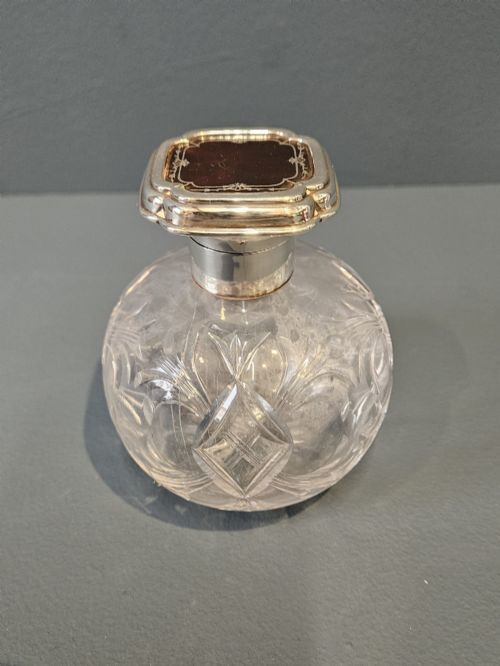
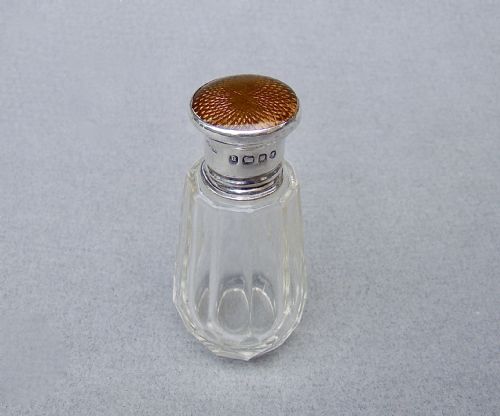
A dressing table perfume bottle sits upon the vanity, holding scented waters inside cut glass or coloured vessels mounted in silver.
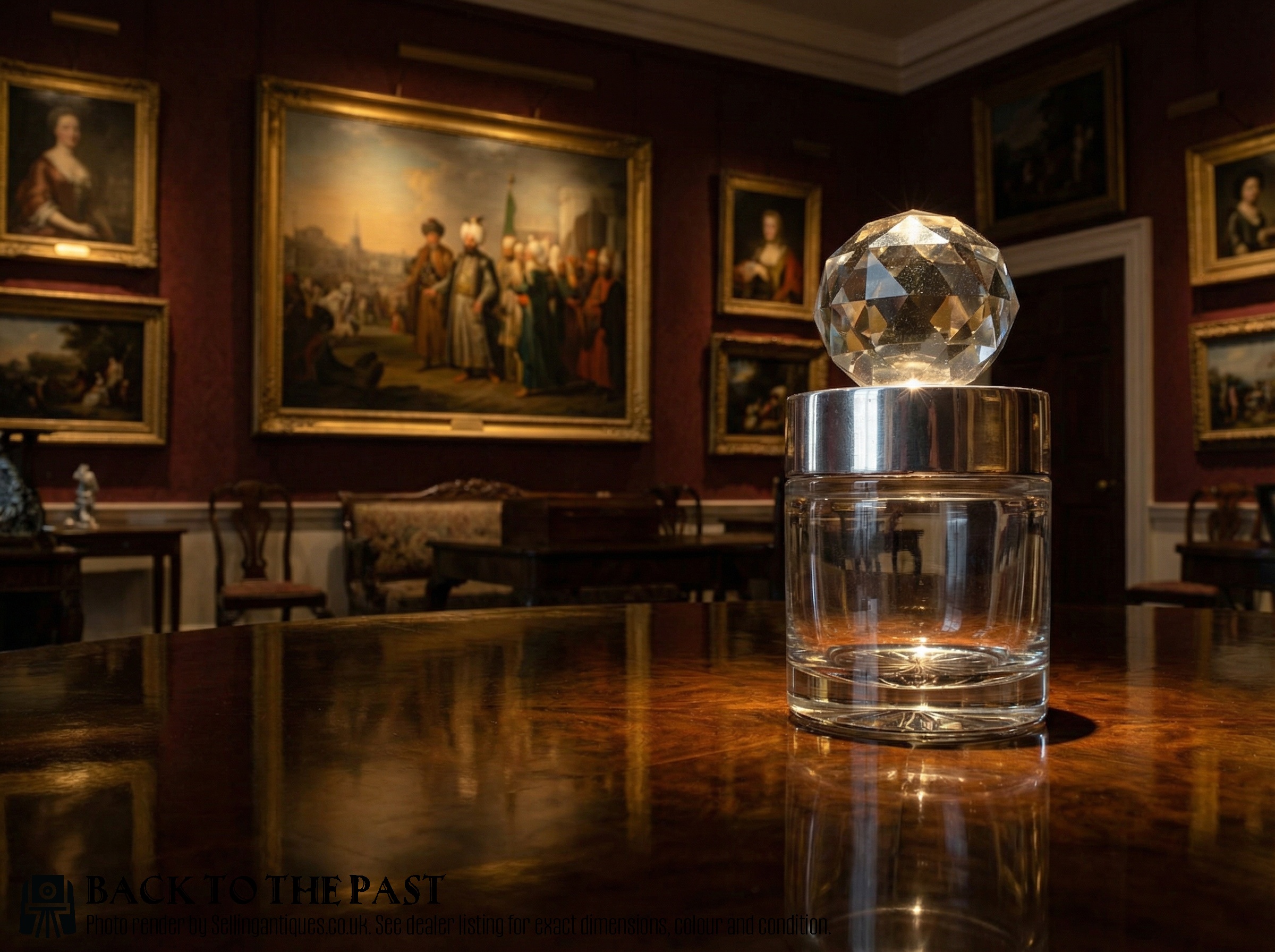
Dressing Table Perfume Bottle
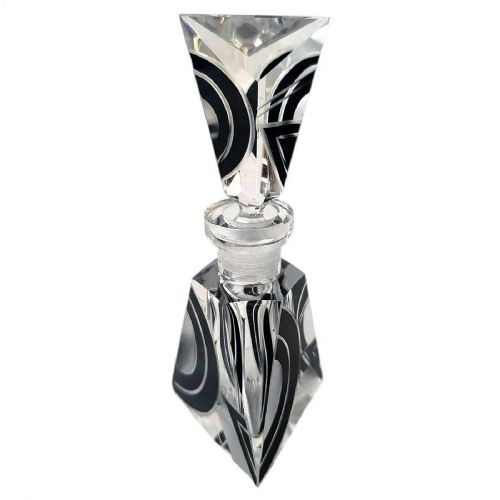
When searching for a dressing table perfume bottle, collectors look at small glass vessels designed for holding scent upon a vanity. These pieces span periods from the nineteenth century through the Edwardian era and into the Art Deco years of the nineteen-thirties.
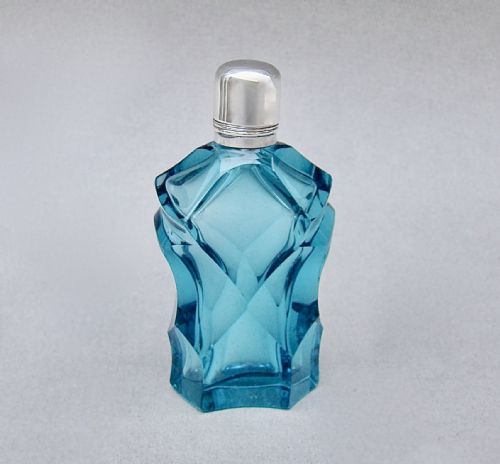
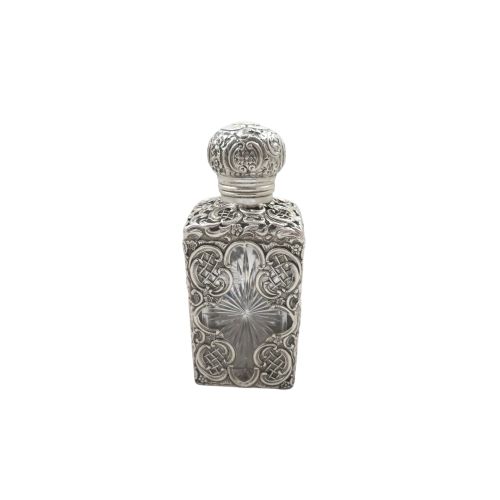
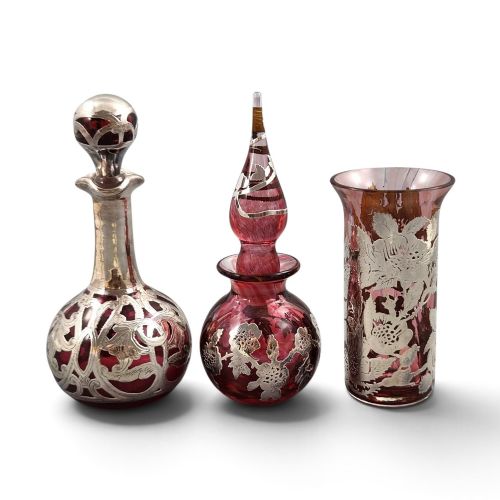
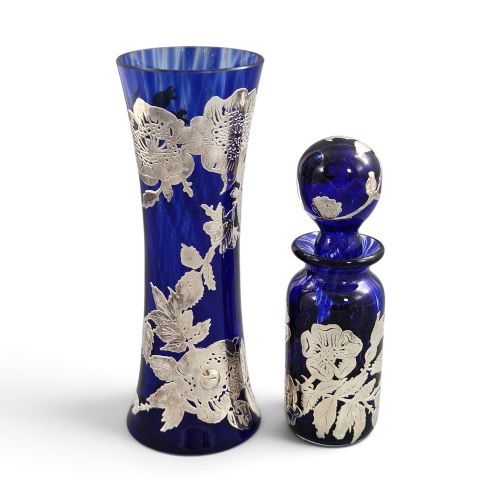
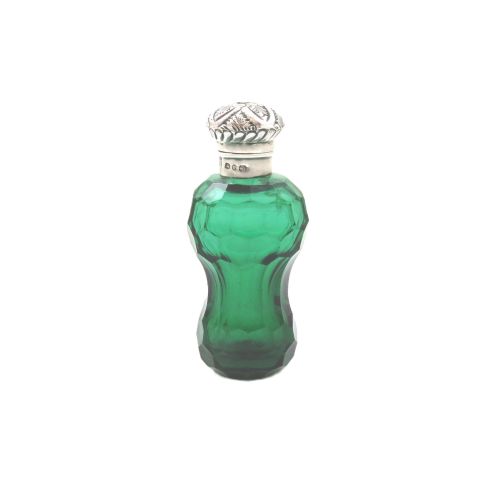
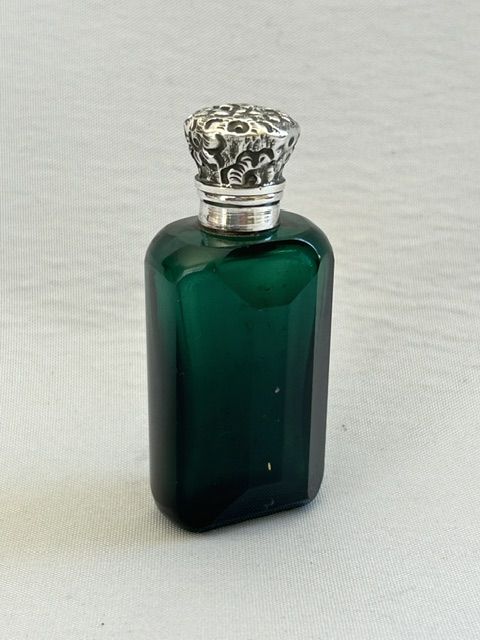
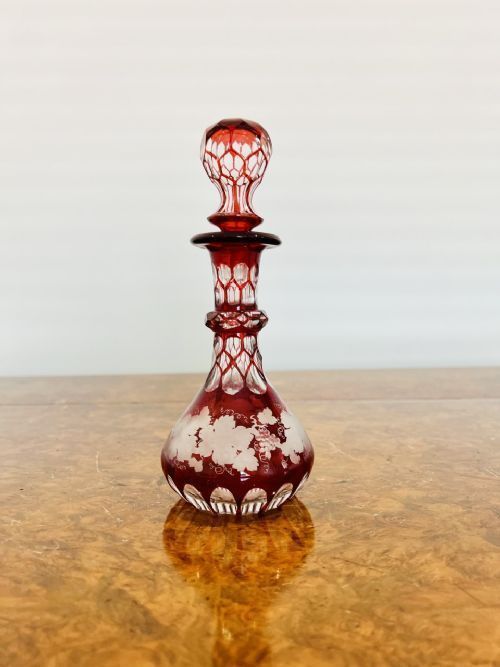
The most common versions met on this page include cut glass bodies with sterling silver collars, hinged lids, or screw caps. Examples also appear with coloured glass in green, blue, teal, and ruby hues, alongside enamel decoration or silver overlay.
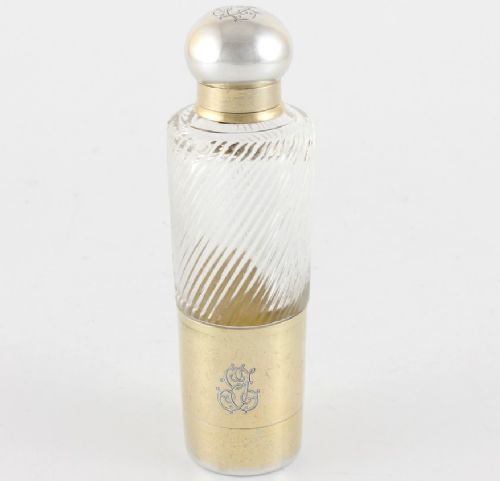
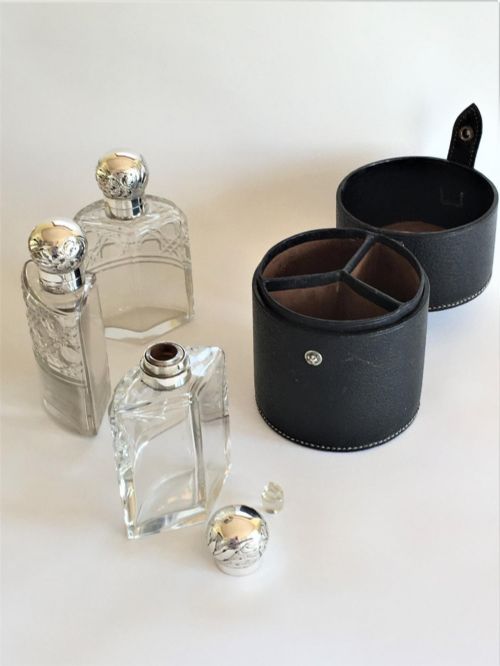
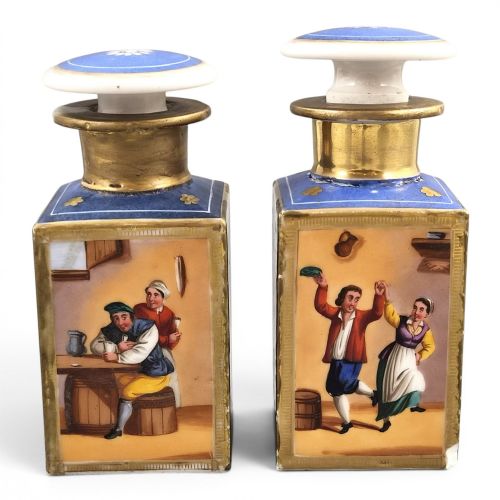
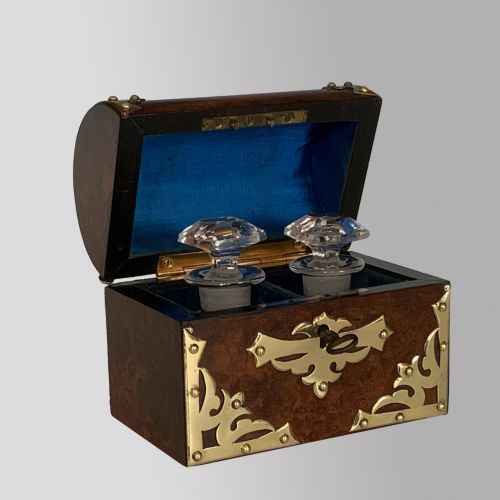
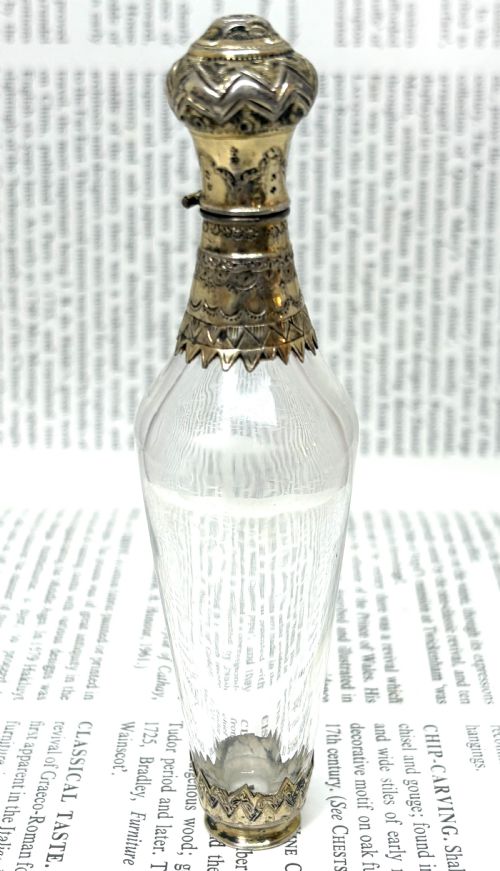
Forms range from simple pocket flasks and spirit perfume bottles to geometric Czech designs and cased trios intended for travel. Many retain their original stoppers, while others incorporate atomisers on stands or appear paired in matching sets.
How they were made
Makers formed the vessels using clear or coloured glass, frequently applying deep geometric cuts, sliced facets, or mould-blown shapes to catch the light. Overlay techniques placed contrasting glass or silver directly onto the main body.
Mounts and collars utilised sterling silver, silver gilt, brass, or ormolu, secured to the glass neck with cork or ground stoppers to prevent evaporation. Enamel work, tortoise shell, and guilloche patterns added decorative detail to the metal lids during the Edwardian and Art Deco periods.
Some Victorian travelling sets included secret pill compartments hidden beneath the silver caps for discreet nineteenth-century remedies.
What varies in quality
The standard of a dressing table perfume bottle rests upon the crispness of the glass cutting and the weight of the metal mount. Heavier crystal bodies and thick sterling silver collars demonstrate superior craftsmanship compared to thin pressed glass and light metal alloys.
Preservation of fragile elements determines the desirability of an example. Intact enamel work without chips, clear hallmarks on the silver, and original matching stoppers elevate an item above those with replaced parts or surface wear.
Tonnel Paris·Gorham·Laugharne Glass·Jacob Petit·Henry Perkins·Karl Palda·Rene Lalique·Rudolf Hlousek·Barnsley and Co·Asprey
The Dressing Table Perfume Bottle Glossary
- Guilloche
- A decorative mechanical technique that etches precise, intricate geometric patterns into a metal surface beneath translucent enamel. This method was widely utilised on silver vanity accessories during the early twentieth century.
- Sterling silver
- An alloy consisting of pure silver and other metals, standardised for strength and durability. Most British mounts and lids carry hallmarks indicating this standard.
- Bristol green
- A deep, rich shade of green glass produced in England during the nineteenth century. It frequently appeared on scent bottles mounted with silver collars.
- Bleu de Roi
- A deep royal blue ceramic or glass colour developed in France. The term translates directly as king's blue.
- Atomiser
- A spray mechanism fitted to a perfume bottle to distribute scent in a fine mist. These often feature a bulb and rubber tubing or a metal pump action.
Dressing Table Perfume Bottle: Frequently Asked Questions
Did these bottles always have stoppers?
Original stoppers were standard for nearly every scent bottle to keep volatile oils from evaporating. Many surviving examples retain their ground glass or glass-tipped silver stoppers.
Replacements appear frequently on the market because original stoppers broke easily during daily use. Matching a replacement requires checking the exact diameter and length of the inner neck.
How do I date a silver mounted bottle?
British silver mounts generally carry hallmarks that include a date letter, a maker's mark, and a standard mark such as a lion passant. These stamps provide the exact year the metal component was assayed and registered.
Foreign pieces rely on style, maker signatures, or registration numbers stamped into the glass or metal. Art Deco and Victorian designs show distinct stylistic differences in their cutting patterns and mount shapes.
Were these bottles meant for travel?
Certain forms were specifically engineered for transport, including cased trios and secure screw-cap flasks designed to fit inside vanity cases. These pieces utilised robust glass and tight seals to withstand movement.
Other larger examples remained stationary on dressing tables and dressing trays as permanent display items. Travelling sets often featured fitted leather or velvet cases to protect the glass during journeys.