




Art Deco Glass Atomiser
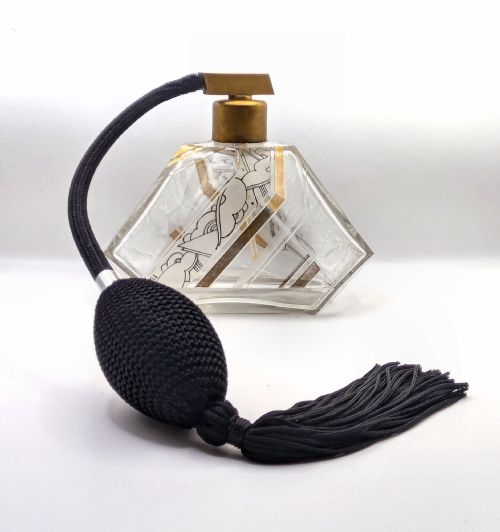
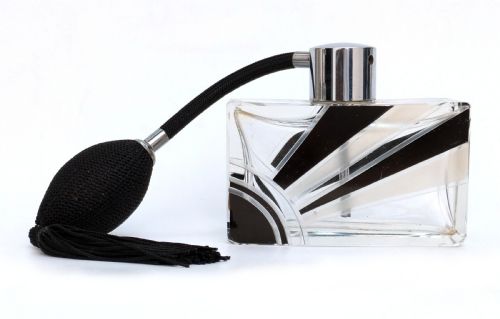
An art deco glass atomiser brings tactile glamour to a dressing table, combining geometric style with functional design.
Art Deco Glass Atomiser
An art deco glass atomiser is a vanity accessory designed for dispensing fragrance through a squeeze bulb and metal mount. These pieces date principally from the 1920s and 1930s, reflecting the modernist aesthetics of the interwar period.
How they were made
Maker utilise moulded, cut, and frosted glass, often pairing coloured or amber and blue crystal with chrome, brass, or sterling silver mounts. Some examples incorporate enamel, guilloche enamel, fabric, and bakelite to create contrasting textures and finishes.
The manufacturing process combines precision glass-cutting with metalwork to secure the atomiser mechanism into the bottle neck. Artisans shape the glass bodies into sharp geometric profiles typical of the period.
Several bottles retain their original fabric-covered squeeze bulbs, whispering of dressing table rituals nearly a century past.
What varies in quality
Quality depends on the weight and clarity of the glass, alongside the complexity of the cut glass or moulded geometric patterns. Pieces by known makers exhibit sharper detailing in the glasswork and superior finishing on the metal mounts.
The integration of secondary materials such as guilloche enamel, sterling silver, or specialised coloured glass elevates the overall execution. Simpler moulded bottles represent standard commercial production of the decade, whereas larger formats and marked designer pieces command greater attention.
Karl Palda·Rudolf Hlousek·René Lalique·Hermanova·Marcel Franck·DeVilbiss
The Art Deco Glass Atomiser Glossary
- Atomiser
- A device for dispensing liquid in a fine spray using a squeeze bulb and tube mechanism. It forms the primary functional component of these vanity bottles.
- Guilloche enamel
- A decorative technique where precise patterns are machined into metal before translucent enamel is applied over the top. This finish frequently appears on high-end sterling silver mounts.
- Frosted glass
- Glass treated to create a textured, opaque surface finish rather than a clear transparent one. It creates soft diffusion of light across geometric facets.
- Bakelite
- An early synthetic thermosetting plastic utilised for decorative caps and bases during the period. Its distinct tactile quality helps date pieces to the interwar decades.
Art Deco Glass Atomiser: Frequently Asked Questions
How do I use an art deco glass atomiser?
These vessels hold liquid perfume and disperse it through a connected rubber squeeze bulb and internal tube.
Today they function primarily as decorative vanity objects rather than for daily fragrance application.
Where were these atomisers made?
Production centred in France, Bohemia, and Czechoslovakia during the 1920s and 1930s.
Different regions favoured specific techniques, such as Czech coloured glass or French moulded crystal.
What materials make up these bottles?
The bodies consist of glass, crystal, frosted glass, or coloured glass in amber, blue, and black.
Mounts and hardware utilise chrome, brass, sterling silver, enamel, fabric, and bakelite.
How do I date an atomiser to the 1930s?
Stylistic indicators include geometric lines, sunray motifs, and the integration of chrome and bakelite.
Marked maker signatures and traditional regional glass-cutting methods also help establish the decade.