


Dressing Table Casket
A dressing table casket holds personal valuables and sits neatly on a bedroom surface, bringing refined nineteenth and twentieth century craftsmanship to daily routines.
Dressing Table Casket
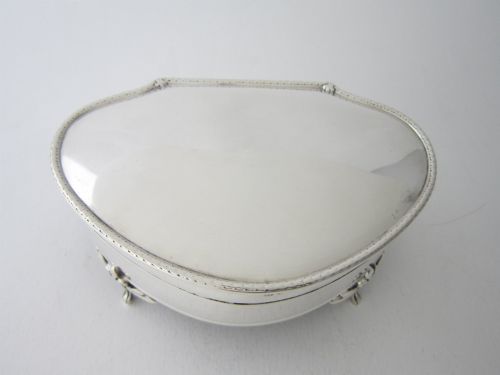
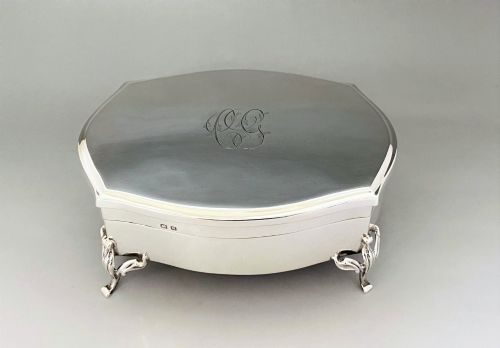
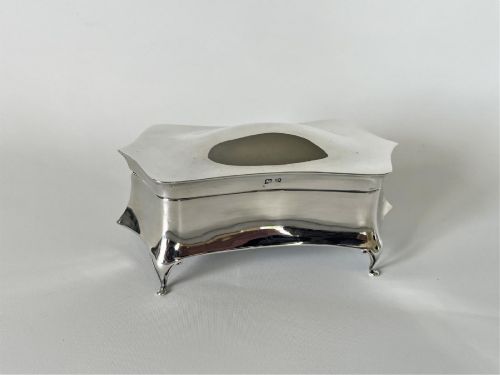
A dressing table casket serves as a secure container for small jewels, rings, and personal mementos. Buyers searching for a dressing table casket encounter various forms ranging from compact silver trinket boxes to substantial wood caskets with fitted interiors and mirrors.
The pieces on this page span the Victorian, Edwardian, and George V periods, extending into early twentieth century Art Nouveau and Art Deco designs. Most examples originate from English silversmiths, alongside continental European silver and glass work.
Common functional variations include dedicated ring boxes, glove boxes, and scent caskets designed for specific dressing table accessories. These items reflect the personal organisation habits of past centuries through thoughtful interior arrangements.
Materials and Techniques
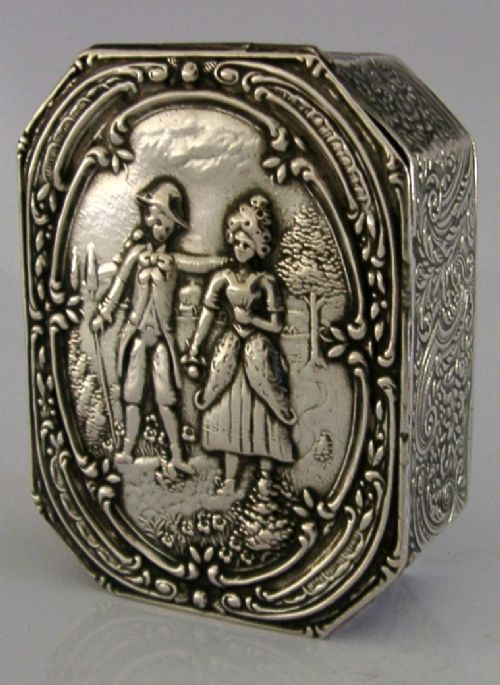
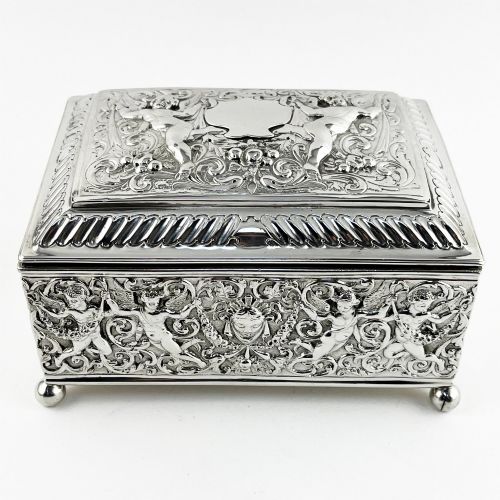
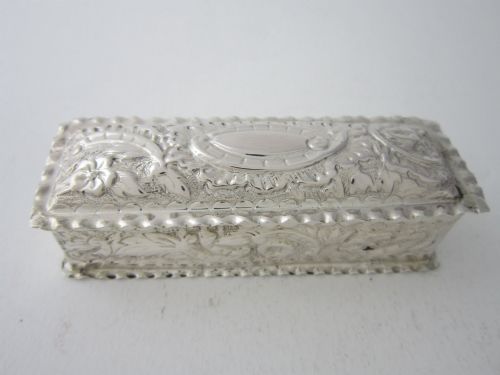
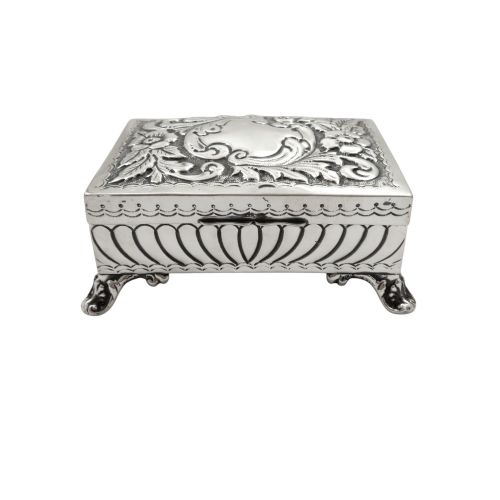
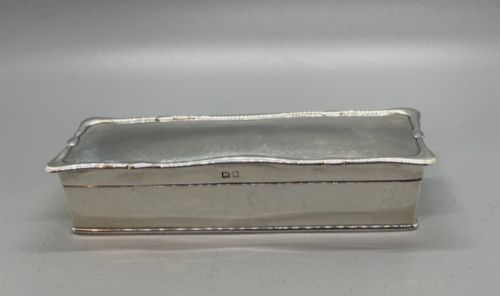
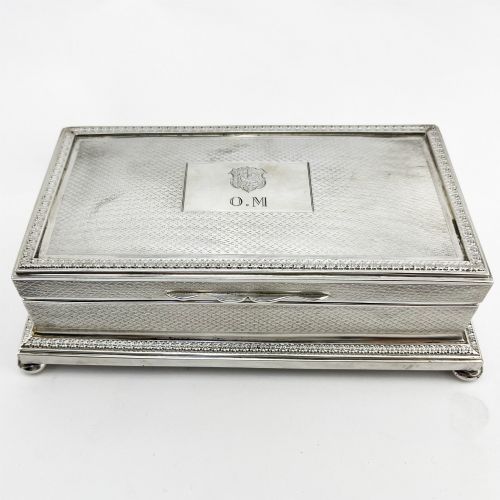
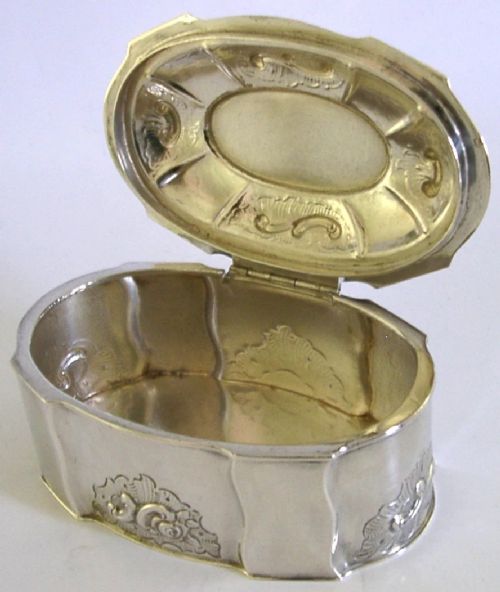
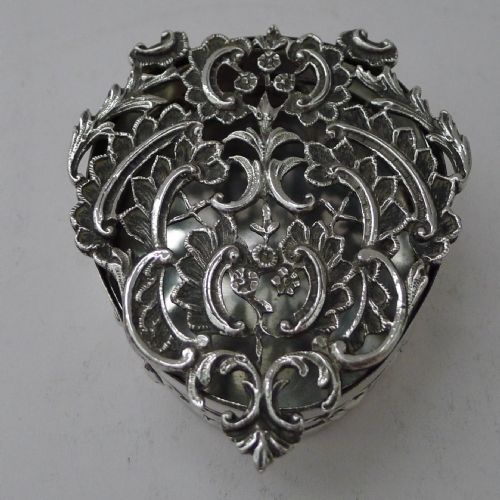
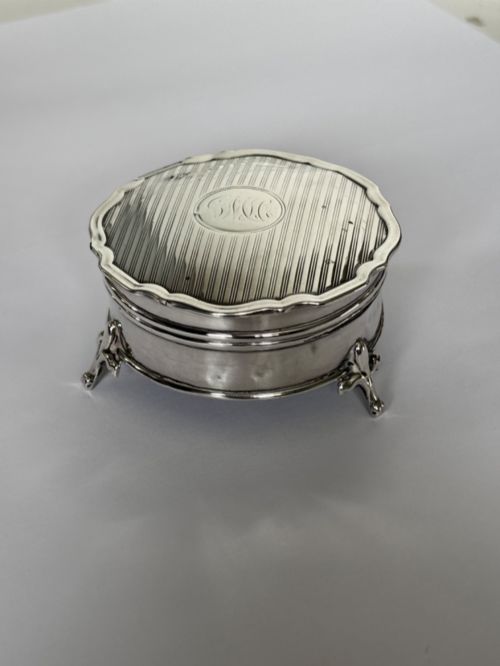
Sterling silver dominates the construction of these caskets, often paired with hallmarks indicating assay offices in cities such as Birmingham, London, and Chester. Silversmiths employed repoussé, casting, and piercing techniques to shape intricate lids and bodies.
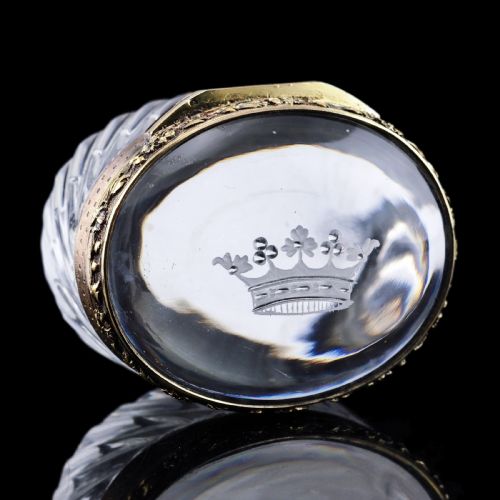
Wooden caskets utilise dense timbers like burr walnut, burr yew, and coromandel, frequently enhanced with brass binding, ormolu mounts, or mother-of-pearl inlay. Glass and crystal vessels appear mounted in silver or gilt bronze, sometimes featuring cut patterns and hinged lids.
Interior linings incorporate velvet and silk to protect delicate items, while specialised compartments accommodate rings and pins securely. Leather binding and tortoiseshell panels add tactile contrast to the metal and wood frameworks.
Listings feature sterling silver, burr walnut, tortoiseshell, and cut glass across Victorian, Edwardian, and Art Deco periods.
Evaluating Execution
Quality rests upon the crispness of chased or embossed silver detail and the structural integrity of the internal wooden carcase or glass body. Superior examples maintain smooth hinge action and secure closures that align precisely without resistance.
The prominence of the maker influences the standing of a piece, with recognised workshops delivering heavier gauge silver and more substantial mounts. Material selection also dictates worth, particularly the choice of figured burr timbers or genuine tortoiseshell over simpler substitutes.
William Comyns·Mappin & Webb·William Hutton·Posen of Frankfurt·William Neale & Sons
The Dressing Table Casket Glossary
- Hallmark
- Official stamps applied to precious metals indicating the standard of purity, the maker, the assay office, and the date of testing. These marks provide definitive historical context for dating silver caskets.
- Repoussé
- A metalworking technique where the artisan hammers the design from the reverse side to create a raised relief pattern on the surface. This method creates decorative panels depicting floral or figural motifs.
- Ormolu
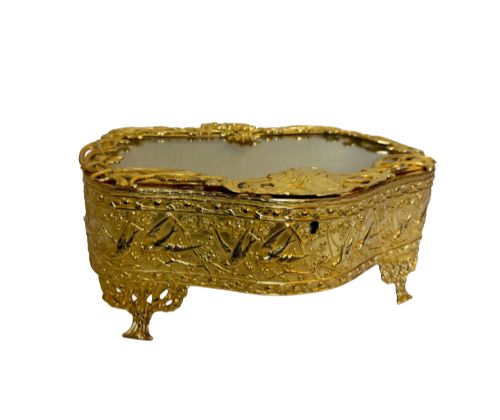
- Gilded bronze mounts applied to furniture and decorative boxes for ornamental enrichment. The technique involves fusing an amalgam of mercury and gold to a bronze base.
- Coromandel
- A dense, heavily figured timber imported from Asia, prized for its dark brown colour and contrasting pale streaks. Cabinetmakers reserved this exotic wood for high-end nineteenth-century boxes.
- Trinket box
- A small receptacle intended for holding minor items of jewellery, pins, or hair accessories. These portable containers sit upon dressing surfaces for daily access.
Dressing Table Casket: Frequently Asked Questions
What fits inside a dressing table casket?
These boxes accommodate rings, brooches, cufflinks, and delicate personal trinkets within their velvet or silk lined interiors. Larger variants hold gloves, vanity bottles, or small pocket watches.
Compartments and partitioned trays help organise specific items to prevent scratching during storage.
How do I date a silver casket?
Silver caskets carry hallmarks stamped directly onto the metal, indicating the specific assay office and year letter assigned by the testing authority. Maker marks also help pinpoint the exact workshop responsible for production.
Stylistic cues such as Art Nouveau whiplash lines or Edwardian neoclassical motifs further narrow down the manufacturing decade.
Are wooden caskets lined with fabric?
Many wooden dressing table caskets feature original velvet, satin, or silk linings designed to cushion jewellery and prevent movement. Some incorporate fitted mirrors inside the lid for convenience during use.
Interior layouts often include lift-out trays that create secondary storage spaces underneath.
Where were these caskets made?
British silversmiths operating in London, Birmingham, and Chester produced a large proportion of these pieces during the Victorian and Edwardian eras. Continental workshops in Germany and France also manufactured notable silver, glass, and gilt bronze examples.
Import marks frequently appear on foreign pieces retailed within Britain.