

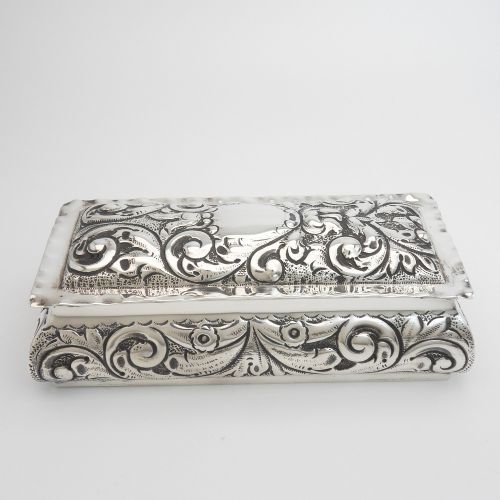


Chased Silver Casket
A chased silver casket offers a tactile receptacle for small valuables, bringing intricate metalwork and historical craft directly to a dressing table or desk.
Chased Silver Casket
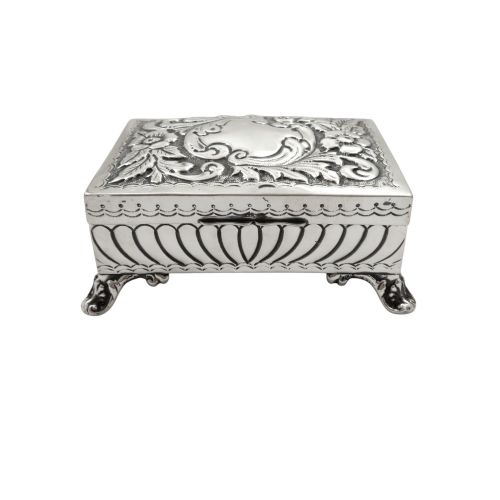
A chased silver casket sits among decorative boxes and jars designed for jewellery, rings, and trinkets. These pieces emerge primarily from Victorian, Edwardian, and nineteenth-century periods, capturing diverse stylistic influences from British assay offices and international workshops alike.
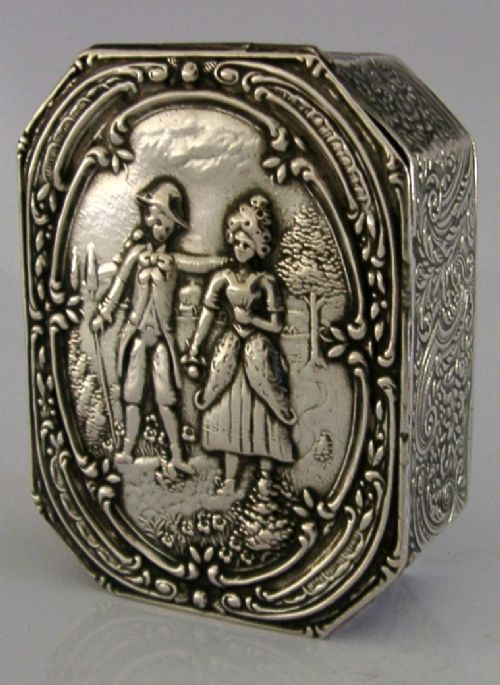
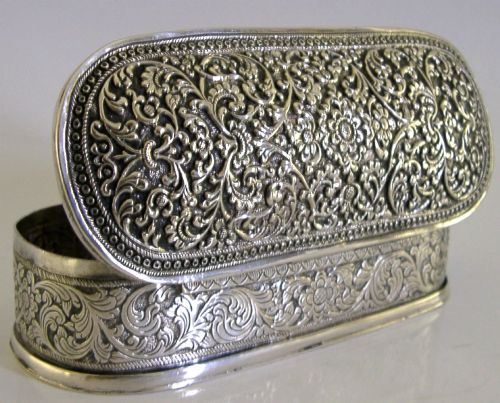
The items span specific regional forms including Indian and Ceylon boxes, heart-shaped trinket boxes, peacock pandan boxes, and substantial table boxes. Buyers will frequently encounter British sterling silver examples alongside ornate Anglo-Indian and continental German Hanau creations.
Objects on this page function as functional storage items and decorative desk accessories. Their utility as jewellery caskets and ring boxes matches their decorative presence within a room.
How they were made
Makers utilised solid silver, sterling silver, and silver plate as the foundational medium for these pieces. Certain examples incorporate gilding or gold gilt interiors to provide a contrasting finish against the exterior metalwork.
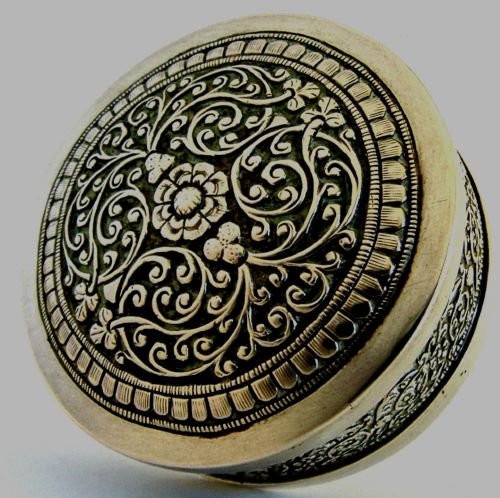
Artisans applied chasing techniques to push the metal from the reverse or depress the surface from the front, creating raised decorative motifs and ornate patterns. This labour-intensive method produced the high level of detail seen across the surface of nineteenth-century Indian and British provincial boxes.
Listings feature items from the Victorian and Edwardian periods alongside nineteenth-century Indian and German Hanau examples.
What varies in quality
The crispness and depth of the chased decoration determine visual distinction across these caskets. Stronger examples display deeply worked, sharply defined motifs where the artisan maintained control over the hammer and punch throughout the design.
Material composition and structural integrity also differentiate the pieces, ranging from heavy solid silver constructions to silver-plated alternatives. The quality of internal gilding and the precision of the hinges and lids further distinguish workshop standards.
A & J Zimmerman Ltd·William Neale & Sons
The Chased Silver Casket Glossary
- Chasing
- A metalsmithing technique where the artisan depresses the front surface of the metal with punches to form a raised design. This method hardens and ornaments the exterior without removing material.
- Gilt
- A thin layer of gold applied to the interior or surface of a silver object. It provides a warm contrast and protects the base metal from tarnishing.
- Pandan
- A traditional Asian box used for holding betel nut leaves and spices, often translated into ornate silver forms for export and domestic use. These receptacles feature hinged lids and compartmentalised interiors.
- Sterling silver
- An alloy consisting of pure silver and other metals, traditionally copper, standardised for durability and strength. British pieces often bear hallmarks confirming this standard.
- Hallmark
- An official stamp applied to precious metals indicating the standard of purity, the assay office, and the date of manufacture. These marks help identify British Victorian and Edwardian items.
Chased Silver Casket: Frequently Asked Questions
How do I clean a silver casket?
Use a soft microfibre cloth and a mild, non-abrasive silver polish to remove tarnish gently from the raised chased details. Avoid harsh chemical dips that can strip internal gilding or ruin patination.
Store the casket away from direct sunlight and damp environments to maintain the condition of the metal and any lining.
Can I use these boxes for daily jewellery storage?
These caskets accommodate rings, small brooches, and delicate necklaces safely on a dressing table. Many retain original fitted interiors designed specifically for jewellery.
Take care when closing lids with tight or antique hinges to preserve the mechanism and any internal gilding.
How do I identify the date of a silver box?
British pieces often carry hallmarks that include date letters, assay office symbols, and maker's marks which pinpoint the exact year of manufacture. Items lacking British marks are typically dated through stylistic comparisons and regional attribution.
Contextual evidence such as construction methods and decorative motifs helps assign pieces to the Victorian, Edwardian, or nineteenth-century periods.
What is the difference between solid silver and silver plate?
Solid silver and sterling silver pieces consist of precious metal all the way through their structure. Silver-plated items feature a base metal core coated with a thin layer of silver.
Weight, hallmarks, and wear patterns around high-friction areas help distinguish between solid metal and plated alternatives.