



Dresden Style Porcelain Cherubs
These dresden style porcelain cherubs bring playful nineteenth-century Rococo Revival charm to your mantelpiece through elaborate German craftsmanship.
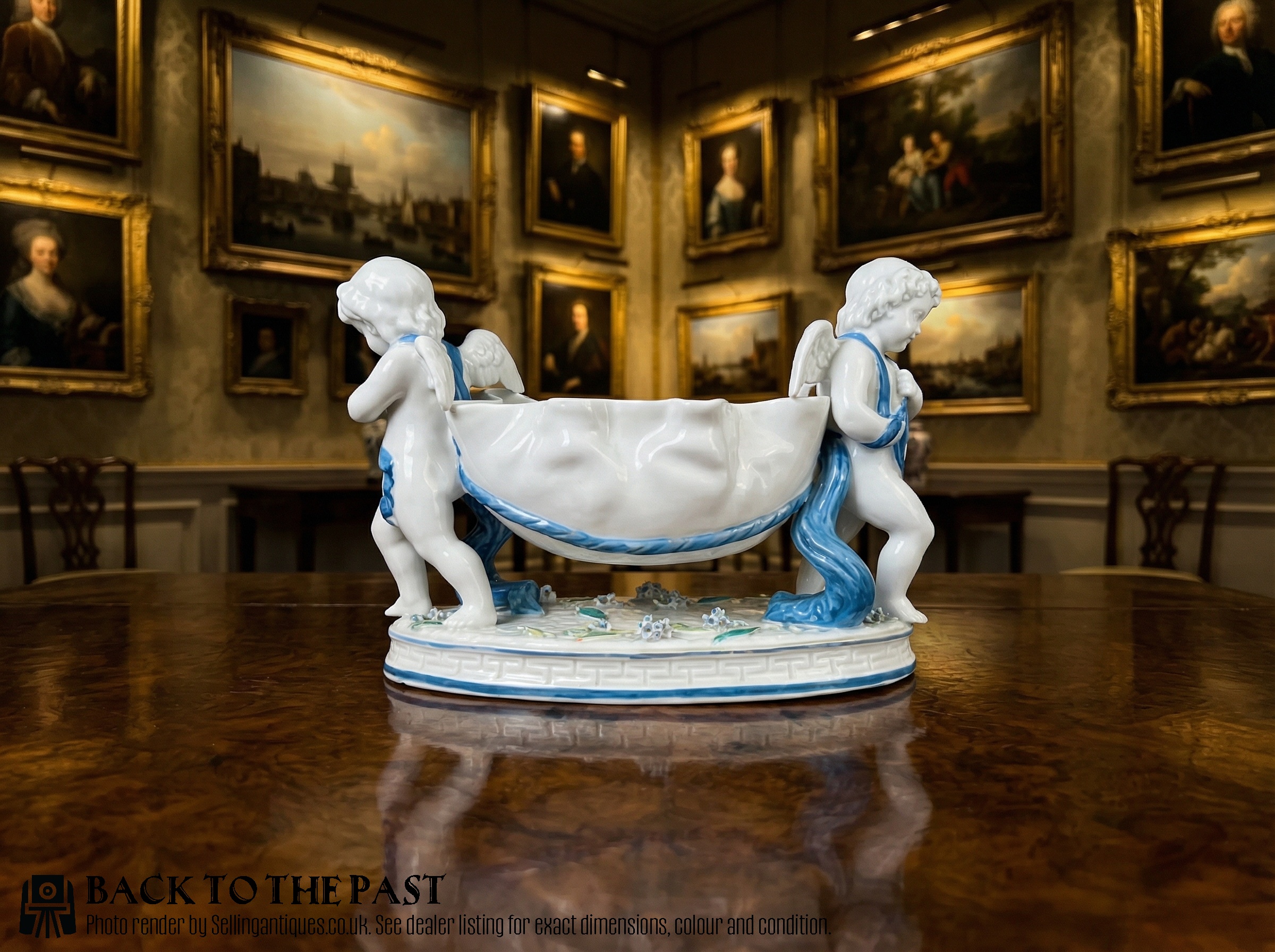
Dresden Style Porcelain Cherubs
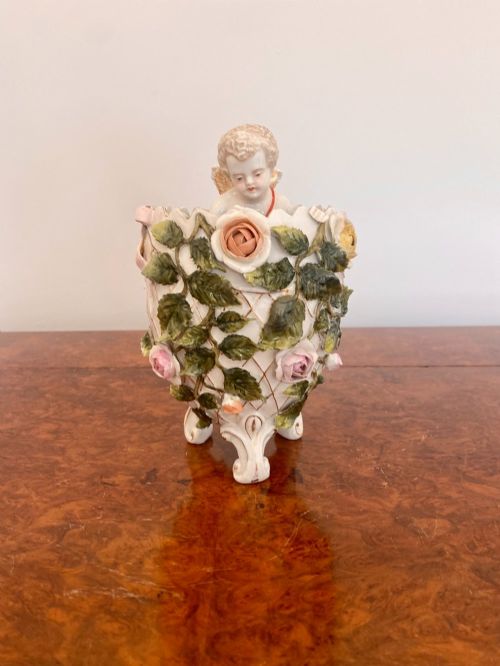
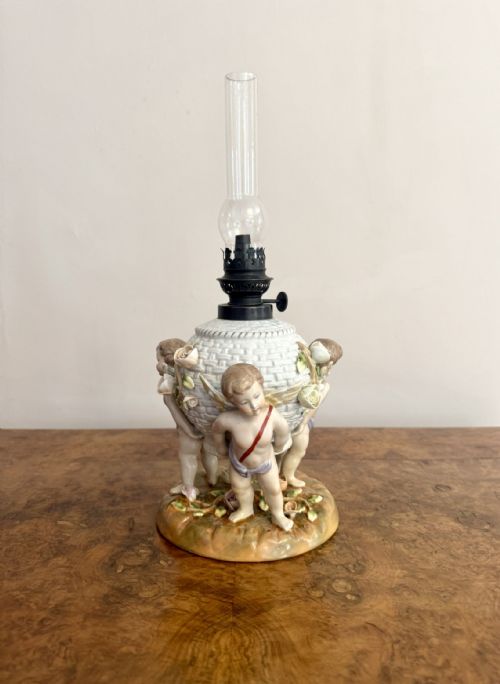
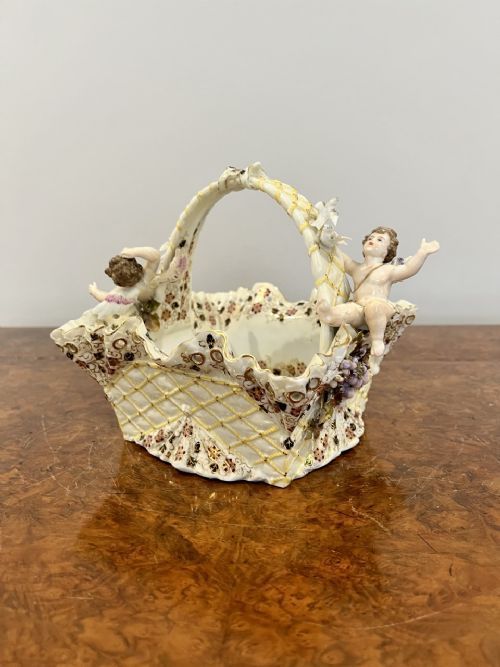
When you search for dresden style porcelain cherubs, you encounter ornate nineteenth-century objects shaped by continental European factories. These pieces take the form of centrepieces, oil lamps, porcelain figurines, and decorative baskets populated by winged putti.
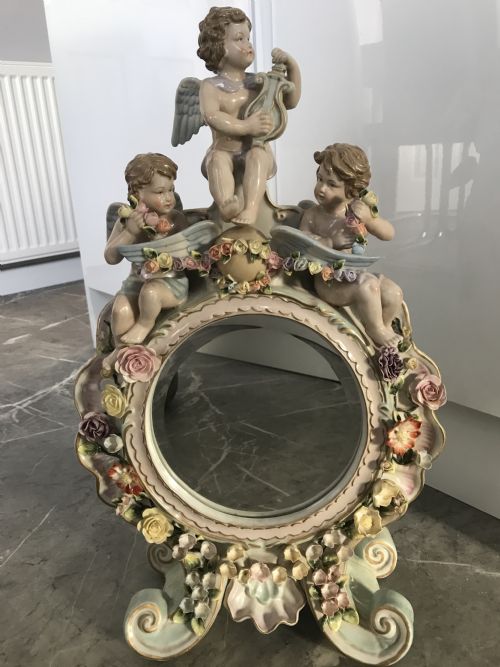
The versions most common on this page date from the Victorian and Edwardian periods around eighteen-eighty to nineteen-twenty. They draw heavily on Rococo Revival styling, often pairing delicate figures with applied flowers, mirrors, and gilded enamel details.
German factories such as Sitzendorf, Schierholz, and Meissen dominate these origins. Their output ranges from large musical putti centrepieces to tabletop oil lamps and lidded vases.
What varies in quality
The crispness of the modelling separates finer figures from simpler output, particularly in the definition of cherub faces and applied flowers. Superior examples display sharply rendered putti limbs and delicately sculpted petals rather than thick, heavy clay work.
The richness of the gilding and enamel painting also marks the grade of a piece. Skilled hand-painting on porcelain centres and vases creates depth and life, whereas lesser items rely on flat, uniform colour.
Dresden Style Porcelain Cherubs Retail Price Guide 2026
Typical asking prices for dresden style porcelain cherubs among the pieces listed under this phrase on Sellingantiques today, from the lower quarter to the upper quarter. They describe what is for sale here now, not the wider market.
Materials recorded across these objects include porcelain, enamel, gold leaf, glass, brass, and ceramic.
Sitzendorf·Schierholz·Plaue·Meissen
The Dresden Style Porcelain Cherubs Glossary
- Putti
- Winged infant figures often depicted as cherubs in continental porcelain. They form the central motif of many centrepieces and decorative groups.
- Rococo Revival
- A nineteenth-century design style marked by asymmetry, scrollwork, and naturalistic floral motifs. It heavily influences the form of these mirrors and lamps.
- Gilded Enamel
- Enamel decoration enriched with gold leaf applications. This technique adds metallic brilliance to the surface of vases and centrepieces.
- Centrepiece
- A large decorative display object placed in the middle of a table. In this context, they frequently feature shell basins supported by cherubs.
Dresden Style Porcelain Cherubs: Frequently Asked Questions
What are dresden style porcelain cherubs?
These pieces are nineteenth-century decorative objects produced by German porcelain factories in the Rococo Revival style. They incorporate modelled putti alongside floral motifs on items like centrepieces and lamps.
Such items reflect the continental taste for ornate table ornaments during the Victorian and Edwardian eras. They served primarily as decorative focal points in formal rooms.
How were these porcelain pieces used?
Original owners displayed these figurines, mirrors, and centrepieces on dining tables, mantelpieces, and dressing tables to demonstrate social standing. Oil lamps also provided functional lighting alongside their decorative sculptural cherubs.
Over time, their role shifted entirely to ornamental display. Collectors today place them in cabinets or on side tables as sculptural focal points.
How do I date these porcelain cherubs?
Dating relies on stylistic markers, factory marks, and the types of materials used across Victorian and Edwardian production. Pieces often span from eighteen-eighty through to nineteen-twenty.
Earlier examples from the nineteenth century typically feature heavier Rococo Revival moulding and richer hand-applied roses. Later twentieth-century items often streamline these decorative elements slightly.
How do I care for antique porcelain?
Gentle dusting with a soft dry brush preserves the delicate applied flowers and gilded enamel surfaces without risking damage. Avoid harsh chemical cleaners that can strip the hand-painted details.
Keep these pieces away from areas prone to heavy vibrations or accidental knocks because the intricate porcelain petals are fragile. Stable shelf placement ensures they survive safely.