



Victorian Porcelain Cherub Bowl
These Victorian porcelain cherub bowl pieces bring theatrical centrepieces into a room, combining figures and glazed vessels.
Victorian Porcelain Cherub Bowl
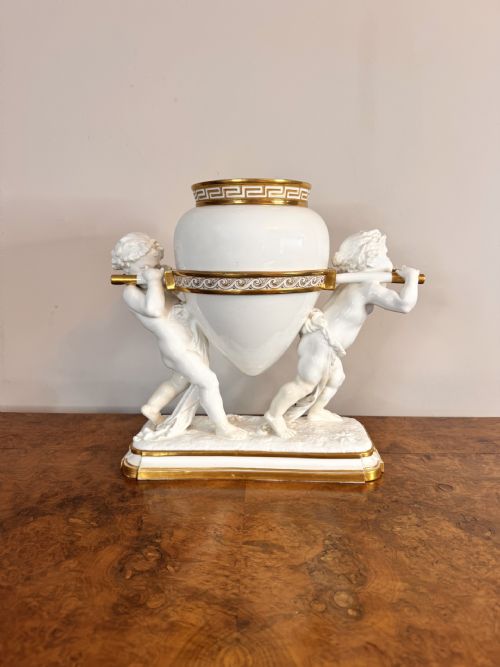
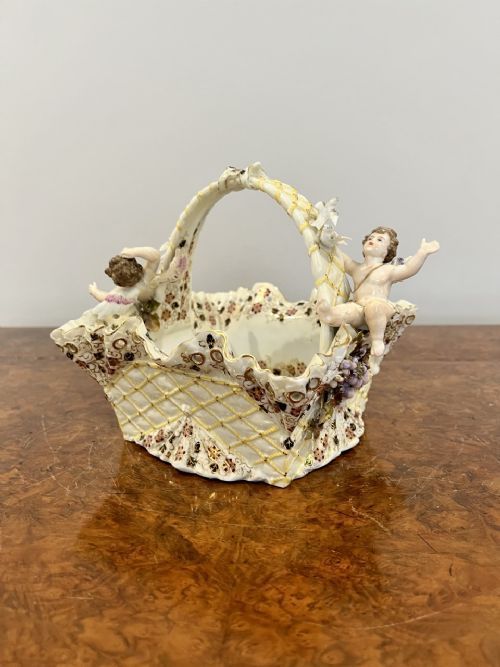
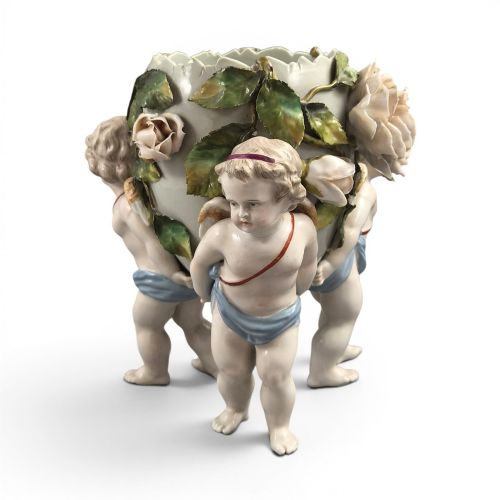
A victorian porcelain cherub bowl takes the form of centrepieces, baskets, comports and vases populated by sculptural figures. The pieces available span the nineteenth century and into the early twentieth century, showing strong Rococo Revival influences.
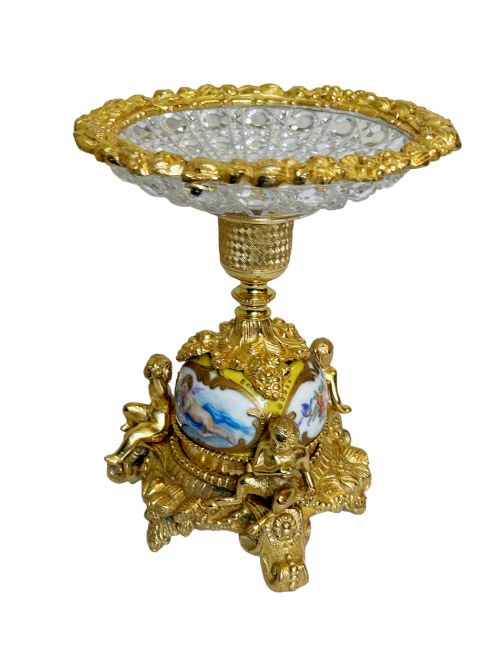
Makers from Germany, France and England shaped these decorative objects using hard-paste porcelain and ceramic bodies. Continental factories frequently paired glazed figures with gilded metal mounts and cut crystal vessels.
Buyers encounter elaborate compotes, shell-shaped vessels and musical putti arrangements rather than simple tableware. These decorative items functioned primarily as table centrepieces and decorative baskets for grand interiors.
Materials and manufacture
The manufacture relies on hard-paste porcelain and ceramic bodies shaped into elaborate vessels and figures. Workshops applied gold leaf, enamel and gilt bronze mounts to enhance the sculptural elements.
Craftsmen combined moulded porcelain components with hand-painted details and applied decorative elements like fruit and flowers. Cut crystal bowls occasionally formed part of the mixed-media centrepiece assemblies.
Victorian Porcelain Cherub Bowl Retail Price Guide 2026
Typical asking prices for victorian porcelain cherub bowl among the pieces listed under this phrase on Sellingantiques today, from the lower quarter to the upper quarter. They describe what is for sale here now, not the wider market.
The listings show pieces spanning the Victorian era up to the nineteen-twenties, incorporating porcelain, enamel, gold leaf, and cut crystal.
Distinctions in quality
The integration of mixed materials, such as gilt bronze mounts supporting cut crystal or porcelain, dictates the refinement of the piece. Rigorous attention to detail in the Rococo Revival scrollwork separates standard production from superior work.
Sitzendorf·Plaue Schierholz·Sevres·Minton·German Saxony
The Victorian Porcelain Cherub Bowl Glossary
- Putti
- Winged infant figures frequently depicted in sculptural art and porcelain centrepieces. These figures often support bowls or recline upon shells.
- Comport
- A decorative footed dish or bowl raised above the table level, used for fruit or display. These pieces form a significant portion of nineteenth-century table ceramics.
- Hard-paste porcelain
- A dense ceramic material fired at high temperatures, composed of kaolin and petuntse. This paste accepts bright enamel colours and fine gilding.
- Rococo Revival
- A nineteenth-century design style mimicking the asymmetry, scrolls and natural motifs of the eighteenth-century movement. It dominates the ornamentation seen on these centrepieces.
- Gilt bronze
- Metal mounts treated with gold or a gold-coloured alloy to match or contrast with porcelain. Workshops utilised this material to join crystal and ceramic elements.
Victorian Porcelain Cherub Bowl: Frequently Asked Questions
What were these bowls used for?
These pieces functioned primarily as table centrepieces and decorative comports for grand dining rooms during the nineteenth century. They held fruit or flowers while adding sculptural interest to the table setting.
Over time, their role shifted from dining table ornaments to purely decorative cabinet pieces and drawing-room displays. Collectors today place them on sideboards and tables as focal points.
How do I date these items?
Dating relies on stylistic markers such as Rococo Revival scrollwork, factory marks stamped into the porcelain, and the specific modelling of the putti. Periods range from mid-nineteenth-century Victorian production to early twentieth-century continental work.
Examining the materials, from hard-paste porcelain to applied gilt bronze mounts, helps narrow down the manufacturing decade. Comparing the piece to documented factory outputs provides further chronological context.
Are these pieces fragile?
The protruding limbs of cherubs, applied floral elements and delicate porcelain fingers require careful handling during placement or cleaning. Mixed-media pieces involving cut crystal and gilt bronze also demand gentle maintenance.
Displaying them away from high-traffic edges prevents accidental knocks to the delicate porcelain projections. Dusting should be done softly with a dry brush rather than liquid cleaners.
Where were they manufactured?
Production centred in major European ceramic hubs across Germany, France and England during the Victorian era. Factories in regions like Saxony and Thuringia produced many of the elaborate putti centrepieces.
French workshops influenced Sevres-style pieces, while English firms like Minton contributed refined compote designs. Each region applied distinct stylistic traits to the porcelain and decoration.