


European Porcelain Figures
These european porcelain figures bring the colour and spirit of the eighteenth and nineteenth centuries straight into a room.
European Porcelain Figures
When you search for european porcelain figures, you enter a world of glazed figurines, groups, candlesticks and centrepiece bowls created across the eighteenth and nineteenth centuries. The pieces on this page span styles from Rococo and Rococo Revival to Victorian and Art Nouveau, representing German and French workshops.
You are most likely to meet nineteenth-century interpretations alongside eighteenth-century works, often depicting pastoral scenes, gardeners, shepherds and mythological subjects. These sculptural forms range from single figures to elaborate multi-figure groups perched on tree trunks or styled with gilt highlights.
How they were made
These works rely on hard-paste porcelain shaped into figurines and statuettes, then finished with detailed enamel painting and glaze. Many pieces incorporate gold leaf or gold gilt applied to accents and bases.
Makers shaped the clay by hand before firing, applying polychrome enamels and high-gloss glazes to achieve the characteristic sheen seen on nineteenth-century continental porcelain and earlier Meissen editions.
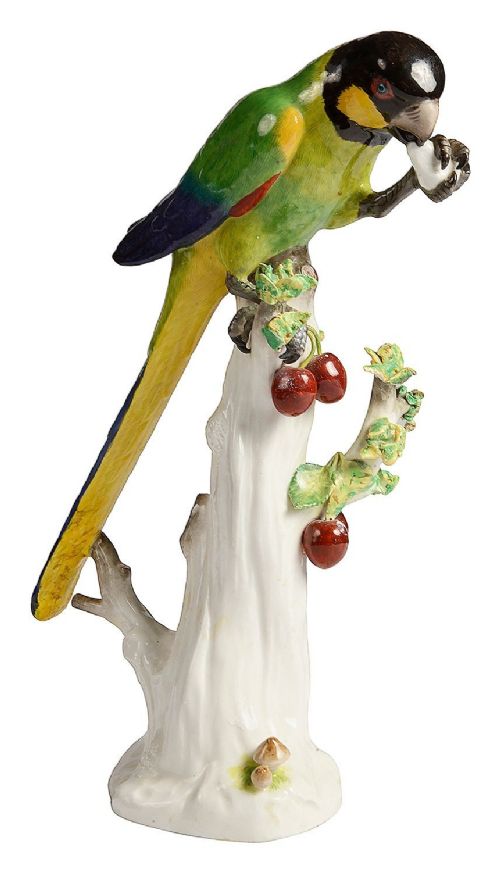
A porcelain parrot perches permanently on a tree trunk, demanding no seed and causing no trouble.
What varies in quality
The distinction between ordinary and exceptional european porcelain figures lies in the crispness of the modelling and the finesse of the enamel painting. Finer examples display delicate facial expressions, precise hand-painted details on clothing, and well-defined naturalistic elements like foliage and tree trunks.
The application of glaze and gilding also sets pieces apart, with superior works showing clean firing without surface pooling and carefully weighted compositions in multi-figure groups like pastoral pairs or mythological scenes.
Meissen·Samson Chelsea·Ludwigsburg·Royal Dux
The European Porcelain Figures Glossary
- Hard-paste porcelain
- A durable ceramic material composed of kaolin and petuntse, fired at very high temperatures to create a dense, vitrified body that resists scratching.
- Enamel
- Opaque vitreous colours painted onto the glazed surface of the porcelain before undergoing a secondary low-temperature firing to fuse the pigments.
- Gilt
- A thin layer of gold or gold leaf applied to the surface of porcelain figures, often highlighting garments, bases, and decorative trim.
- Marcolini Period
- The era of the Meissen porcelain factory under the directorship of Count Camillo Marcolini, spanning the late eighteenth century and noted for specific factory marks.
- Rococo Revival
- A nineteenth-century design style that revived the asymmetry, C-scrolls, and elaborate ornamentation of the eighteenth-century Rococo movement.
European Porcelain Figures: Frequently Asked Questions
How do I identify a Meissen figure?
Meissen pieces often feature distinct factory marks on the base, such as the famous crossed swords, alongside high-grade modelling and fine enamel work.
Subjects range from single birds perched on tree trunks to complex allegorical groups created during different historical periods.
What is the difference between hard-paste and soft-paste?
Hard-paste porcelain uses natural kaolin and petuntse fired at extreme heat, producing a sturdy, glassy body that does not easily scratch.
Continental factories favored this formulation for its durability in intricate sculptural forms like figurines and candlesticks.
How were figural candlesticks used?
These functional sculptures combined decorative pastoral or mythological scenes with sockets designed to hold taper candles on dining tables or mantelpieces.
They allowed wealthy households to display artistic porcelain while providing ambient illumination during the evening.
Where were Chelsea-style figures made?
Many figures in the Chelsea style were actually produced by later nineteenth-century makers like Samson in Paris or German factories emulating English eighteenth-century aesthetics.
These continental works often adopted the charming pastoral subjects and rich gilding associated with earlier English porcelain.
How should I clean antique porcelain?
Dust the surface gently with a soft, dry brush to prevent accumulation in the crevices of complex groupings and delicate foliage.
Avoid harsh cleaning agents or soaking, especially on pieces featuring delicate enamel painting or gold leaf highlights.