




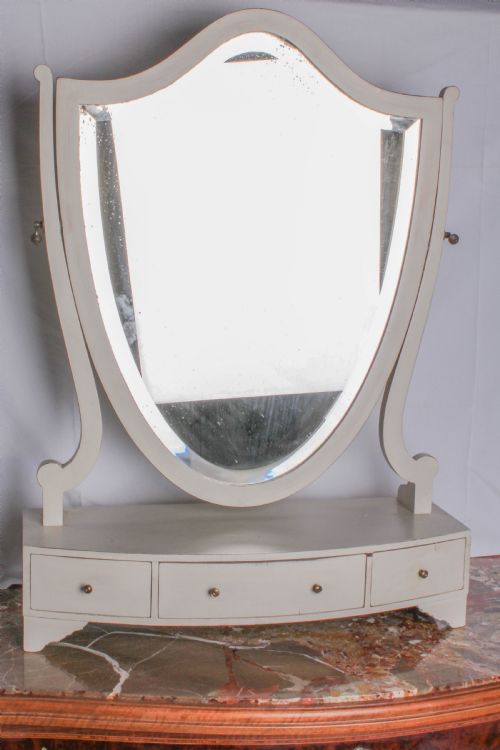


Drawer Base Toilet Mirror
Drawer base toilet mirror designs offer a compact surface for grooming, combining a pivoted glass with a functional storage box beneath.
Drawer Base Toilet Mirror
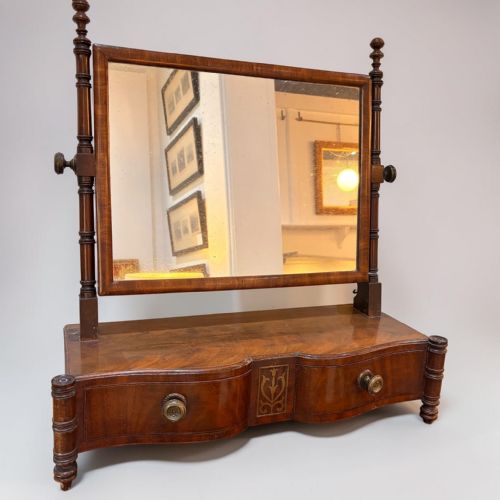
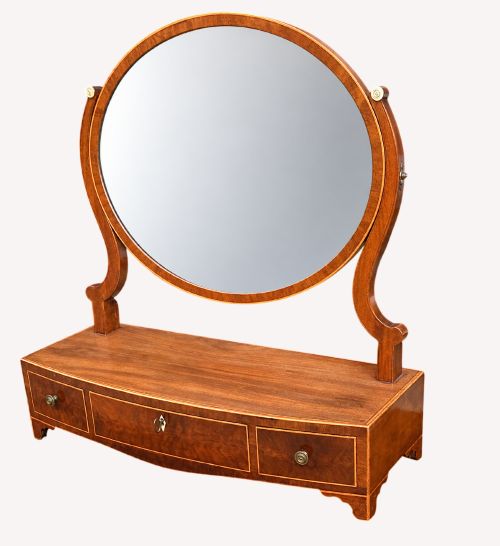
A drawer base toilet mirror sits upon a table or chest, bringing together a swivelling glass frame and a small pedestal containing one or more drawers. These pieces emerge across the Georgian, Victorian, and Edwardian periods, serving practical domestic roles in bedrooms and dressing rooms.
Materials and construction methods
Cabinetmakers construct these frames primarily in solid mahogany and walnut, occasionally applying boxwood inlay for decorative contrast. Timber selection dictates the grain pattern, with figured and flame veneers appearing on finer examples from the eighteenth and nineteenth centuries.
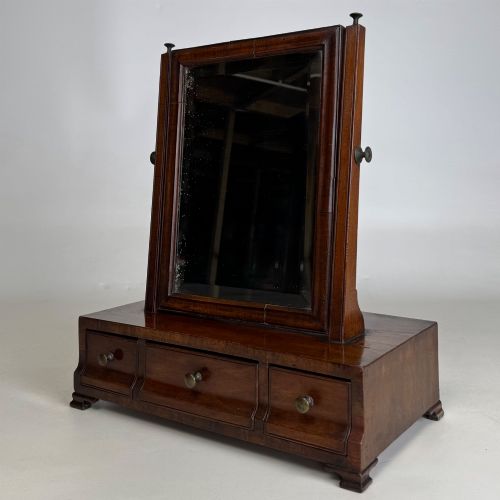
The mirror plate pivots between upright arms using brass screw caps or pins, allowing the user to tilt the glass as required. Bases incorporate dovetailed drawer construction, sometimes resting on small supports such as squashed bun feet.
Drawer Base Toilet Mirror Retail Price Guide 2026
Typical asking prices for drawer base toilet mirror among the pieces listed under this phrase on Sellingantiques today, from the lower quarter to the upper quarter. They describe what is for sale here now, not the wider market.
Squashed bun feet occasionally anchor the base, giving a slightly plump stance to an otherwise formal Georgian or Victorian dressing mirror.
Assessing quality in construction and detail
Quality rests upon timber selection and the precision of the joinery in the drawer box. Fine pieces display well-figured grain, crisp boxwood stringing, and careful dovetailing that remains tight after centuries of use.
Proportion and glass retention also distinguish the pieces. Superior examples maintain balanced frames where the weight of the mirror plate matches the stability and scale of the base below.
The Drawer Base Toilet Mirror Glossary
- Shield shaped
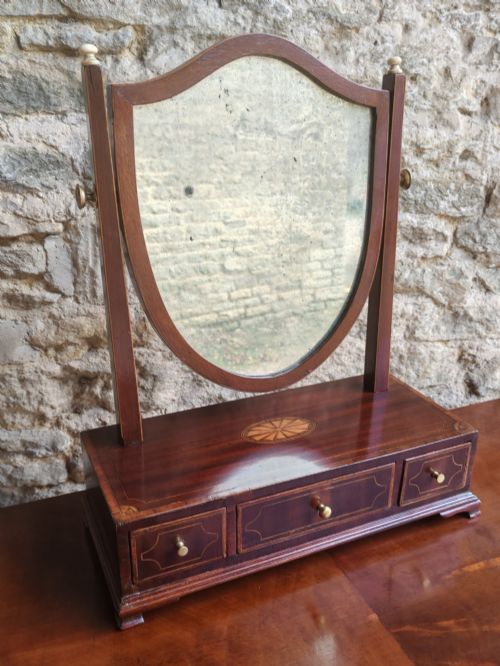
- A mirror plate cut into the outline of a heraldic shield. This contour appears frequently on late eighteenth and Edwardian dressing mirrors.
- Serpentine base
- A drawer housing with a front edge curved in a concave and convex wave. This shaping demands skilled carpentry to fit the drawer fronts accurately.
- Swing mirror
- A glass plate mounted on pivots between two upright posts. This arrangement allows the user to tilt the reflection angle.
- Boxwood inlay
- Narrow strips of pale wood inserted into recesses in the darker primary timber. It creates contrasting geometric lines on the base.
- Flame mahogany
- Timber cut from the fork of the mahogany tree where the branch meets the trunk. It yields a distinctive flickering flame pattern.
Drawer Base Toilet Mirror: Frequently Asked Questions
Where do I place a toilet mirror?
These mirrors sit comfortably on top of dressing tables, sideboards, or chests of drawers. Their compact footprints require minimal surface area while providing a usable reflection.
Ensure the supporting furniture stands at a height that lets you use the glass comfortably without straining.
How do I date an older mirror?
Dating relies on timber choices, construction techniques, and cabinet styles. Georgian pieces often show simpler mahogany frames, while Victorian versions may feature richer flame veneers and turned supports.
Examine the secondary woods inside the drawers and the style of the brass fixings to understand the period of manufacture.
What is the lower box used for?
The base incorporates one or more small drawers designed for holding trinkets, jewellery, or cosmetics. This built-in storage keeps dressing surfaces tidy.
The arrangement ranges from single long drawers to stepped tiers of three smaller compartments.