
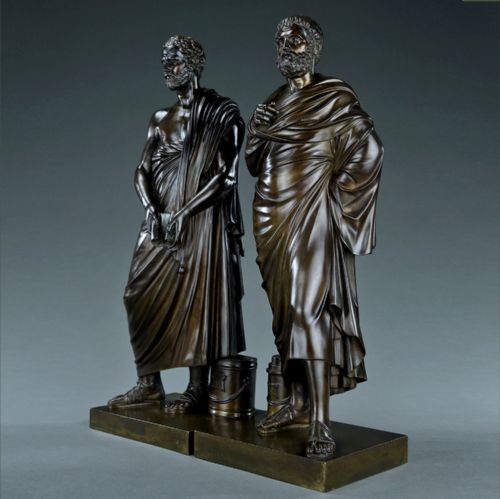


Draped Bronze Sculpture
These draped bronze sculpture pieces bring classical form and fluid drapery into a room, offering enduring presence through cast metal.
Draped Bronze Sculpture
A draped bronze sculpture captures the human figure wrapped in cloth, drawing directly from classical antiquity and later revival movements. When you search for draped bronze sculpture, you encounter figures from mythology, allegorical subjects, and portrait studies cast in metal.
The pieces on this page span the nineteenth century, the Regency era, and the Art Nouveau period. You meet Neoclassical deities, French salon figures, and Grand Tour reductions of ancient marbles.
Forms range from full-length statues of goddesses and literary figures to torcheres and portrait busts. The drapery technique defines the character of each work, revealing the form beneath while adding folds and movement to the bronze.
Materials and methods
Foundries cast these works primarily in bronze, often applying dark patination or parcel-gilt highlights to emphasise the texture of garments and skin. Some pieces utilise patinated plaster as a medium for classical studies before metal casting takes place.
Finishes vary from smooth patinated bronze to gilded details that catch the light on sculpted folds. Marble plinths frequently support the metal figures, providing a stable and classic base for the sculpture.
Several figures hold torches or garments with such theatrical flair that one might suspect they are late for a very dramatic Greek tragedy.
Judging quality
Quality rests in the crispness of the casting and the sensitivity of the chase work on the drapery folds. Superior pieces retain sharp details in the hair and fabric where the metalworker has refined the raw cast by hand.
The depth and tone of the patination contribute significantly to the visual success of the surface. Finer examples display subtle variations in colour and sheen that give the bronze a lifelike warmth.
Barbedienne·Humphrey Hopper·Ernst Barrias·Georges Van Der Straeten·Auguste Moreau·Antoine Coysevox
The Draped Bronze Sculpture Glossary
- Patination
- The chemical treatment or natural ageing applied to the surface of metal. This process alters the colour and protects the bronze.
- Grand Tour
- A cultural journey undertaken by wealthy Europeans in the eighteenth and nineteenth centuries. Travellers collected small bronzes of classical antiquities as souvenirs.
- Torchere
- A stand or sculpture designed to hold a light source. These often take the form of a draped figure carrying a torch or lamp.
- Neoclassical
- An artistic movement drawing inspiration from the classical art and culture of ancient Greece and Rome. It emphasises proportion, restraint, and classical dress.
- Parcel-gilt
- A technique where only specific portions of an object are gilded with gold leaf. This method highlights particular details such as hems or ornaments on draped garments.
Draped Bronze Sculpture: Frequently Asked Questions
What is a draped bronze sculpture?
A draped bronze sculpture is a cast metal artwork depicting a human figure wrapped in fabric, often inspired by classical mythology or allegory. These pieces range from small Grand Tour souvenirs to large nineteenth-century salon statues.
Foundries produced them using traditional casting methods, frequently mounting the metal figures on marble bases. The cloth serves to show the skill of the sculptor in rendering soft folds in hard metal.
How do I care for bronze?
Bronze requires minimal maintenance, needing only an occasional dusting with a soft, dry cloth. Avoid using liquid cleaners or polishes that can strip the original patination from the metal.
Keep the sculpture away from direct sunlight and damp environments to protect both the metal surface and any supporting marble plinth.
How can I tell the period?
Dating relies on stylistic clues such as the classical severity of Regency pieces versus the organic whiplash lines of Art Nouveau. Maker signatures, foundry stamps, and the composition of the metal also help determine age.
Examining the base and the character of the patination offers further evidence of when the foundry cast the piece.
Where were these sculptures displayed?
Nineteenth-century collectors placed these bronzes in libraries, drawing rooms, and entrance halls as symbols of classical learning and taste. Smaller figures sat upon desks or mantelpieces.
Larger statues often stood on dedicated pedestals or torcheres to allow viewers to admire the drapery from multiple angles.