


Dragon Incense Burner
A dragon incense burner brings sculpted mythical beasts and rising aromatic smoke together in bronze, jade, and porcelain.
Dragon Incense Burner
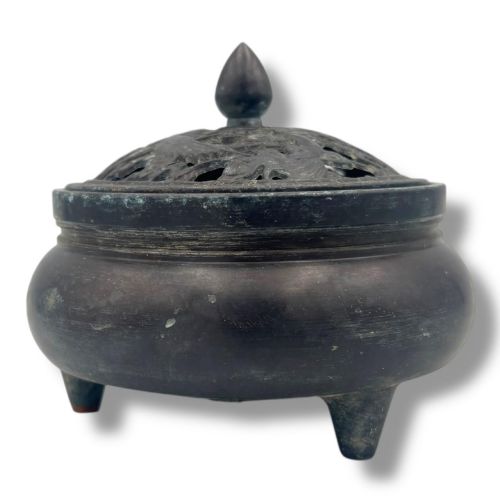
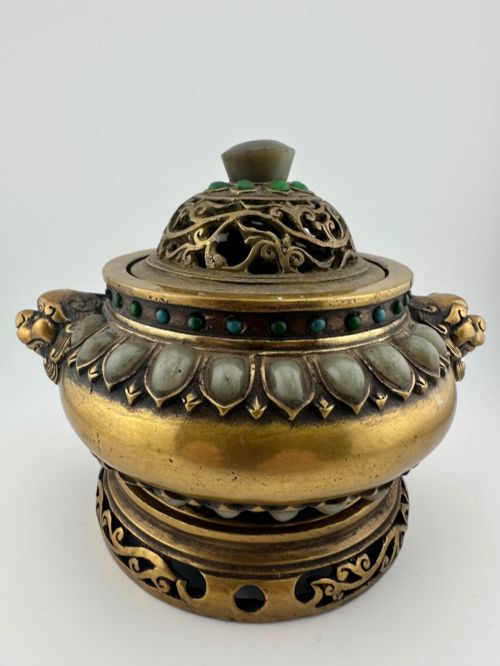
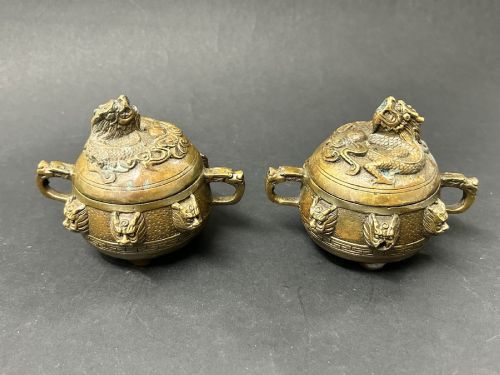
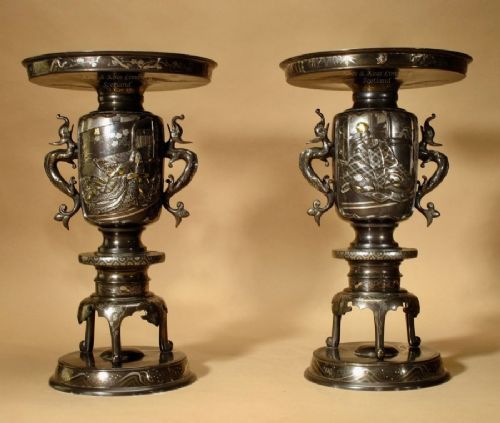
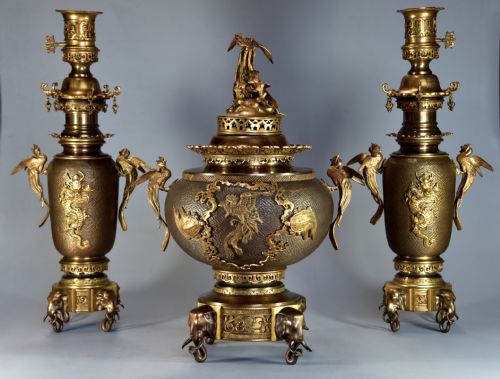
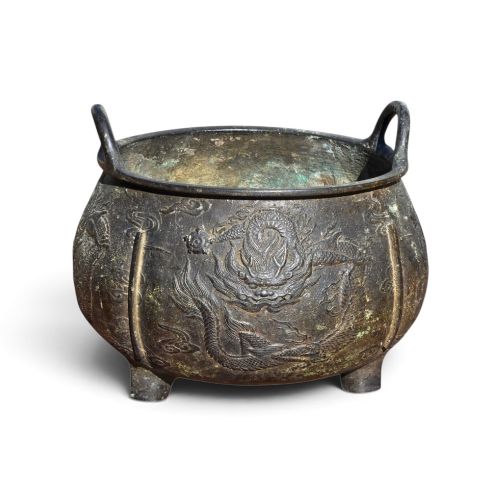
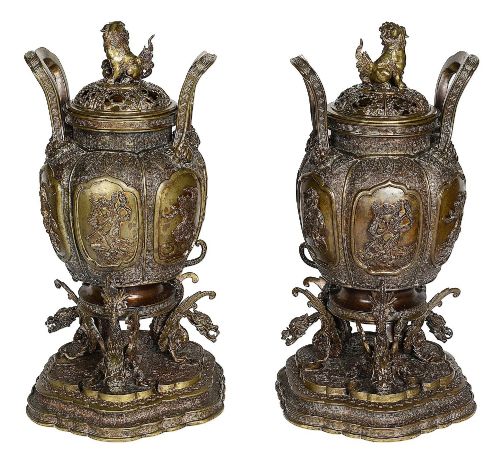
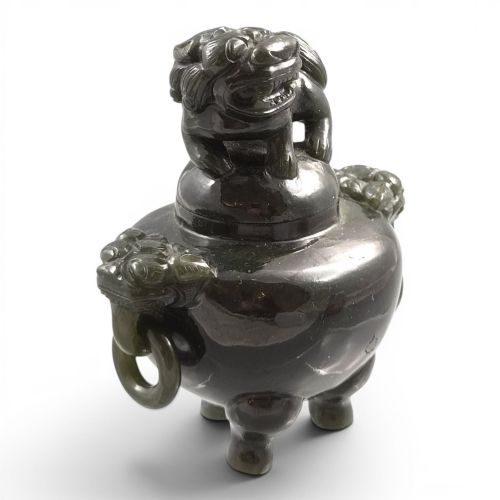
A dragon incense burner takes the form of a tripod vessel, lidded urn, or censer bowl designed to hold burning aromatics while displaying detailed creatures. These pieces emerge predominantly from the Qing Dynasty, the Ming Dynasty, and the Japanese Meiji period, reflecting centuries of metalwork and ceramic tradition. Buyers encounter heavy bronze tripods alongside jade bowls, porcelain koro, and brass censers.
The form often includes sculptural dragon lids, Foo Dog accents, or mask handles cast into the body of the vessel. Chinese Qing examples and Japanese Meiji pieces dominate the selection, ranging from massive monumental censers down to delicate tabletop items. Many pieces carry historic reign marks on the base, such as Xuande or Qianlong indicators.
How they were made
Makers utilised cast bronze, brass, and antimony to build the sturdy frames of these vessels, frequently applying gold inlay or patinated finishes. Artisans also carved dark green jade and hardstone into translucent tripod bowls with fitted stands.
Ceramic pieces rely on Hirado porcelain fired with reticulated panels and sculpted dragon motifs. Metal components involve detailed chasing, while bronze surfaces sometimes incorporate applied mask handles and fierce dragon relief work.
Listings feature materials spanning bronze, brass, jade, hardstone, gilt bronze, porcelain, cast bronze, and gold inlay across multiple centuries.
What varies in quality
The precision of the metal casting and the crispness of the dragon scales separate standard domestic vessels from superior examples. Weight and wall thickness indicate the solidity of the bronze, while finer jade items show superior translucency and polish.
Artisanal skill shows in the integration of the lid with the tripod base, ensuring the dragon or Foo Dog motif on the cover complements the proportions of the bowl below.
The Dragon Incense Burner Glossary
- Censer
- A vessel designed for burning incense. These often feature pierced covers to allow fragrant smoke to drift outward.
- Tripod
- A vessel supported by three legs. This configuration provides stability on wooden tables and altar surfaces.
- Koro
- A Japanese term for an incense burner. These typically feature three or more feet and a perforated lid.
- Reticulated
- Describes ceramic or metalwork featuring an openwork or pierced lattice pattern. This technique allows smoke and light to pass through the walls.
- Meiji Period
- An era in Japanese history spanning from 1868 to 1912. Metalwork and porcelain from this time display exceptional sculptural detail.
Dragon Incense Burner: Frequently Asked Questions
Are these bronze censers heavy?
Many examples possess substantial weight due to solid cast bronze construction. Larger specimens can weigh several kilograms and require sturdy furniture for safe display.
Smaller tripod bowls remain portable, though the metal thickness generally ensures a reassuring heft in the hand.
What is a Xuande mark?
A Xuande mark refers to an inscribed reign period from the Ming Dynasty. These marks often appear on later bronze censers as a tribute to historical craftsmanship.
Collectors look at the patination and casting style alongside the mark to determine the true age of the piece.
How do I clean a bronze censer?
Dust the surface gently with a soft, dry brush to preserve the historic patination and finish. Avoid liquid polishes or harsh chemical cleaners that strip away age.
Remove any residual ash from the interior with a small dry cloth once the vessel cools completely after use.