




Brown Metal Censer
These brown metal censer examples bring centuries of ritual craftsmanship into the home, prized for their heavy patinated surfaces and sculptural forms.
Brown Metal Censer
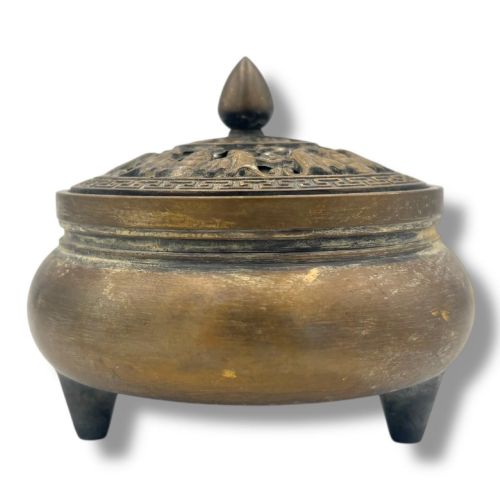
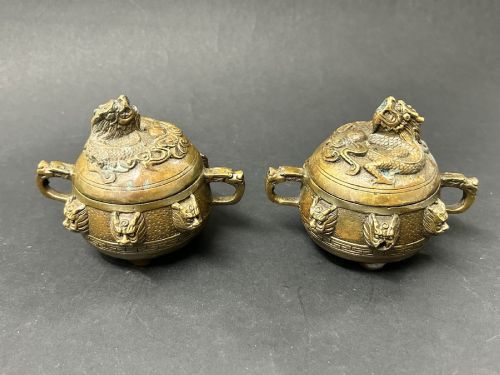
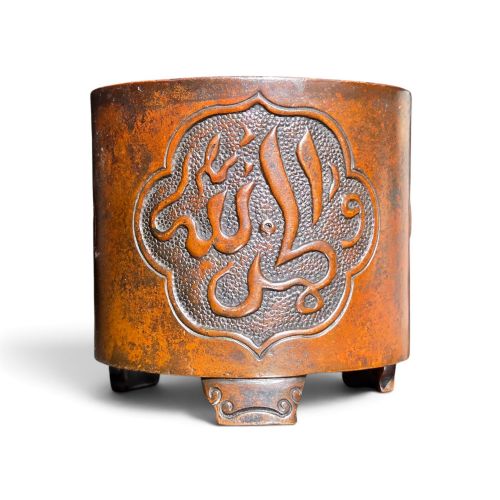
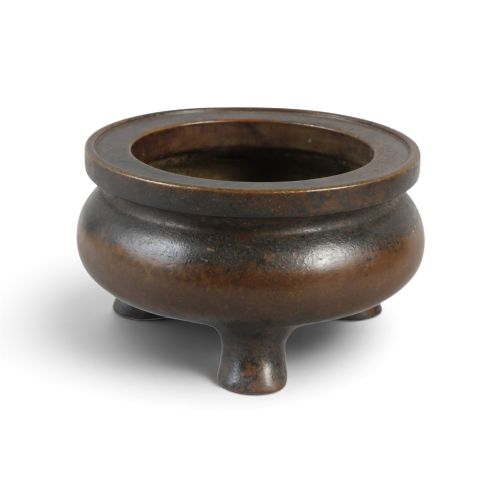
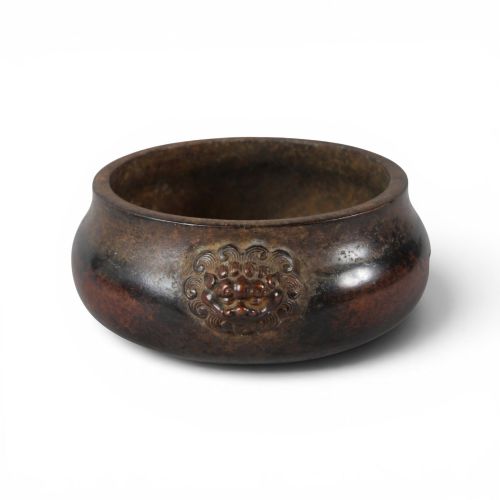
A brown metal censer sits firmly within a tradition of ritual vessels, scholar's studio pieces, and incense burners shaped from bronze and copper alloy. Buyers encounter tripod vessels with pierced lids, cylindrical forms, and dragon motifs alongside Japanese koro burners.
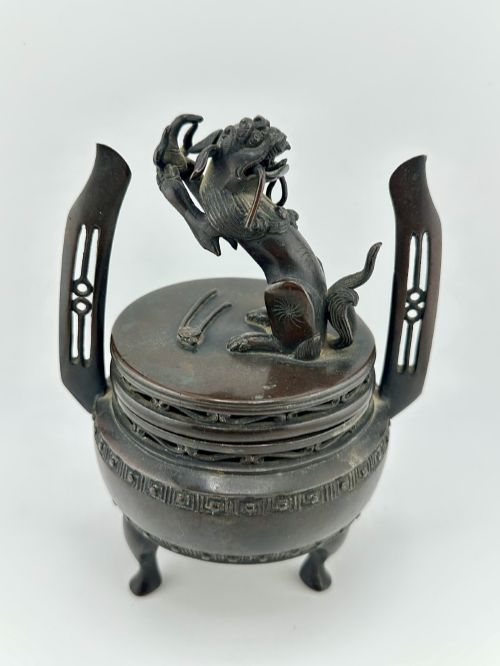
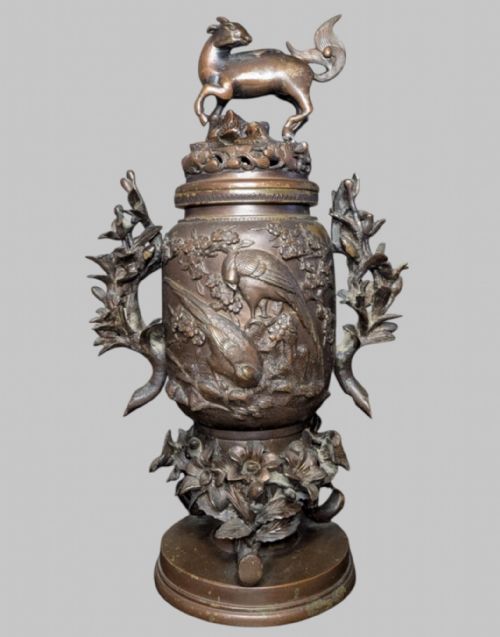
The selection ranges across centuries, drawing heavily from late Qing Dynasty production, seventeenth-century scholar's pieces, and Meiji period Japanese metalwork. Forms extend from tripod bowls with qilin finials to ritual vessels and sectional jardinieres.
Originating largely from Chinese and Japanese workshops, these vessels served utilitarian and sacrificial roles before entering Western collections as decorative items. The material is predominantly bronze, often finished with a dark, warm patina developed over generations of handling.
The Spectrum of Quality
Substance and casting weight distinguish heavier scholar's studio pieces from lighter decorative containers, with mass often signalling superior bronze density. Crispness in cast details, such as dragon motifs and pierced floral lids, separates standard items from exceptional work.
The integrity of the surface patina matters greatly, as undisturbed historical oxidation enhances the visual depth of the metal. Original matching covers and finials, such as qilin or goat figures, complete the composition and elevate the piece.
Several censers come topped with vigilant qilin finials or a lone goat keeping watch over the fragrant smoke.
The Brown Metal Censer Glossary
- Censer
- A vessel designed for burning incense, often featuring a ventilated cover to release fragrant smoke. These pieces range from simple tripod bowls to elaborate ritual objects.
- Tripod
- A vessel supported by three feet, commonly seen in ancient and later Asian metalwork. This configuration provides stability on scholar's desks and altars.
- Patina
- The surface sheen and colour alteration acquired by metal through age and handling. A rich patina adds visual depth to bronze and copper alloy surfaces.
- Koro
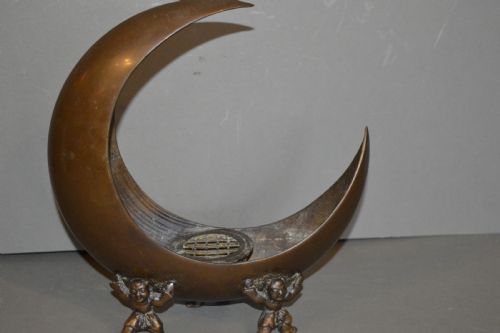
- A Japanese term for an incense burner, frequently cast in bronze and finished with sculptural finials. These burners often take unconventional shapes like crescent moons.
- Scholar's Censer
- A smaller, tactile bronze vessel made for the desk of a literate official or literati collector. These objects were valued for their weight and contemplative qualities.
Brown Metal Censer: Frequently Asked Questions
How do I clean a bronze censer?
Dust gently with a dry, soft brush to preserve the historical surface oxidation and patination.
Avoid chemical polishes and water, which can strip away centuries of accumulated tone and damage the metal.
What is a scholar's censer?
A scholar's censer is a tactile bronze vessel made for the desk of a traditional Chinese literate official.
These pieces were handled during quiet contemplation and valued for their substantial weight and dark, warm patina.
Are these censers made of solid bronze?
Most pieces in this category are cast from bronze or copper alloy, with many examples possessing significant weight.
Thick-walled casting was common in traditional workshops to ensure durability and a resonant quality.
How do I identify a Japanese koro?
A Japanese koro is typically identified as an incense burner originating from Meiji or Taisho period metalwork.
They frequently feature distinct animal finials, such as goats, and sculptural forms distinct from Chinese tripod vessels.