
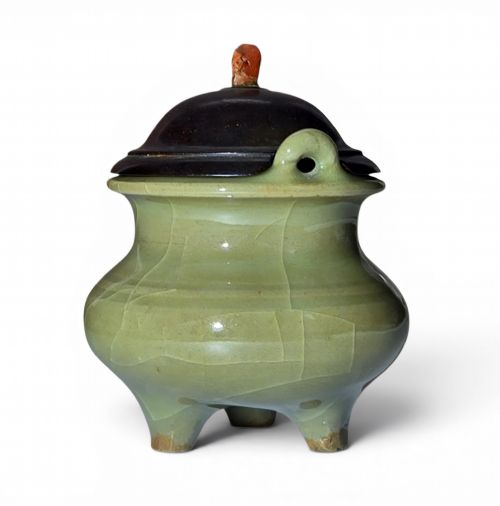


Late Qing Censer
These late qing censer pieces are bronze and brass incense burners that bring the quiet discipline of the scholar's studio into a modern interior.
Late Qing Censer
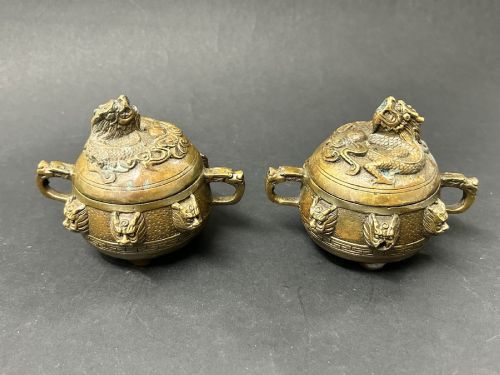
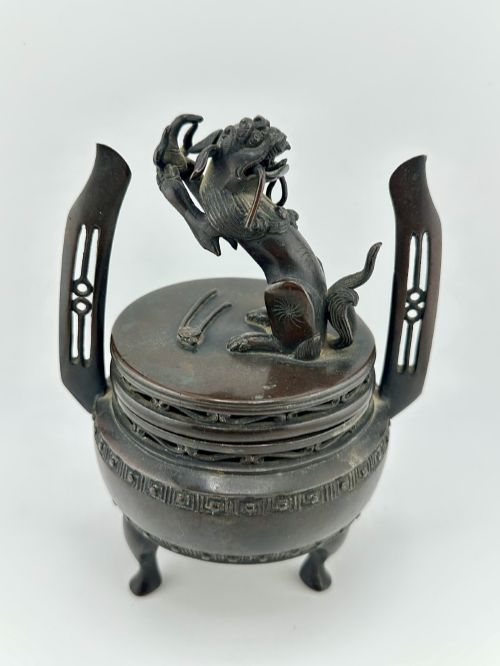
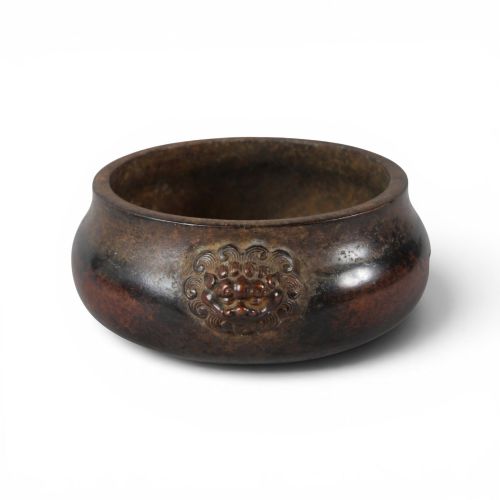
When you search for late qing censer, you meet cast metal vessels designed for burning incense, predominantly cast in bronze, brass, or copper alloy during the nineteenth century and around nineteen hundred. The forms range from heavy tripod bowls and hexagonal covered vessels to miniature scholar's desk pieces and antimony censers.
Many examples incorporate covers, handles, and animal finials such as qilin or dragons, while others appear as simple bowls or vases adapted for incense use. Alongside the metalwork, the selection includes related earthenware forms like the Famille Rose laughing boy incense holder.
The period attribution spans nineteenth-century production, with specific pieces dated around eighteen eighty, eighteen ninety, and nineteen hundred, reflecting the broader Qing Dynasty aesthetic.
How They Were Made
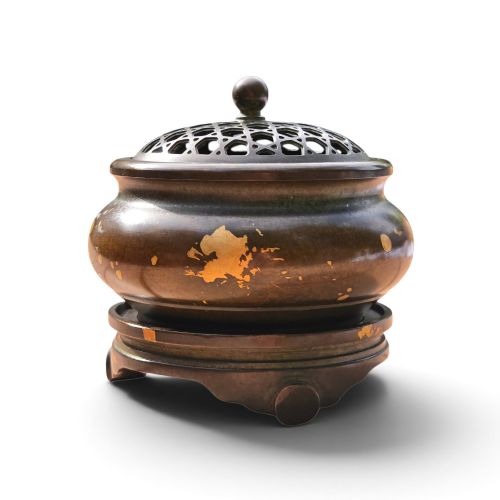
The primary material is cast bronze or brass, shaped through traditional metalworking techniques to create substantial tripod vessels and heavy scholar's desk pieces. Artisans also utilised gold gilding and copper alloy, sometimes achieving a specific patination on the surface.
Cover construction often involved intricate metal casting for dragon and qilin finials, while other pieces feature bespoke additions such as carved zitan wood and coral covers fitted to earlier ceramic bodies.
Listings feature nineteenth-century bronze and brass pieces, including works dated eighteen eighty, eighteen ninety, and nineteen hundred.
What Varies in Quality
The distinction between standard production and superior examples lies in the weight of the metal and the crispness of the casting. Heavyweight scholar's pieces and substantial tripod censers demonstrate a more controlled application of bronze and brass.
Surface treatment defines the upper tier, where a fine natural patina or deliberate gold splashing enhances the visual depth of the material. The integration of secondary elements, such as bespoke zitan wood and coral covers, separates utilitarian items from exceptional studio pieces.
The Late Qing Censer Glossary
- Censer
- An incense burner designed for ceremonial or domestic use. These vessels typically feature a bowl and cover.
- Tripod
- A vessel supported by three legs. This form is common in bronze and brass censers.
- Qilin
- A mythical hooved Chinese creature often depicted as a finial on censer covers. It symbolises good fortune.
- Zitan
- A dense, dark hardwood native to Asia. It is frequently utilised for bespoke censer stands and covers.
- Patina
- The surface sheen and colour acquired by metal over time. A fine patina indicates age and handling.
Late Qing Censer: Frequently Asked Questions
What is a late qing censer used for?
These vessels were created to burn aromatic incense in scholar's studios and domestic rooms during the late nineteenth and early twentieth centuries.
Today, they function as decorative objects that bring traditional metalwork and historical weight into interior spaces.
How do I identify a bronze censer?
Look for cast metal construction, typically featuring a bowl supported by three tripod legs and often accompanied by a fitted cover with a figural finial.
They range from heavy studio pieces weighing over three kilograms to miniature vessels designed for scholars' desks.
Are all censers made of bronze?
While bronze is the predominant material seen in these pieces, manufacturing methods also incorporate brass, copper alloy, and antimony.
Some examples integrate contrasting materials such as gold gilding, zitan wood, and coral within the covers and stands.
How should I display a heavy bronze censer?
Due to the substantial weight of these metal vessels, they require a sturdy surface such as a wooden desk, sideboard, or mantelpiece.
Allowing sufficient space around the tripod legs and handles highlights the cast details and surface patina.