
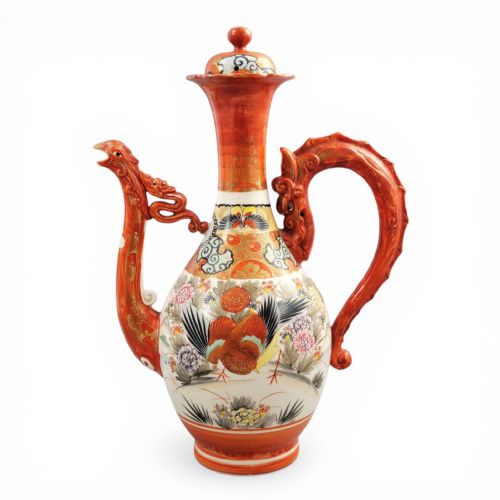


Dragon Handle Vase
A dragon handle vase brings mythical beasts and intricate casting straight into a room, offering a dramatic sculptural profile.
Dragon Handle Vase
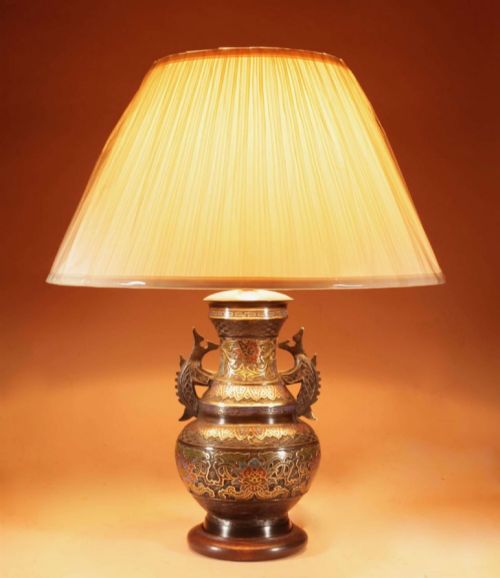
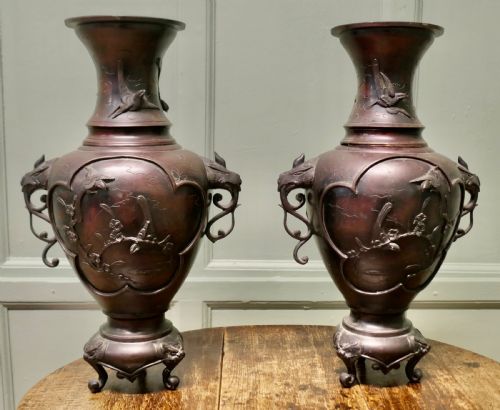
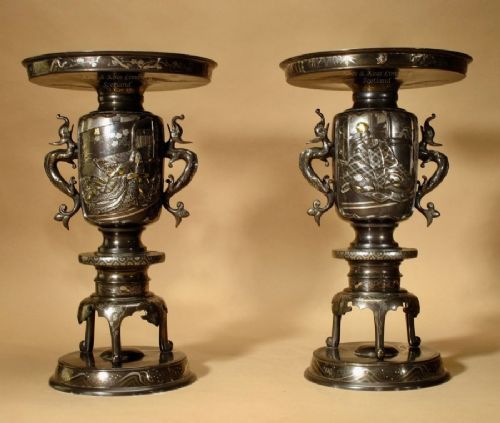
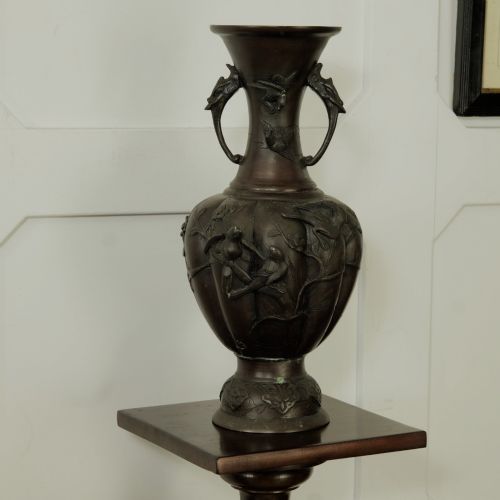
The selections span various forms including large altar vases, moon flasks, ewers, and table lamps converted from earlier vessels. Most examples belong to the nineteenth century, particularly the Victorian era and the Meiji period, alongside occasional seventeenth-century Chinese pieces and Regency items.
Japanese bronze and champlevé enamel pieces dominate the available selection, frequently matched as pairs. Porcelain iterations also appear, spanning Satsuma, Canton, and Mason's ironstone wares.
How they were made
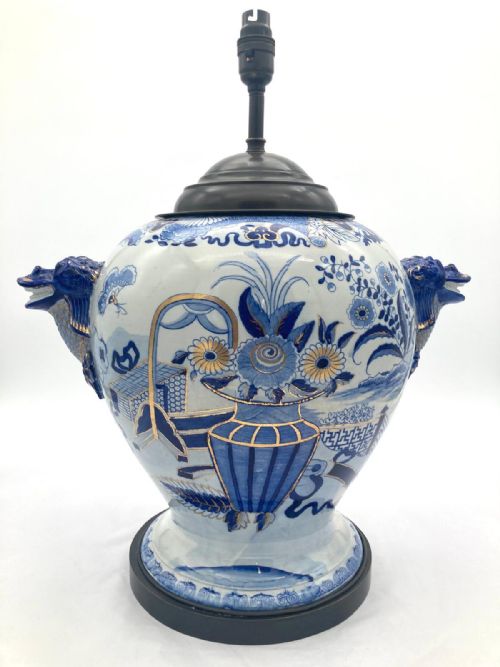
Ceramic examples combine thrown or moulded earthenware and porcelain bodies with hand-painted enamels, gilding, and raised slip decoration. Ironstone pieces like those by Hicks and Meigh or Mason's employ durable heavy paste bodies moulded into elaborate shapes.
Surface decoration frequently includes applied gold leaf, polychrome glazes, and detailed hand-painting depicting floral motifs, phoenixes, or traditional oriental landscapes.
Dragon Handle Vase Retail Price Guide 2026
Typical asking prices for dragon handle vase among the pieces listed under this phrase on Sellingantiques today, from the lower quarter to the upper quarter. They describe what is for sale here now, not the wider market.
Materials recorded across the inventory include bronze, champleve enamel, porcelain, earthenware, ironstone, silver, and wood.
What varies in quality
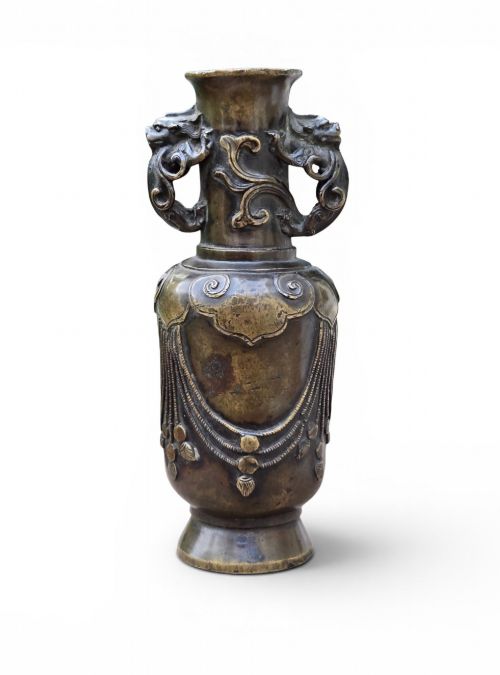
Quality rests upon the crispness of the casting and the depth of the chased detail on the bronze handles. Superior examples display sharply defined scales and securely integrated mounts rather than crude soldering.
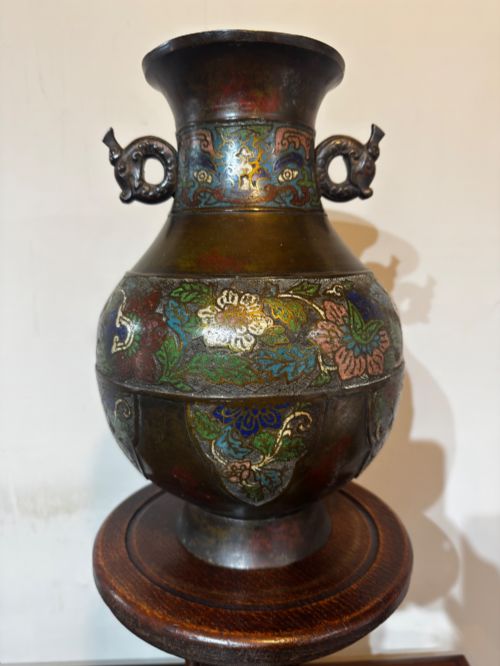
On enamel and porcelain pieces, the finesse of the hand-painting and the preservation of the gilding determine the tier of the piece. Well-preserved enamels with vibrant colour separation sit above rubbed or flatly painted surfaces.
Hicks and Meigh·Mason's
The Dragon Handle Vase Glossary
- Champlevé
- An enamelling technique where troughs are dug into a metal surface and filled with vitreous enamel before firing. This method creates bold coloured patterns alongside exposed bronze lines.
- Meiji Period
- The era in Japanese history running from 1868 to 1912, noted for opening trade with the West and producing exceptional decorative bronzes. Pieces from this time often bear artisan signatures or workshop marks.
- Moon Flask
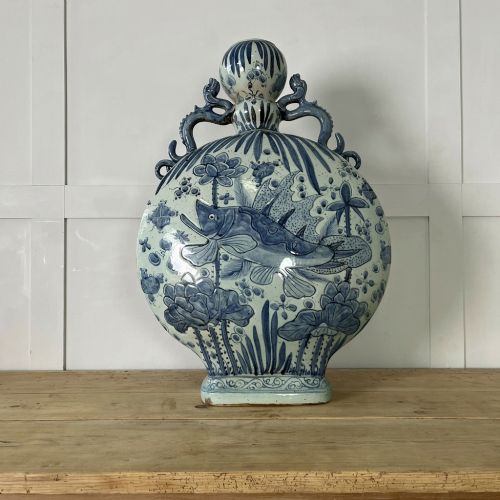
- A flattened circular ceramic vessel with a narrow neck and small side handles, derived from ancient pilgrim flasks. They balance on oval feet and offer wide surfaces for pictorial decoration.
- Ewer
- A large jug with a wide spout and a looped handle, originally designed for pouring water. Many survive as purely decorative display pieces.
- Archaistic
- A style that deliberately imitates ancient forms and motifs, such as those found on early Chinese ritual bronzes. These objects borrow vessel shapes from centuries past while utilising contemporary manufacturing techniques.
Dragon Handle Vase: Frequently Asked Questions
What materials are these vases made from?
The selection primarily consists of cast bronze, often enhanced with champlevé enamel, alongside porcelain and ironstone ceramics. Some examples incorporate wood stands, silver mounts, and gold leaf.
Secondary materials include brass, fabric for lamp fittings, and earthenware bodies found in Satsuma and Canton wares.
How do I identify a Meiji period piece?
Meiji period items date between 1868 and 1912, originating from Japan during a time of prolific metalwork and ceramic production. They frequently feature complex bronze casting, dark patination, and sometimes artist signatures.
Common forms from this era include heavy ritual vases, champleve vessels, and detailed ewers featuring dragon mounts.
Were these always lamps?
Many ceramic and bronze vessels were originally produced as decorative display urns, altar vases, or ewers. Conversion into table lamps often happened later to adapt them for domestic lighting.
Original lamp conversions sit alongside unaltered vessels intended purely for display or incense burning.
How do I distinguish Chinese from Japanese pieces?
Chinese pieces in the selection include Qing Dynasty and export items such as moon flasks and bronze ritual vessels. Japanese items often reflect the Meiji or Edo periods, encompassing Kutani, Satsuma, and specific bronze schools.
Stylistic motifs, potting techniques, and enamel palettes typically separate the two traditions.