

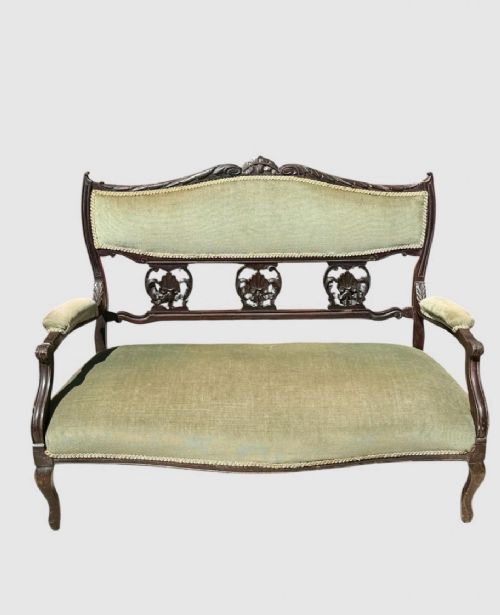


Double Upholstered Couch
A double upholstered couch brings warmth to a room, offering deep seating shaped in walnut, mahogany, and richly textured fabrics.
Double Upholstered Couch
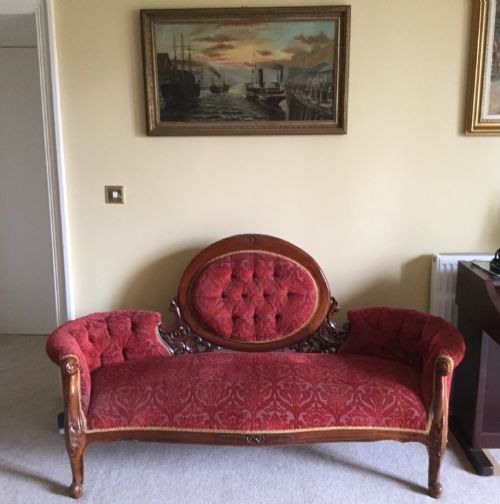
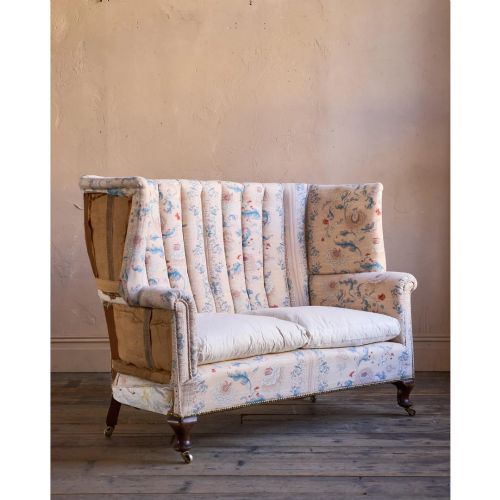
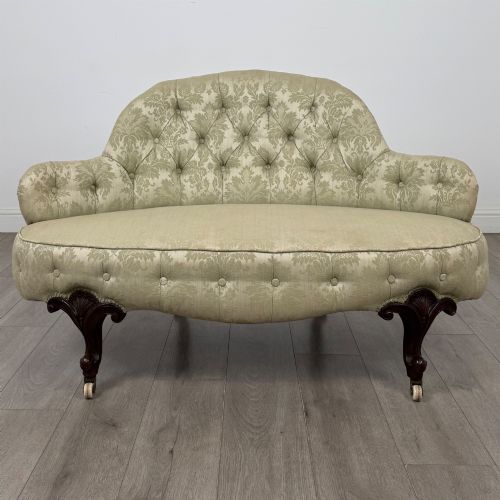
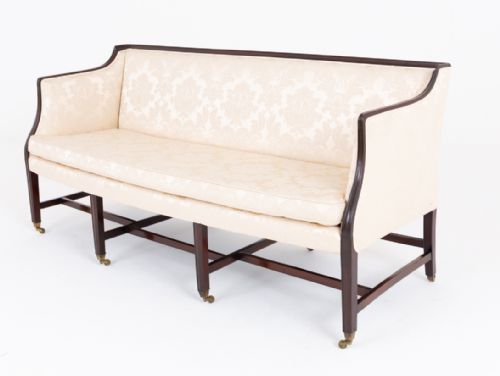
When you search for a double upholstered couch, you are looking at substantial seating forms that span the Georgian, Victorian, and Edwardian eras. These pieces appear as sofas, settees, double-ended couches, and twin-back day forms.
You will most frequently meet Victorian walnut and mahogany examples alongside Edwardian two-seater salon settees. The selection includes double spoon-back designs, wingback frames, and double scroll-ended sofa shapes.
How they were made
Craftsmen built the structural frames of these pieces using dense hardwoods such as mahogany, walnut, rosewood, and birch, often finishing them with carved, turned, or fluted detail. Upholstery work utilised sprung settee bases paired with traditional textiles including velvet, damask, brocade, and ticking fabric.
Showwood frames display the timber grain around the perimeter of the padded areas, combining exposed polished wood with fully upholstered seating compartments.
Some Victorian conversation seats let two people sit face-to-face while maintaining strict nineteenth-century posture.
What varies in quality
The standard of a double upholstered couch rests on the depth of the timber carving and the architectural balance of the frame. Superior examples combine robust mahogany or figured walnut with precise joinery and well-defined scroll or spoon-back contours.
Subtleties in the turned legs, the crispness of the applied inlay, and the integrity of the showwood structure distinguish standard production items from finer regional and retail pieces.
Howard & Sons
The Double Upholstered Couch Glossary
- Double-ended sofa
- A couch featuring symmetrical scroll or raised ends that allow a user to recline against either side. These forms date frequently to the William IV and Regency periods.
- Showwood
- Exposed polished timber frame surrounding the upholstered sections of a seat. This technique highlights the quality of the walnut or mahogany beneath.
- Double spoon-back
- A twin-lobed wooden backrest shaped to mimic the contour of a spoon. It is a common characteristic of Victorian seating.
- Barley twist
- A spiral carving resembling a twisted rope applied to the wooden legs or structural framing. It appears often on Victorian furniture.
- Wingback
- A high-backed chair or sofa style featuring protective side panels designed to shield the occupant from drafts. Upholstered versions offer fully padded sides.
Double Upholstered Couch: Frequently Asked Questions
Where did people place a double upholstered couch in the home?
These seating pieces found placement in principal reception rooms, parlours, and drawing rooms where family members and guests gathered. Double-ended variants also suited window bays and larger hallway settings.
Settees with supportive sprung bases provided comfortable seating for multiple occupants during formal afternoon visits and evening leisure hours.
How do I distinguish a Victorian settee from an Edwardian one?
Victorian pieces tend to utilise darker timbers like walnut and rosewood, often featuring heavy carved decoration, spoon backs, and deep buttoning. The silhouettes remain robust and densely proportioned.
Edwardian examples display lighter mahogany frames, occasional inlay work, and slightly more restrained outlines influenced by earlier Georgian and Queen Anne revivals.
What is a double-ended couch used for?
The balanced scroll ends allowed a person to recline comfortably with their head supported at either end of the furniture piece. This design functioned similarly to a chaise longue while seating multiple people.
They served as versatile lounging seats positioned away from walls in the centre of spacious rooms.
Are these couches suitable for daily modern seating?
The sturdy hardwood frames and traditional sprung bases provide a durable foundation for regular domestic use. Many surviving pieces retain strong structural integrity after more than a century.
Buyers often pair the historical timber frames with fresh upholstery fabrics to match modern interior colour schemes while preserving the antique form.