
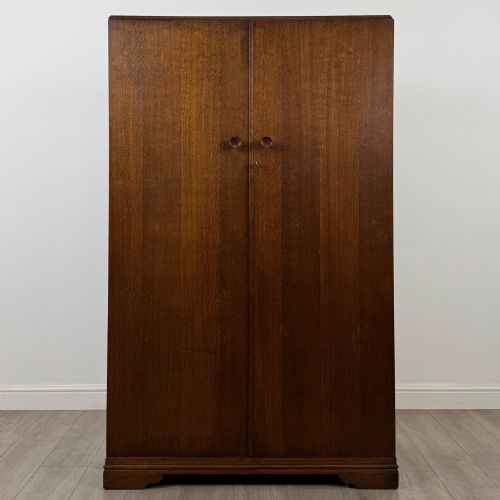
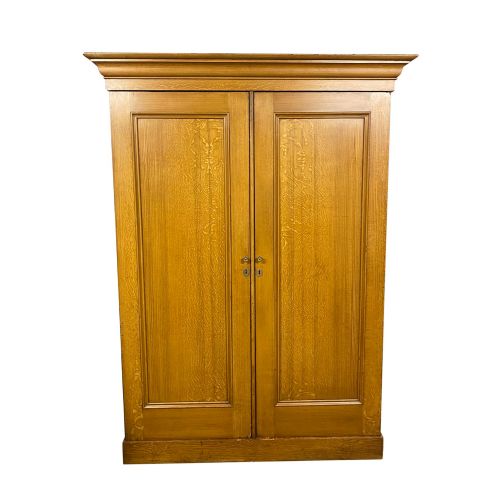
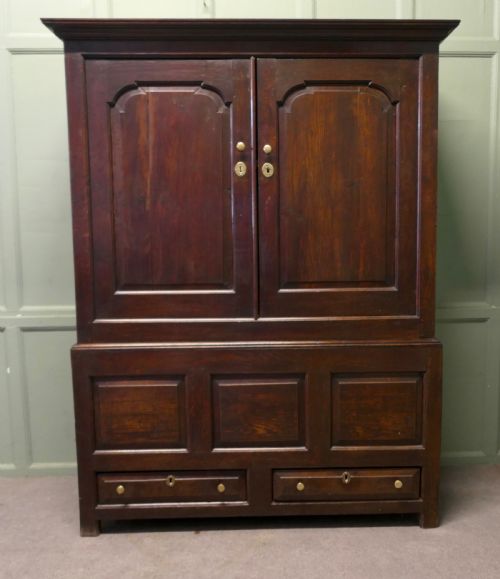
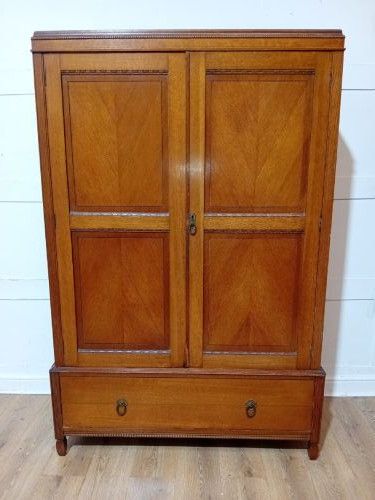




Double Door Oak Wardrobe
A double door oak wardrobe is a sturdy piece for hanging garments, offering generous storage and enduring timber grain that grounds a bedroom.
Double Door Oak Wardrobe
A double door oak wardrobe provides substantial hanging space and storage within a robust timber frame. When you search for this phrase, you encounter pieces spanning from the seventeenth century through to the 1930s.
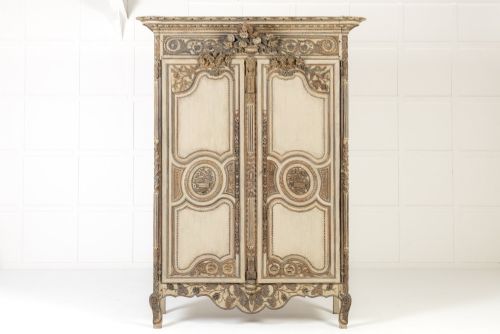
The selections on this page range from Georgian cupboards and French painted armoires to compactum designs from the Edwardian period and the 1920s. Oak is the primary material, occasionally paired with walnut, pine, or scumble paintwork.
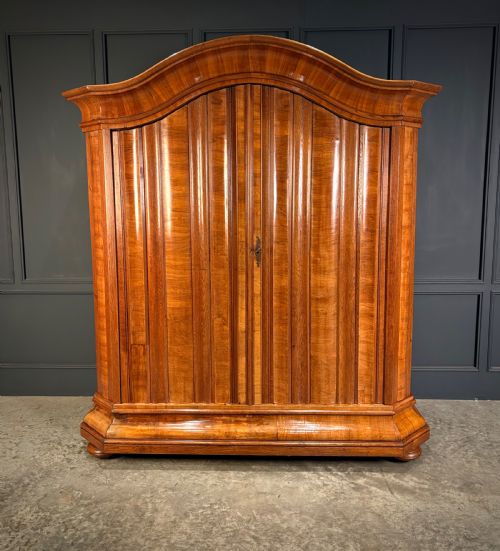
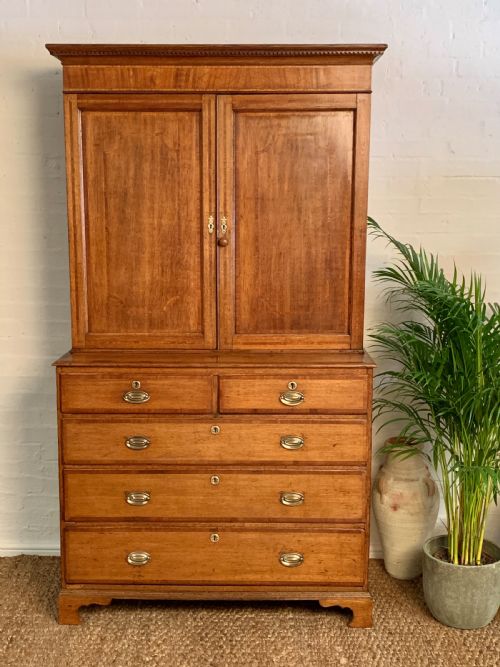
You will also find linen presses and housekeeping cupboards functioning as wardrobes within these listings. Continental pieces bring distinct regional styles like French Provincial and Continental Baroque to the standard double door format.
How they were made
These wardrobes are constructed primarily from solid oak, sometimes utilising pine for internal shelving or secondary framing. Joinery methods rely on traditional panel construction to accommodate the natural movement of timber over centuries.
Metal hardware such as brass and iron provides structural support through hinges, locks, and escutcheons. Surface treatments vary from natural waxed oak finishes to applied scumble paint and decorative carved detailing.
Some nineteenth century pieces wear scumble paint, a clever technique designed to make ordinary wood look stubbornly grand.
What varies in quality
Quality rests in the crispness of hand-carved ornamentation and the integrity of the original timber framing. Pieces with untouched surfaces and period brass or iron hardware command greater appreciation among collectors.
The refinement of internal configuration, such as compartmentalised compactum fittings or original hanging rails, distinguishes standard utility pieces from exceptional examples of cabinetmaking.
Harris Lebus·Heals
The Double Door Oak Wardrobe Glossary
- Compactum
- A wardrobe combining hanging space with internal drawers, shelves, and compartments. This multifunctional design maximises storage within a single footprint.
- Scumble Paint
- A decorative finishing technique applied to create simulated wood grain or textured patterns over a base coat. It gained popularity on nineteenth century utility furniture.
- Armoire
- A large upright cupboard or wardrobe, traditionally used for storing clothes. Continental versions frequently feature deep carved panels and imposing cornices.
- Cross-banded
- A border technique where thin strips of veneer are laid perpendicular to the grain of the primary panel. This creates a contrasting decorative frame around drawer fronts or doors.
Double Door Oak Wardrobe: Frequently Asked Questions
What is a compactum wardrobe?
A compactum wardrobe is a fitted piece that integrates hanging space with banks of internal drawers and shelves. It offers comprehensive clothing storage in one unified cabinet.
The layout typically separates hanging garments from folded items and accessories within the same double door footprint.
How do I date an oak wardrobe?
Dating relies on examining construction techniques, joinery marks, and the style of hardware used on the doors. Hand-cut joints and pegged frames generally point to earlier centuries.
Later pieces from the twentieth century often incorporate standardised machine-cut components and different internal hanging mechanisms.
Are French armoires the same as wardrobes?
French armoires serve the same primary function as wardrobes by storing clothing behind large double doors. They frequently display distinct regional carving styles and proportions.
Many examples originate from provincial workshops and feature painted finishes or substantial panelled doors.
How do I care for antique oak?
Antique oak benefits from periodic waxing with a traditional beeswax to nourish the dry timber. Avoid placing wardrobes near direct heat sources to prevent the wood from splitting.
Maintaining a stable room temperature protects both the solid oak panels and the internal secondary timbers.