
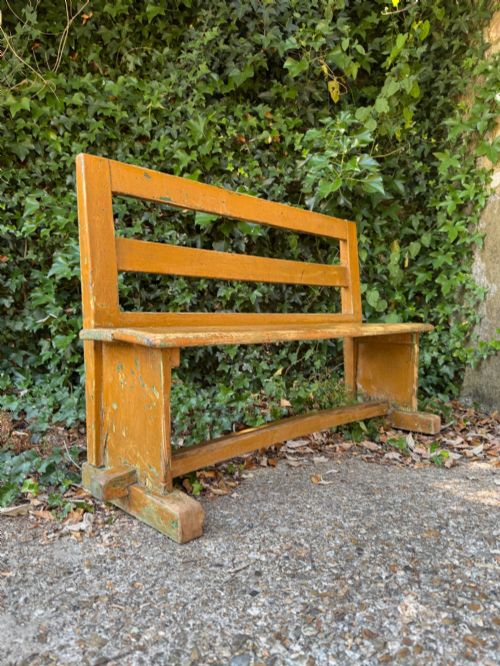
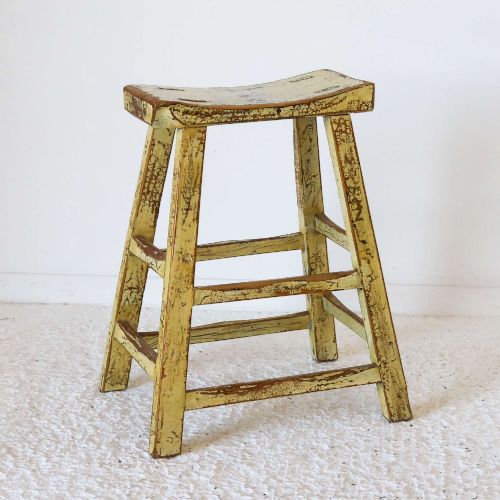
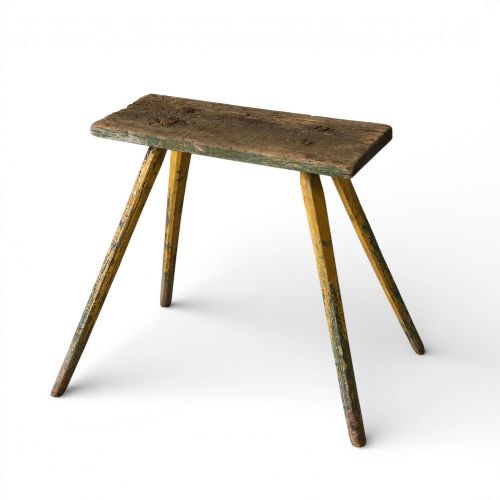


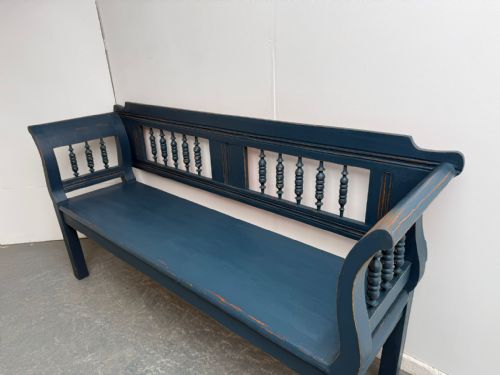
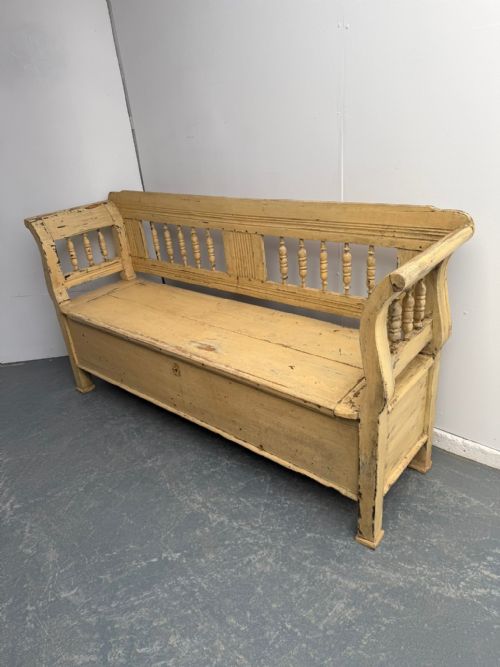


Distressed Wooden Bench
A distressed wooden bench brings years of honest utility and weathered character into a room.
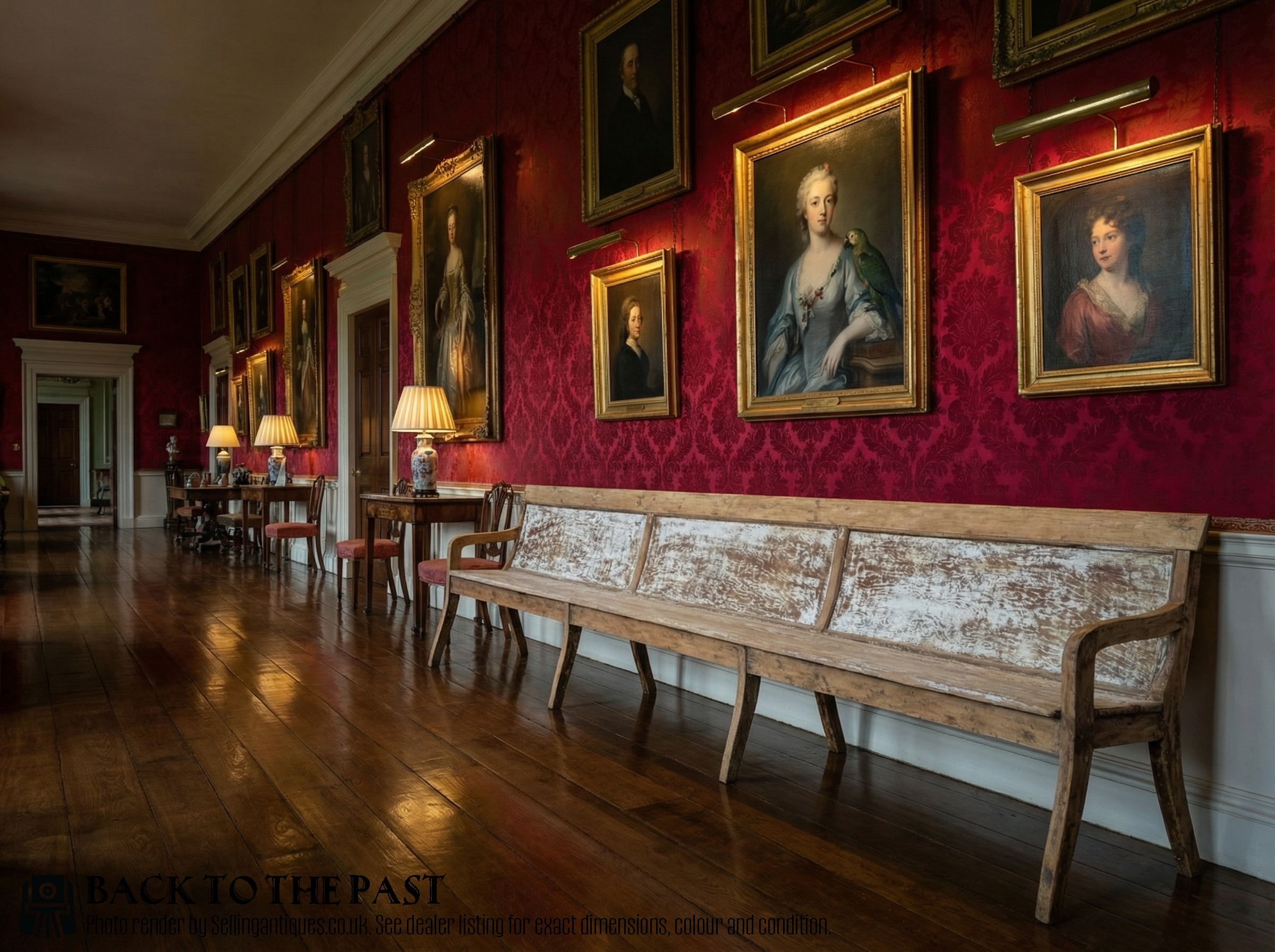
Distressed Wooden Bench
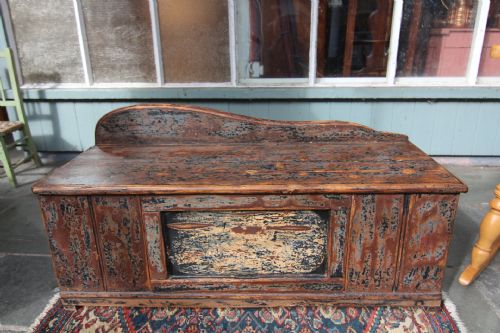
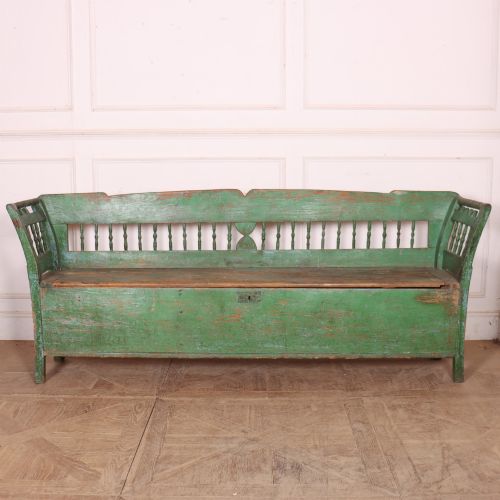
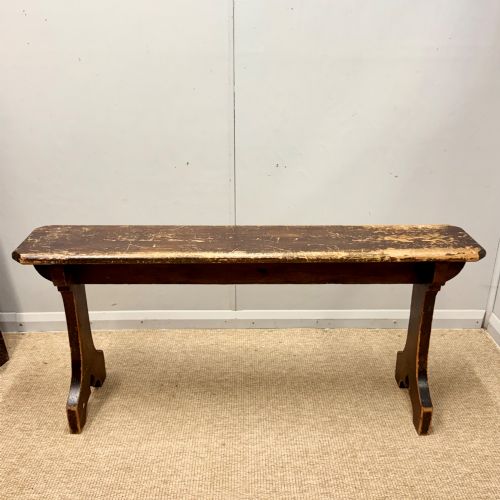
When you search for a distressed wooden bench, you encounter seating shaped by decades of everyday use, often originating from farmhouse, country and provincial settings. These pieces include straightforward pine benches, high back settles, box settles with storage, and occasional upholstered sofas from the eighteenth, nineteenth and early twentieth centuries.
The version you are most likely to meet on this page is a nineteenth-century or Victorian pine bench, frequently bearing layers of original painted finish in shades of grey, blue, cream or green. Regional variations from Sweden, France, Austria and England appear regularly, offering distinct proportions and stylistic details from their respective countries of origin.
How they were made
Makers constructed these benches primarily from solid timber such as pine, oak, elm and general hardwood, utilising durable joints suited to heavy domestic or agricultural labour. Many examples display scratch-built or vernacular construction methods where local materials dictated the design.
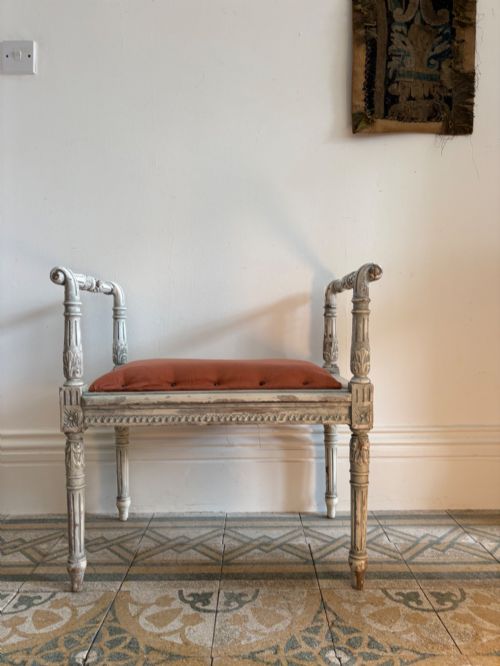
Surfaces often received protective coats of paint or lacquer, which wore down naturally over generations to create the aged patination and distressed texture defining the style. Some finer regional seating incorporates carved decorative elements, fabric upholstery or silk inserts alongside the painted wooden framework.
Listings span the eighteenth century through to the early twentieth century, incorporating pine, oak, elm, fabric and iron materials.
What varies in quality
Quality rests upon the integrity of the original construction and the preservation of authentic surface finishes, such as early layers of paint applied decades ago. Pieces retaining their structural stability alongside uncompromised patination stand apart from those with excessive modern alterations.
Proportion and scale also dictate distinction, as longer dining benches and substantial box settles from specific regional traditions command greater presence than smaller utility stools. The harmony between the raw timber substrate and its remaining surface pigment determines the visual strength of the piece.
The Distressed Wooden Bench Glossary
- Box settle
- A high-backed wooden bench featuring a compartment beneath the seat for storage, designed to keep occupants away from drafts.
- Gustavian
- The Swedish interpretation of neoclassical design, characterised by restrained carving, light painted finishes and clean lines.
- Patina
- The surface sheen and texture developed through age, handling and wear, revealing the history of the material.
- Trestle
- A structural support consisting of a horizontal beam fixed to two splayed legs, commonly found beneath long tables and benches.
- Verdigris
- A green or bluish crust formed on copper or brass surfaces through atmospheric oxidation and age.
Distressed Wooden Bench: Frequently Asked Questions
How do I use a distressed wooden bench at home?
These benches fit naturally alongside dining tables, in hallways, or positioned against living room walls for extra seating and display space.
Box settles offer hidden storage beneath the seat, making them practical for stowing away boots, blankets or household items in busy areas.
How can I tell a nineteenth-century bench from an eighteenth-century one?
Dating relies on examining construction techniques, tool marks and the composition of the timber and paint layers over time.
Earlier pieces often display hand-hewn joinery and older fastener types, while Victorian examples generally reflect standardised workshop production methods of the nineteenth century.
Are painted finishes on these benches original?
Many pieces retain their original or early painted surfaces, which have worn down naturally through decades of daily use and cleaning.
Close inspection reveals how the paint layers have aged into the underlying timber, creating the characteristic distressed texture valued by collectors.