
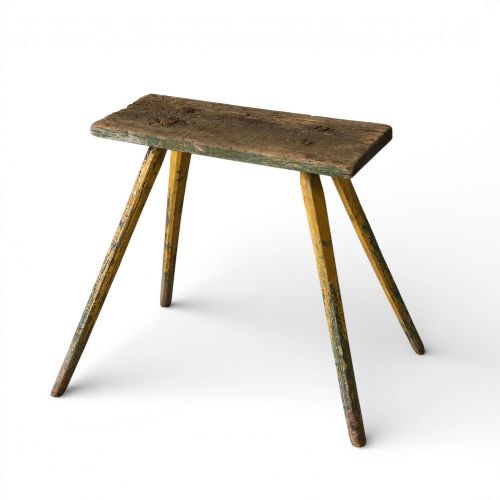

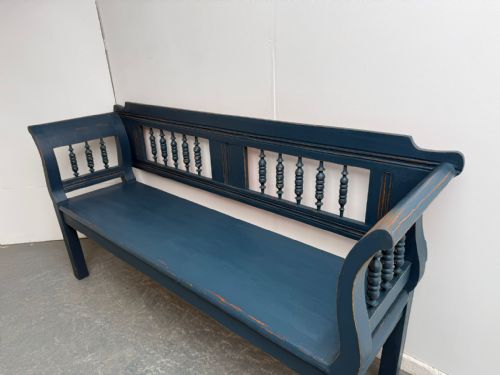
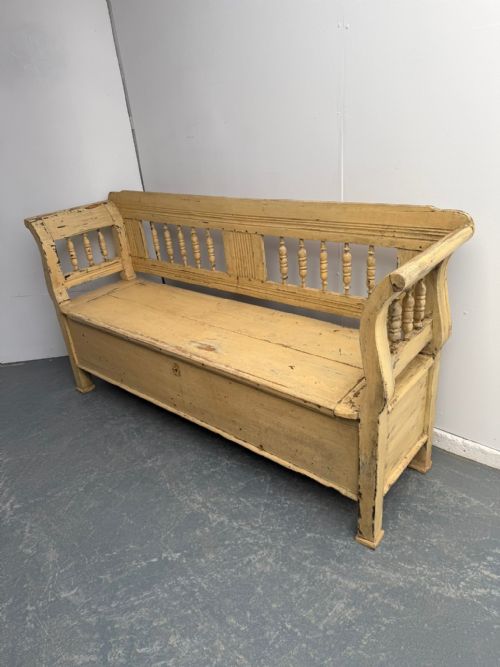


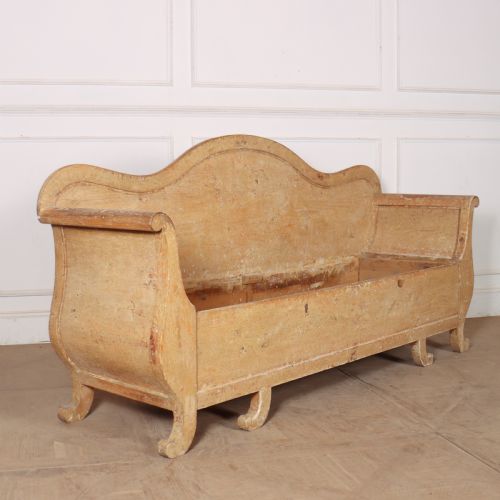


Distressed Pine Bench
A distressed pine bench brings warmth and honest utility to a room, offering practical seating paired with centuries of working history.
Distressed Pine Bench
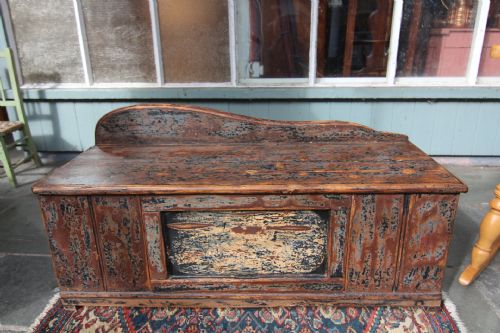
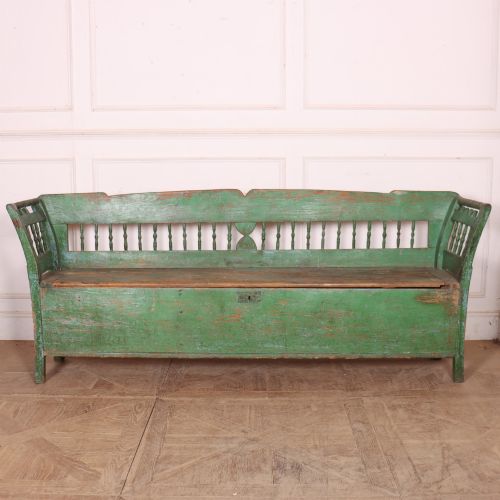
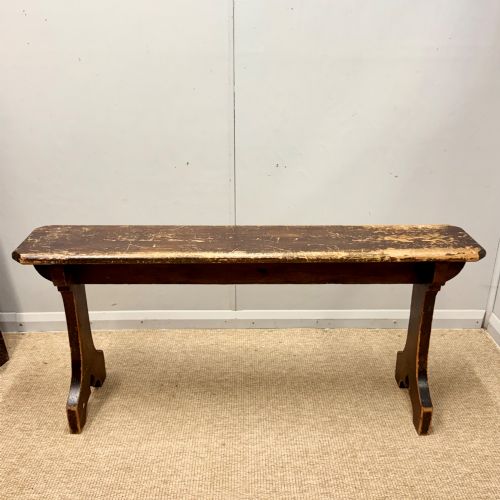
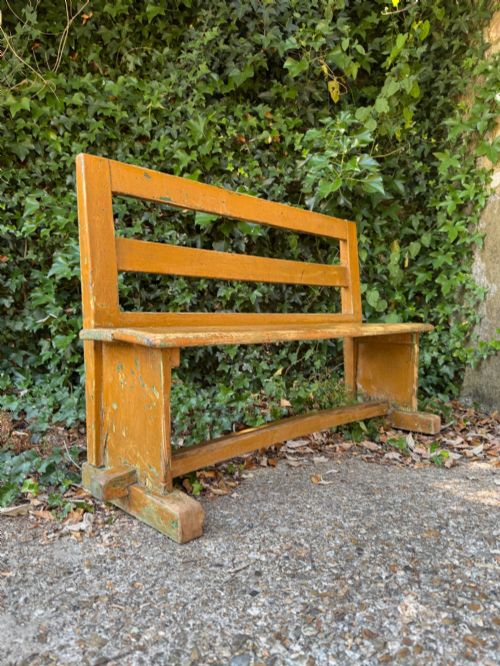
When you search for a distressed pine bench, you encounter robust seating created for everyday domestic or tavern use across British, Scandinavian, and European traditions. These pieces range from simple plank forms to high back settles with integrated storage boxes beneath the seat.
The version most likely to meet you on this page is a nineteenth century example, often bearing original painted finishes in muted tones like grey, blue, cream, or green. Forms vary from long dining benches to compact box settles, reflecting regional vernacular styles from French, Swedish, and Austrian makers.
How they were made
Makers utilised softwood timber, predominantly pine, assembled with traditional joinery such as pegged mortise and tenon frames. Iron brackets or braces occasionally reinforced structural joints on heavily utilised tavern benches and box settles.
Surfaces received layers of lead or oil based paint over decades of use, creating the characteristic weathered patina. Some regional pieces, particularly from Austrian and Scandinavian traditions, incorporated polychrome decoration or hand mixed pigments that aged into distinct craquelure.
Materials recorded across the inventory include softwood pine, structural iron, and occasional fabric elements alongside painted and unpainted timber surfaces.
What varies in quality
The distinction between ordinary utility and superior quality rests in the integrity of the original construction and the preservation of authentic surface finishes. Pieces retaining untouched historical paint layers command greater interest than those stripped down to bare timber or aggressively repainted in modern times.
Proportion and structural survival dictate the standing of a piece within its category. A bench retaining its original boards, unaltered height, and sound joinery demonstrates the durable vernacular craftsmanship valued by collectors of country furniture.
The Distressed Pine Bench Glossary
- Settle
- A wooden bench with a high back, solid arms, and frequently a box compartment beneath the seat for storage. This form sheltered occupants from draughts in traditional farmhouses and taverns.
- Box seat
- A bench design incorporating a hinged lid on the seat base to provide concealed storage for blankets or household items. It represents a practical dual purpose furniture type common in nineteenth century rural homes.
- Polychrome
- Decorated or painted in multiple colours. This technique appears on folk art pieces and regional furniture to add decorative character.
- Vernacular
- Architecture or furniture built by local craftsmen to meet immediate practical needs using regional materials. These pieces lack academic architectural styling but possess strong local character.
- Patina
- The surface sheen and colour alteration developed through age, wear, and cleaning. It serves as a visual indicator of a piece's history and untouched condition.
Distressed Pine Bench: Frequently Asked Questions
How do I clean a painted pine bench?
Dust the surface regularly with a dry, soft cloth to prevent grime accumulation.
Avoid harsh chemical cleaners or excessive moisture that might lift fragile historic paint layers.
Are these benches suitable for daily dining?
Many long pine benches were built specifically for seating around farmhouse tables and function well for everyday use.
Check the seat height relative to your table to ensure comfortable legroom and posture.
What is a box settle used for?
A box settle provided both seating near the hearth and enclosed storage for textiles or dry goods.
The high back also served to block cold draughts in uninsulated rooms.
How can I tell if the paint is original?
Original paint exhibits natural wear patterns, layered oxidation, and integration into the wood grain beneath.
Examine corners and recesses where modern sanding or repainting is difficult to conceal.