


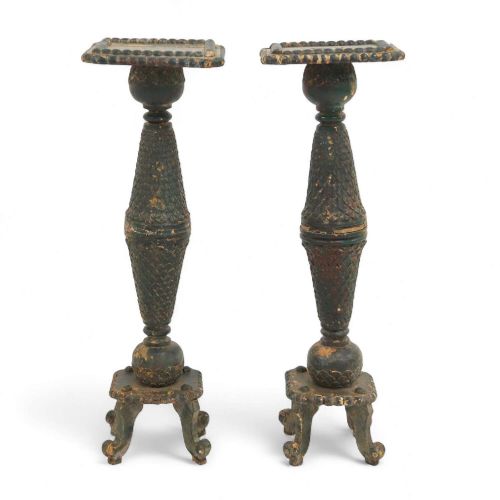
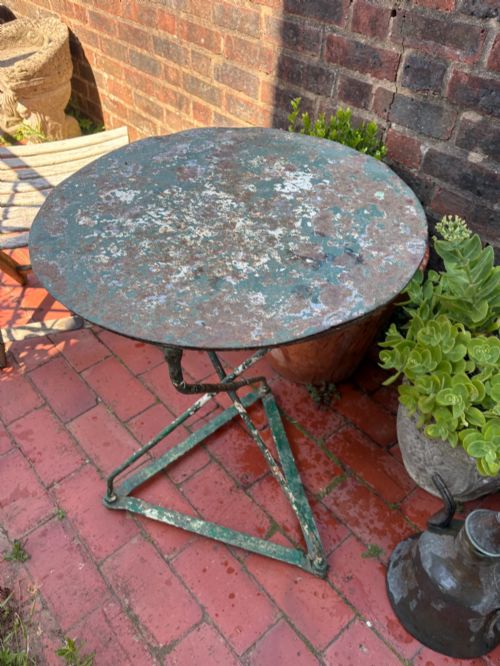


Distressed Painted Plant Stands
These distressed painted plant stands bring genuine patina and botanical height to a room, offering practical display surfaces with weathered character.
Distressed Painted Plant Stands
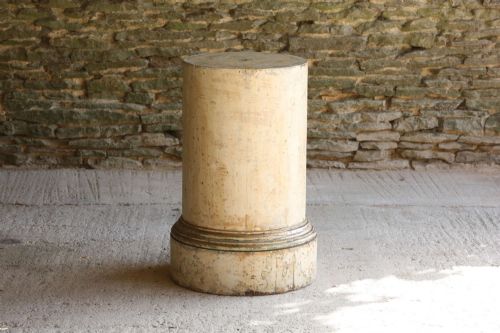
Distressed painted plant stands encompass pedestals, torcheres, and sculpture stands designed to elevate greenery or decorative objects within a space. Pieces matching this phrase date predominantly from the nineteenth and early twentieth centuries, reflecting diverse aesthetic movements from French country to Edwardian design.
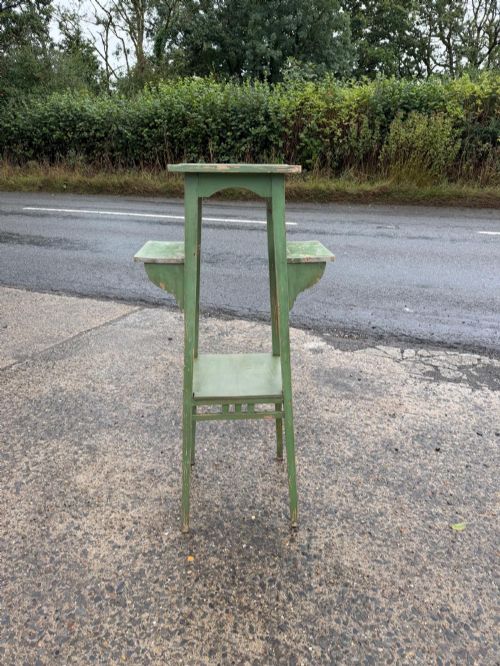
The forms span slender cylindrical sculpture supports, decorative torchiere pedestals, and occasional side tables or etageres. Surviving examples often display aged green or neutral painted finishes applied over wood, pine, cast iron, or carved timber structures.
Buyers encounter items originating from English and French traditions, frequently featuring original paint surfaces that highlight decades of handling and use. Marble tops and carved wood details occasionally appear alongside rustic pine and ash constructions.
Materials and construction methods
Carpenters and makers utilised solid woods such as pine, ash, and general timber for the primary structures, frequently shaping them into turned columns or cylindrical stands. Carved wood and cast iron elements provided stability and ornamental weight to pedestal bases and garden tables.
Surfaces received layers of decorative paint, visible today in original green and other historic pigments that have weathered naturally over time. Marble inserts were integrated into table tops to provide durable, water-resistant surfaces for botanical displays.
Distressed Painted Plant Stands Retail Price Guide 2026
Typical asking prices for distressed painted plant stands among the pieces listed under this phrase on Sellingantiques today, from the lower quarter to the upper quarter. They describe what is for sale here now, not the wider market.
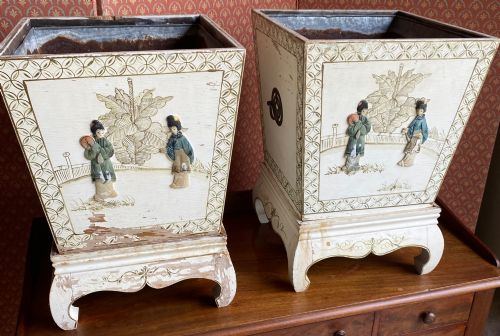
The forms span French etageres, Japanese style planters, cylindrical sculpture stands, and rustic garden tables.
Distinctions in quality and finish
Quality rests in the integrity of the original paint surface and the balance of the proportions, distinguishing deliberate weathering from structural compromise. Superior examples maintain authentic age-related wear without masking the underlying joinery and carving quality.
The refinement of the woodwork, from simple rustic pine step ladders and garden tables to elaborately carved torcheres and marble-topped lamp tables, dictates the character of each piece. Intricate turning and harmonious proportions elevate functional plant supports into decorative focal points.
The Distressed Painted Plant Stands Glossary
- Torchiere
- A tall standing pedestal or lamp holder designed to elevate light sources or botanical displays. These pieces typically feature slender shafts supported by weighted or carved bases.
- Etagere
- A set of open shelves for displaying small objects, plants, or decorative items. French examples from the turn of the twentieth century frequently utilise tiered platforms.
- Gueridon
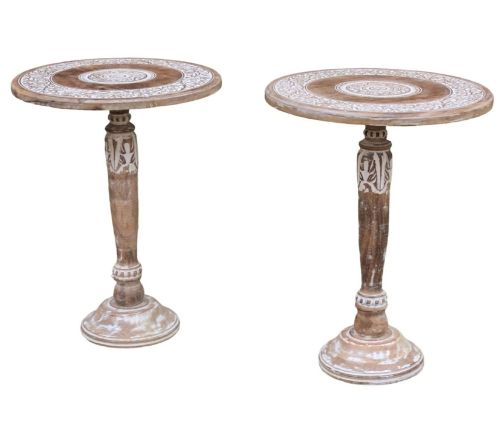
- A small round table supported by a central pillar or multiple legs, originating in seventeenth-century France. Nineteenth-century interpretations often feature painted metal or wooden tops.
- Strapp work
- A decorative surface pattern or strapwork design applied to garden tables and furniture. This technique adds textural interest to the wooden framework.
- Plinth
- A heavy rectangular or cylindrical base supporting a column, statue, or plant stand. It provides structural stability and visual grounding for elevated objects.
Distressed Painted Plant Stands: Frequently Asked Questions
What periods do these plant stands date from?
The available pieces predominantly date from the nineteenth century through the early decades of the twentieth century. Examples span Victorian, Edwardian, and turn-of-the-century manufacturing traditions.
Craftsmen from this era utilised traditional timber construction methods, applying historic paint finishes that have aged naturally over generations of domestic or garden use.
How were antique torcheres originally used?
Torcheres originally served to elevate lighting fixtures such as oil lamps or candles before the widespread adoption of wired electricity. Their tall, slender proportions positioned light sources effectively around a room.
Over time, these versatile pedestals naturally transitioned into display stands for large houseplants, floral arrangements, and decorative sculptures.
Are marble tops common on these stands?
Marble tops appear on several specific French table and lamp stand variations from the nineteenth century. This material offered a durable, water-resistant surface suitable for holding damp plant pots and vases.
Such surfaces are typically fitted directly into a wooden frame, providing a contrasting texture to the surrounding painted timber.
How should I care for original paint finishes?
Original painted surfaces require gentle treatment using a dry microfiber cloth to remove dust without disturbing the historic pigment. Avoid abrasive cleaning products, chemical solvents, or excessive moisture that might lift aged layers.
Keeping the stands away from direct heat sources and strong sunlight helps preserve the stability of both the underlying wood and the surface patina.