
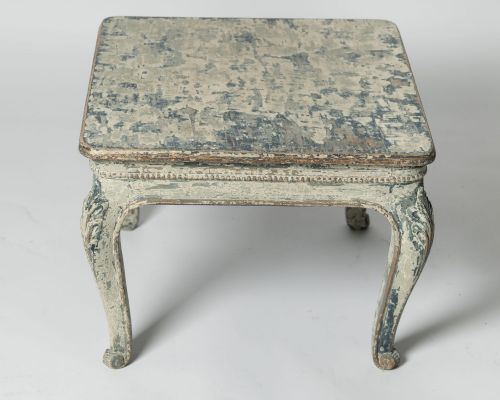
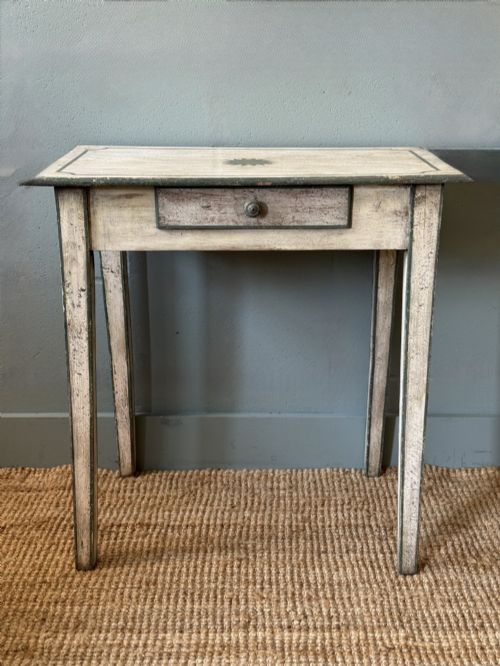
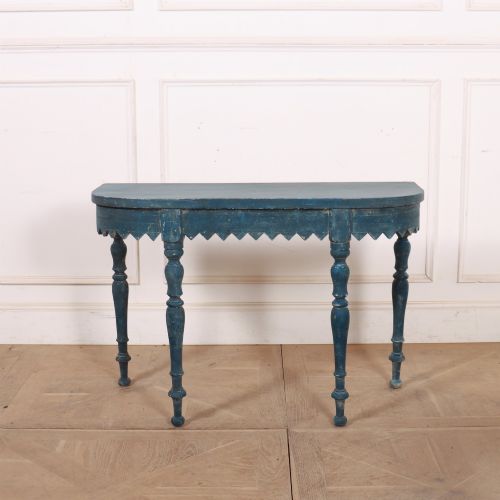


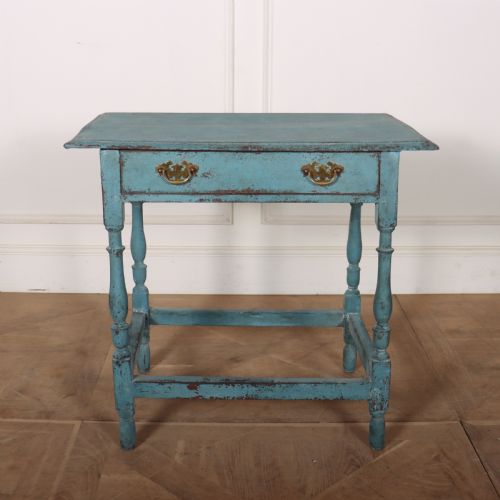

Distressed Painted End Table
These distressed painted end tables bring surface character and practical utility to a room through weathered paint finishes and sturdy timber frames.
Distressed Painted End Table
A distressed painted end table provides a compact surface for lamps and daily items while adding regional style to a room. Buyers searching this phrase encounter forms ranging from English oak and pine lamp tables to French fruitwood and Swedish occasional pieces.
The versions most commonly met on this page include 18th century English lamp tables and 19th century Scandinavian pine side tables. These pieces often display aged painted surfaces that reveal layers of history beneath.
Makers and makers' marks are absent from the titles, pointing instead to vernacular workshop traditions across England, France, and Sweden. The object types vary from simple side and lamp tables to console tables and window seats.
Assessing quality in painted tables
Quality rests in the integrity of the timber frame and the natural evolution of the painted surface. A superior piece retains its structural stability alongside an authentic patina earned through age.
The refinement of the proportions and the execution of regional styles distinguish finer examples from standard utility pieces. Subtle details in the turning of legs or the shaping of aprons elevate a table's presence.
Several tables have lived through multiple centuries of redecoration, wearing their accumulated layers of paint like badges of honour.
The Distressed Painted End Table Glossary
- Lamp table
- A small occasional table designed specifically to hold a lighting fixture beside a seating area. These compact pieces form a large portion of the current selection.
- Pine
- A softwood commonly utilised in Scandinavian and English vernacular furniture. It takes paint readily and develops a distinctive character as the surface ages.
- Fruitwood
- A dense timber favoured in French regional furniture making. It offers a fine grain that supports both polished and painted finishes.
- Gustavian
- The Swedish interpretation of neoclassical design characterised by restrained ornamentation and pale painted finishes. This style brings a bright, orderly aesthetic to rustic forms.
- Regence
- A transitional French style bridging the Louis XIV and Louis XV periods. It introduces lighter, more curved lines to woodwork and seating.
Distressed Painted End Table: Frequently Asked Questions
Where should I place a painted end table?
These compact tables fit easily beside a sofa or armchair to hold a reading lamp or cup. They also function well in hallways or corners where surface space is needed without blocking movement.
Their varied heights and widths allow them to integrate into both traditional rooms and contemporary spaces as accent pieces.
How do I care for an aged painted surface?
Dust the surface regularly with a soft, dry cloth to prevent dirt accumulation. Avoid harsh chemical cleaners that can strip or soften the historic paint layers.
Keep the timber away from direct heat sources and strong sunlight to prevent the wood from drying out and the paint from further flaking.
Are these tables sturdy enough for daily use?
Most pieces are built from solid woods like oak, pine, and fruitwood, designed for practical household tasks. Their sturdy frames support everyday items such as lamps and books securely.
Checking the joints and overall balance ensures the table remains stable on uneven floorboards.
How can I tell Swedish and French styles apart?
Swedish pieces often reflect Gustavian restraint with pale grey or white paint and simple linear forms. French examples tend to display more curved contours and occasional carved details associated with provincial or regence styles.
Both traditions utilise regional timbers beneath their painted finishes, though French makers frequently employed fruitwood.