

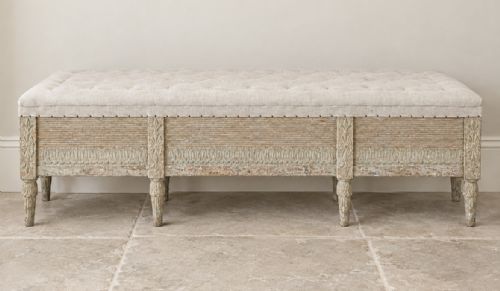
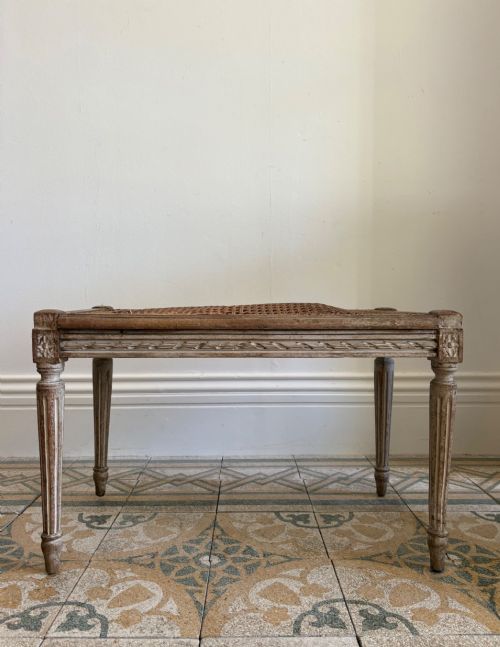
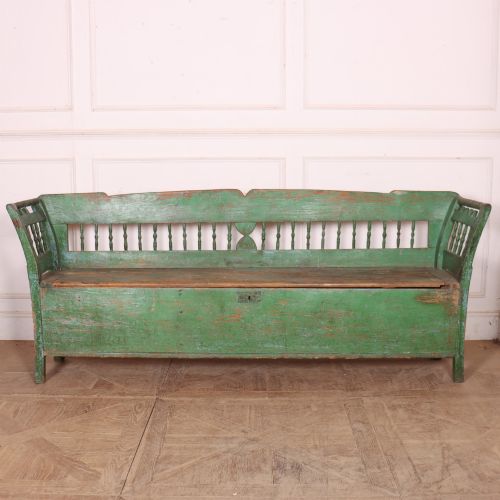
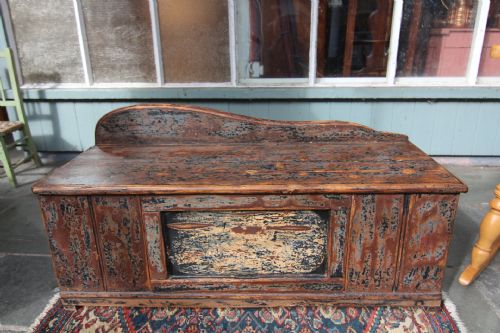
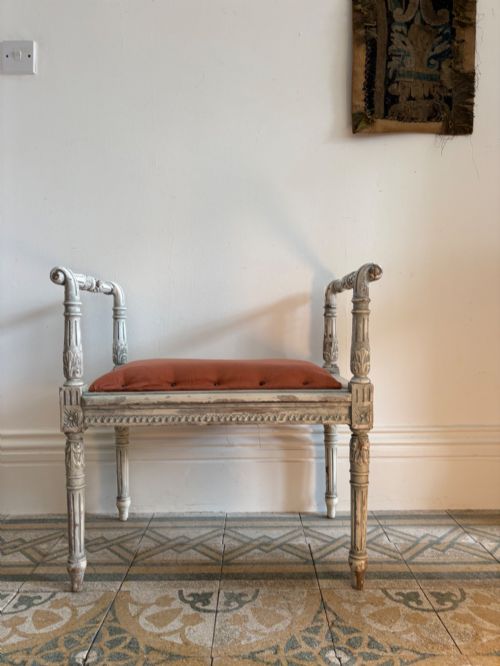
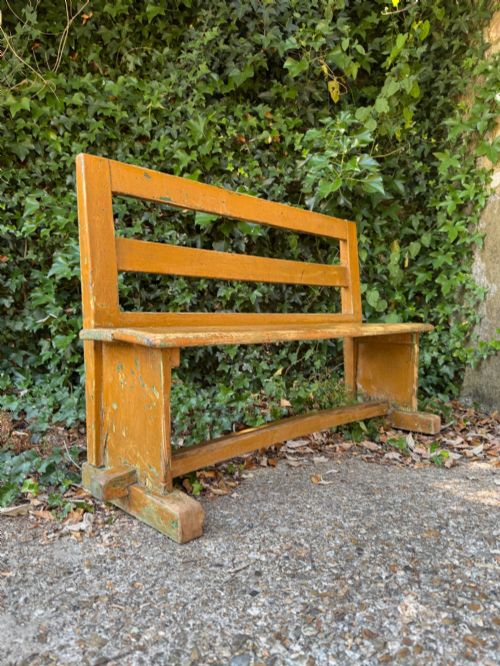
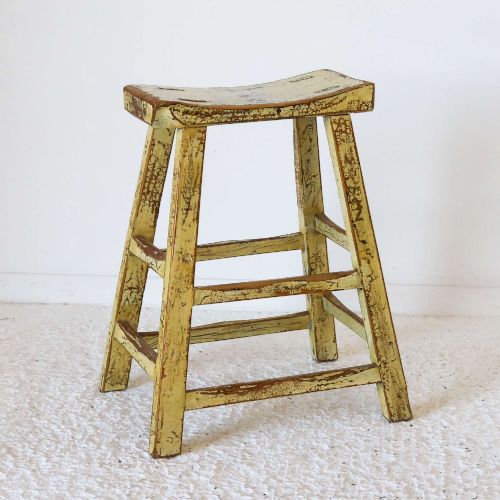
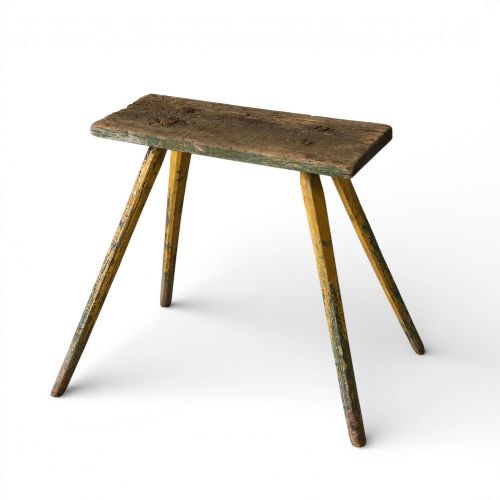


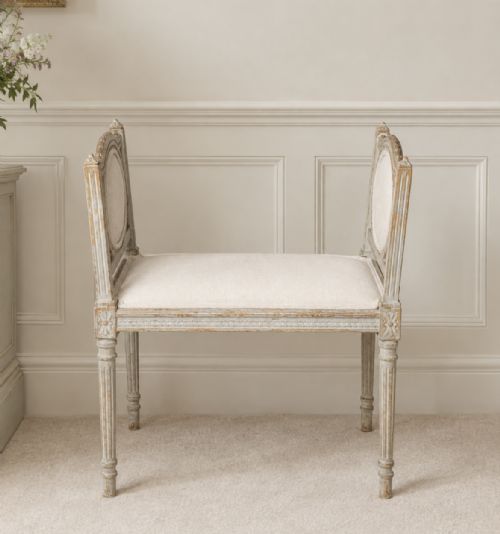

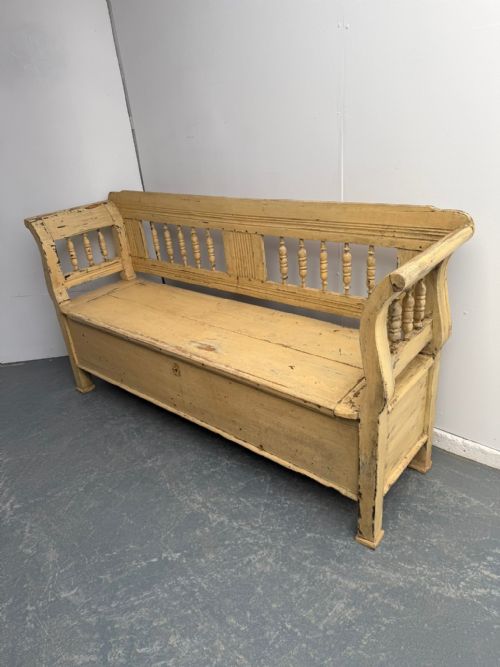
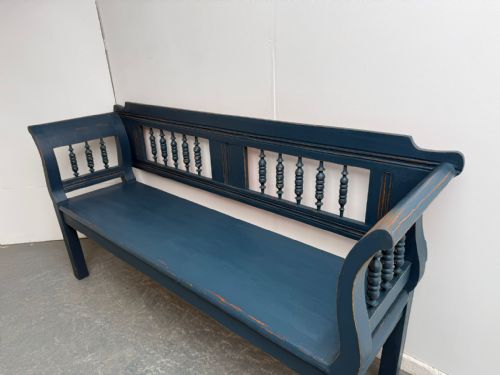


Distressed Paint Wooden Bench
A distressed paint wooden bench brings lived-in character to an interior through layered pigment and sturdy timber construction.
Distressed Paint Wooden Bench
A distressed paint wooden bench is primarily found in forms such as long dining benches, high-backed settles, and multi-seater storage benches. These pieces emerge predominantly from nineteenth-century European workshops, spanning English, French, and Scandinavian origins.
Buyers encountering this phrase usually meet regional country seating built from pine or elm, often carrying original surface treatments in shades of grey, cream, blue, or white. The inventory leans heavily towards nineteenth-century craftsmanship alongside select eighteenth-century examples and early twentieth-century rustic forms.
Alongside conventional benches, the selection includes related seating types such as settles, window seats, low stools, and country sofas. These objects serve utility in hallways, kitchens, and living spaces while displaying the natural weathering of decades of domestic use.
Materials and construction methods
The foundation of these pieces rests on solid timber, with pine, elm, and general softwood serving as the primary structural materials. Joinery relies on traditional carpentry techniques appropriate for utilitarian farmhouse and country furniture.
Surfaces are finished with layers of paint applied directly to the wood, which wears down naturally over time to create the characteristic distressed appearance. Iron hardware and occasional fabric or silk upholstery appear on specific regional variants such as settles and stools.
The listings feature nineteenth-century pine benches alongside eighteenth-century Swedish settles constructed from painted wood.
Distinctions in quality and finish
Quality in a distressed paint wooden bench is determined by the integrity of the original surface finish versus later repainting. Pieces retaining their earliest layers of coloured pigment command greater interest from collectors.
Structural honesty and the preservation of original timber, particularly in regional elements like box settle compartments or carved details, set finer examples apart from heavily altered utility furniture.
The Distressed Paint Wooden Bench Glossary
- Settle
- A wooden bench with a high back, solid arms, and frequently a box compartment beneath the seat for storage. This form kept draughts away from occupants in older domestic interiors.
- Gustavian
- The Swedish neoclassical design style characterised by restrained classical carving and pale, luminous painted finishes. It developed during the reign of Gustav III in the late eighteenth century.
- Distressed paint
- A surface finish showing natural wear, chipping, and fading accumulated through long-term domestic use. It reveals earlier layers of pigment beneath the upper coat.
- Box settle
- A heavy wooden bench featuring a hinged seat lid that opens to reveal an integrated storage well. These pieces functioned as multi-purpose furniture in farmhouse kitchens.
Distressed Paint Wooden Bench: Frequently Asked Questions
How do I care for original painted wood?
Maintain the surface by dusting gently with a dry cloth and avoiding harsh chemical cleaners that strip aged pigment. Keep the timber away from direct heat sources and fluctuating humidity to prevent further flaking.
Apply microcrystalline wax sparingly if the exposed wood requires nourishment, taking care around areas of fragile original paint.
How do I distinguish eighteenth and nineteenth-century pieces?
Examine the joinery methods and the composition of the painted surface under natural light. Earlier pieces often display hand-sawn timber marks and denser accumulations of worn pigment layers.
Compare the proportion and decorative moulding against documented regional styles from Swedish, French, or English traditions to confirm the period.
Are these benches comfortable for daily use?
Many country benches were built for utility rather than lounging, resulting in upright wooden backs and firm seats. Adding loose squab cushions or textiles improves comfort for extended sitting.
Check the seat height and depth relative to your table or intended room setting before settling on a specific form.