

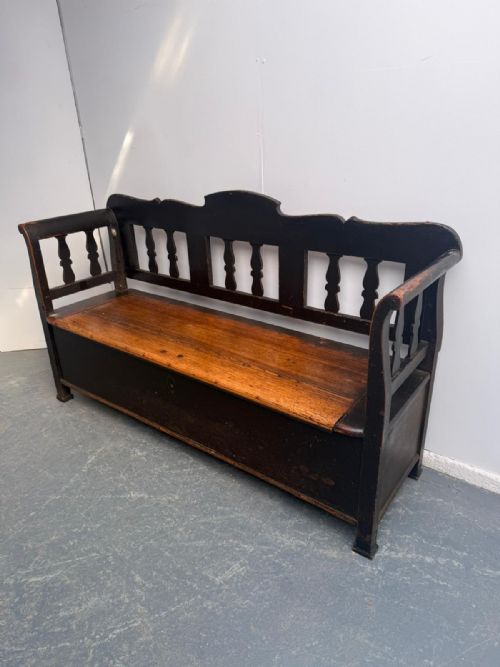

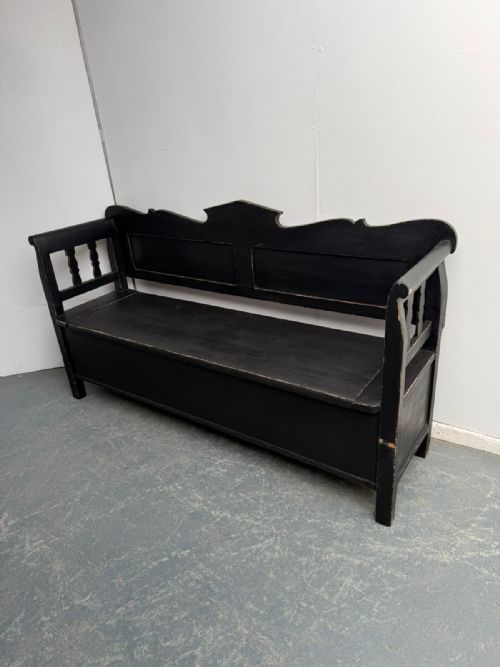


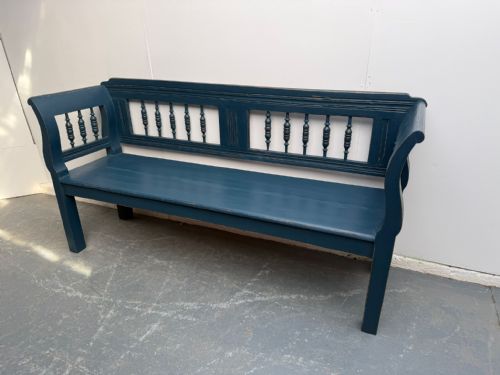

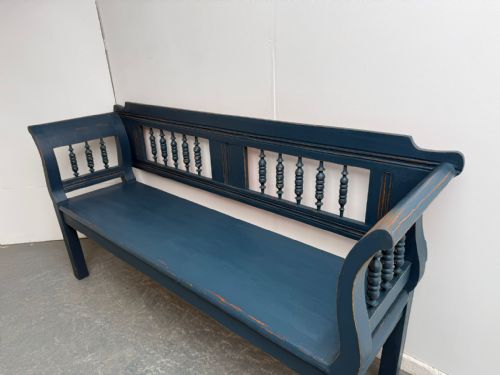


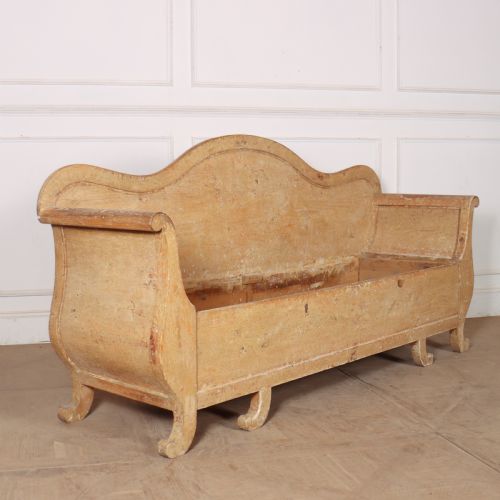

Painted Hall Bench Seating
Painted hall bench seating brings regional character and practical hallway storage into a home through traditional painted pine and hardwood forms.
Painted Hall Bench Seating
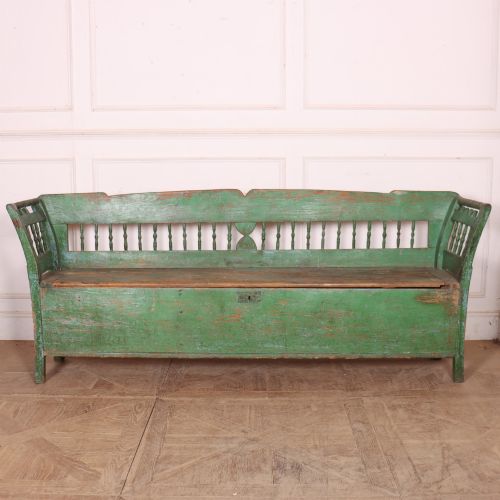
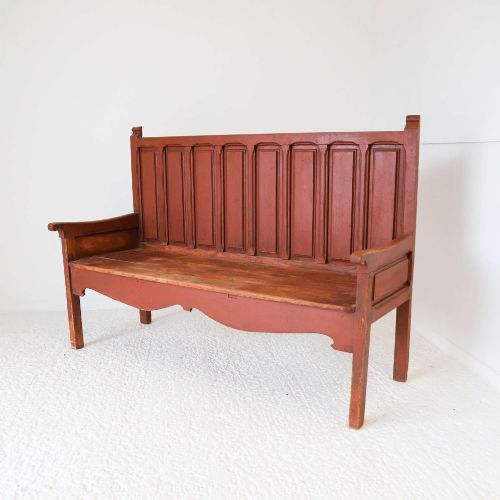
Painted hall bench seating encompasses settles, window seats, and benches originating from English, Welsh, Spanish, Dutch, Austrian, and Hungarian traditions. These pieces range from simple plank construction to high-backed designs intended to block draughts in corridors and living spaces.
The most common examples encountered here are Victorian and nineteenth-century pine benches, often featuring integrated box seating beneath the seat lids. Regional variations span from Gustavian-inspired Swedish forms to rustic Austrian and Hungarian country pieces.
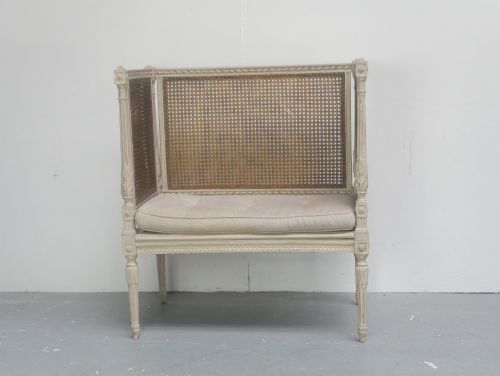
Earlier eighteenth-century examples include Welsh tavern benches and Spanish settles, showing simpler lines and heavier timbers. Edwardian and later pieces introduce lighter frames alongside occasional satinwood or cane details.
Quality and Proportion
Quality rests upon the integrity of the original timber frame, the retention of early or original painted surfaces, and the balance of proportions. Neat proportions and untouched box compartments elevate simpler rustic forms.
The distinction between utilitarian workshop pieces and finer regional seating lies in the preservation of original decorative schemes, such as folk art painting or barrel back construction, rather than elaborate ornamentation.
Some nineteenth-century box settles still carry the faint aroma of old pine and decades of farmhouse warmth beneath their painted exteriors.
Thonet
The Painted Hall Bench Seating Glossary
- Settle
- A wooden bench with a high back, solid arms, and often a storage box beneath the seat. This form provided shelter from cold draughts in older hallways and kitchens.
- Box Settle
- A bench featuring a hinged seat opening to an internal storage compartment. These items served a dual purpose for seating and household storage.
- Scumble
- A translucent glaze applied over a base coat of paint to imitate wood grain or create mottled decorative patterns. It is found on nineteenth-century pine furniture.
- Windsor
- A seating structure built with turned legs and spindles socketed into a solid shaped seat. This technique appears in various forms of traditional wooden benches.
- Satinwood
- A hard, yellow timber used for fine cabinet making and decorative seating in later periods. It provides a smooth, polished contrast to rustic painted pine.
Painted Hall Bench Seating: Frequently Asked Questions
What is painted hall bench seating?
Painted hall bench seating comprises wooden settles, benches, and window seats finished with decorative or protective paint layers. These items originate from various European country traditions and historic periods.
They function as practical seating and hallway furniture, frequently incorporating storage boxes or high backs designed for domestic interiors.
How were these benches used historically?
Historically, high-backed settles were positioned near doorways or firesides to block cold draughts from entering living spaces. The integrated box compartments stored household goods, linens, or firewood.
In hallways, they provided a sturdy place for removing boots and outerwear while welcoming visitors into the home.
How do I identify the period of a painted bench?
Period identification relies on examining construction methods, timber types, and wear patterns beneath the paint surface. Eighteenth-century examples typically show heavier planking and simpler joinery than nineteenth-century Victorian or Edwardian pieces.
Paint analysis also helps, as original lead-based pigments or early folk art finishes differ visibly from modern synthetic coatings.
How do I care for antique painted wood?
Care for painted wooden furniture involves maintaining stable indoor humidity levels away from direct heat sources and sunlight. Dusting with a dry, soft cloth preserves the fragile historic paint layers.
Avoid using harsh chemical cleaners or abrasive polishes that can lift or dissolve traditional painted finishes.