



High Back Wooden Pew
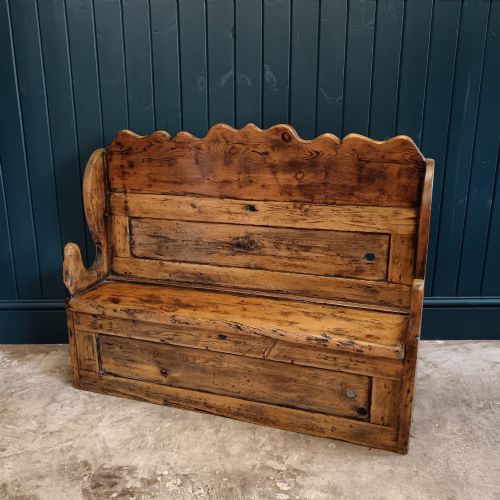
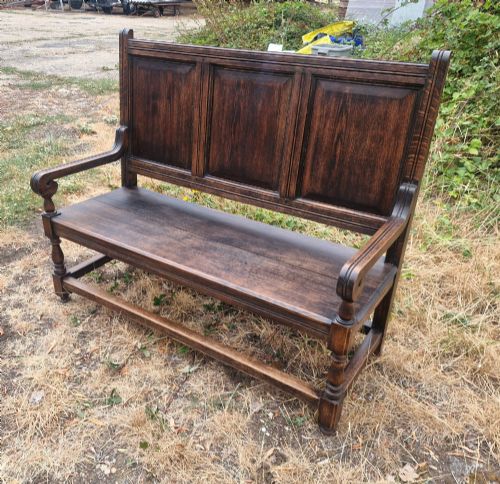
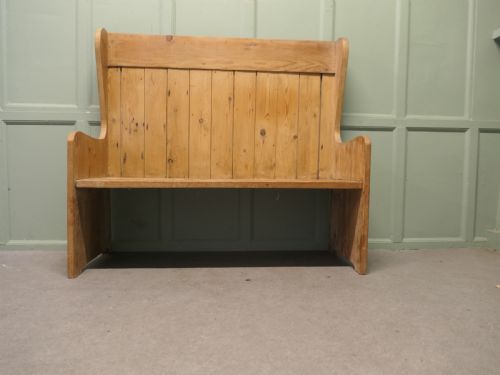
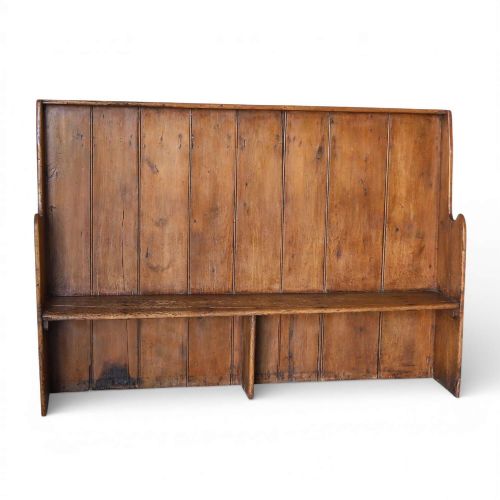
A high back wooden pew offers deep seating and sheltered comfort, combining period character with practical everyday utility in any room.
High Back Wooden Pew
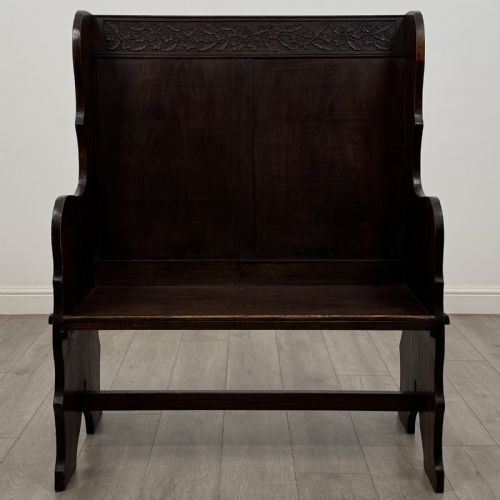
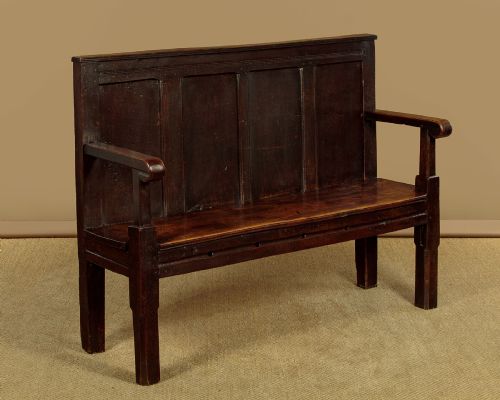
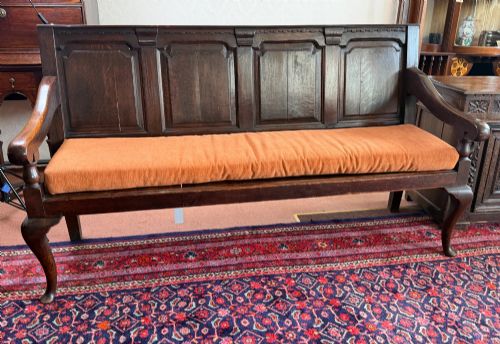
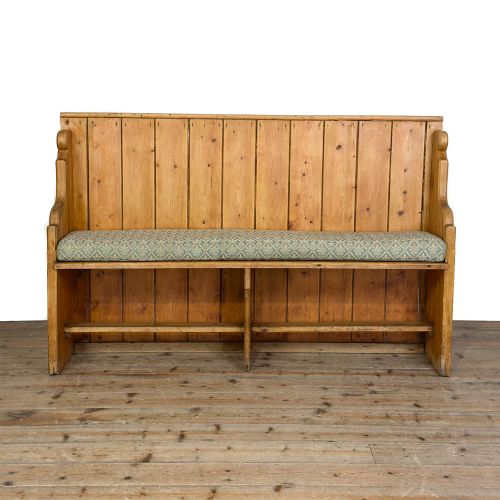
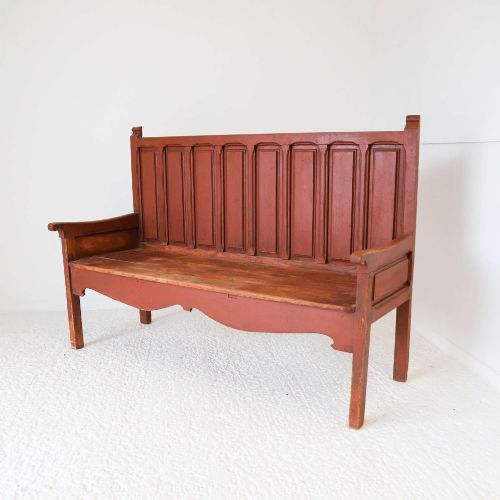
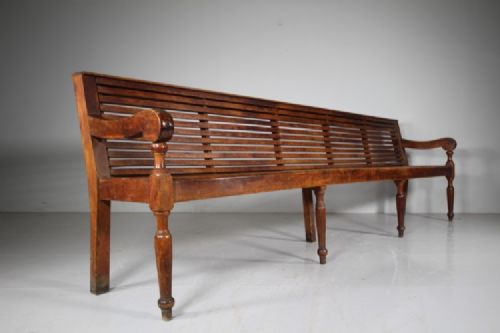
A high back wooden pew is a substantial seating form designed to block draughts and anchor a room, appearing across listings as settles, benches, and hall seats. The pieces encountered here span from the eighteenth century through the Edwardian period, drawing on vernacular traditions from England, Spain, and Wales.
Most examples rely on sturdy timbers and high panelled backs to create an enclosed seating area, often incorporating storage boxes beneath the seat. These functional items served communities, churches, and domestic hallways alike before finding a place in modern homes.
How they were made
Cabinet makers and local joiners constructed these seats using solid native timbers such as oak, pine, elm, chestnut, and walnut, frequently joined with pegged mortise and tenon joints. Panels were often fielded or carved to add rigidity and decorative depth to the tall backs.
Surfaces show various historical treatments, from waxed and polished grain to original painted finishes and bleached patinas. Barrel backs and canopied designs required specialised steaming and bending of wood to achieve their curved enclosing forms.
The listings feature pine, oak, elm, walnut, and chestnut across pieces dating from the eighteenth and nineteenth centuries.
What varies in quality
Quality rests in the integrity of the timber selection and the retention of original structural elements like boarded seats and panelled backs. Pieces that maintain their untouched surface patinas and authentic joinery stand apart from those altered or heavily restored over time.
The sophistication of the carpentry, from simple country assembly to elaborate carved panels and integrated storage boxes, defines the distinction between utilitarian workshop output and finer formal seating.
The High Back Wooden Pew Glossary
- Settle
- A wooden bench with a high back and solid arms, often featuring a box compartment beneath the seat for storage. This form was designed to keep out cold draughts in domestic interiors.
- Box settle
- A variation of the bench incorporating a hinged seat lid that opens to reveal a deep storage well. It combines seating with domestic containment.
- Barrel back
- A seating design featuring a curved, enclosing wooden back that wraps around the occupant for maximum shelter against fireside chills. This form requires expert timber shaping.
- Patina
- The surface sheen and colour developed on wood through decades of handling, polishing, and natural ageing. This quality indicates the age and history of a piece.
High Back Wooden Pew: Frequently Asked Questions
How do I choose the right size?
Measure your wall space and entryways carefully, as these high back wooden pews are substantial items that cannot be easily manoeuvred around tight corners.
Consider the depth of the seat and the height of the back to ensure the piece suits the proportions of your room.
Where were these pieces used historically?
These seats originally furnished churches, country taverns, waiting rooms, and farmhouse hallways where blocking draughts was essential.
Today they function effectively in large kitchens, boot rooms, and hallways as practical seating with integrated storage.
How do I care for wooden surfaces?
Maintain the timber by applying a traditional beeswax polish occasionally, avoiding modern silicone sprays that can damage historic finishes.
Keep the piece away from direct heat sources and strong sunlight to prevent the timber from splitting or warping.
How can I tell the period?
Examine the tool marks, construction methods, and timber species, comparing panel styles and hardware against known historical examples.
Earlier pieces often display pegged joints and hand-planed boards, while later revival items show more uniform machine preparation.