
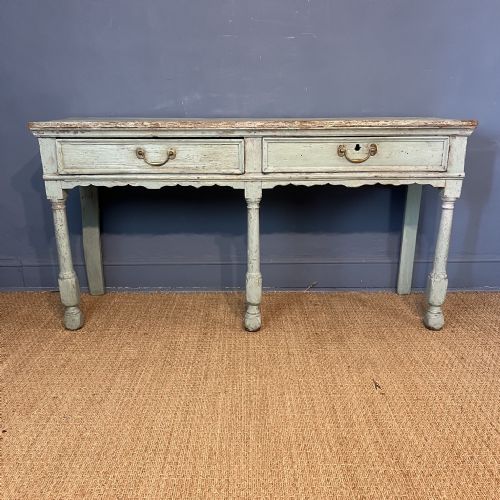


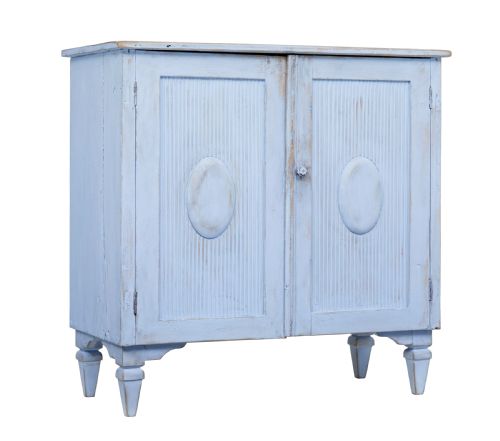


Distressed Blue Painted Sideboard
These distressed blue painted sideboard examples combine practical storage with time-worn painted surfaces, bringing rustic character to any interior.
Distressed Blue Painted Sideboard
When you search for a distressed blue painted sideboard, you are looking at substantial storage furniture coated in historic or decorative blue pigment. These pieces span the eighteenth and nineteenth centuries, taking the form of dresser bases, cupboards, commodes, and console tables.
On this page, you will most frequently meet pieces rooted in English country traditions alongside Scandinavian country and Austrian folk art examples. They function as deep storage units or serving tables, defined by their weathered blue exterior.
The regional variations range from West Country vernacular dresser bases to Swedish linen cupboards and Portuguese serpentine commodes. Each item brings a distinct provincial utility and aged visual presence to a room.
How they were made
Construction relies heavily on native timbers such as pine and softwood, shaped by regional joiners using traditional methods. Carcasses are built for daily utility, often supporting heavy potboards or multiple drawers.
Surfaces are finished with paint, sometimes layered over decades, accompanied by metal, iron, or brass hardware. The blue pigment ages naturally through friction, light exposure, and wear, creating the characteristic distressed texture.
Some cupboards travelled across snowy Scandinavian borders before acquiring their characteristic battered blue coats.
What varies in quality
Quality rests in the integrity of the original timber frame and the authenticity of the surface patina. Pieces retaining their early or original blue paint demonstrate a more cohesive historical character than later decorative layers.
Proportion and regional joinery skill separate standard utilitarian furniture from finer provincial examples. The balance between the functional carcase and the surviving surface pigment dictates the visual weight of the piece.
The Distressed Blue Painted Sideboard Glossary
- Dresser base
- A low cabinet or sideboard featuring drawers and sometimes a potboard beneath, historically used for food preparation and storage.
- Commode
- A low chest of drawers or cabinet, often featuring decorative shaping or serpentine lines originating from continental traditions.
- Potboard
- An open lower shelf built into a dresser base, traditionally used for storing heavy pots and culinary utensils.
- Vernacular furniture
- Domestic pieces made by local craftsmen using regional styles and readily available materials, rather than following metropolitan fashions.
- Serpentine commode
- A chest or cabinet with a wavy, undulating front profile that requires advanced joinery and shaping.
Distressed Blue Painted Sideboard: Frequently Asked Questions
What is a distressed blue painted sideboard?
A distressed blue painted sideboard is a utilitarian storage piece, such as a dresser base or cupboard, finished in weathered blue paint.
These items draw on English country, Scandinavian, and continental traditions from the eighteenth and nineteenth centuries.
How were these sideboards used originally?
They served as practical storage for linens, crockery, and provisions in domestic kitchens, dining rooms, and hallways.
Their sturdy construction supported heavy daily use in provincial country houses and farmhouses.
How do I live with a painted sideboard?
These pieces anchor a room by providing deep surface space and enclosed storage while introducing historic colour.
They pair well with both traditional rustic interiors and modern spaces requiring textural contrast.
How do I tell eighteenth and nineteenth century pieces apart?
Eighteenth-century examples often display specific regional joinery techniques, timber shrinkage patterns, and early surface finishes.
Nineteenth-century pieces frequently reflect broader folk art traditions, such as Austrian or Scandinavian vernacular styles.