

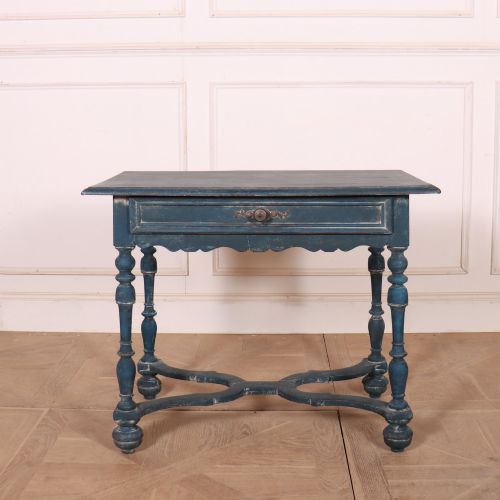
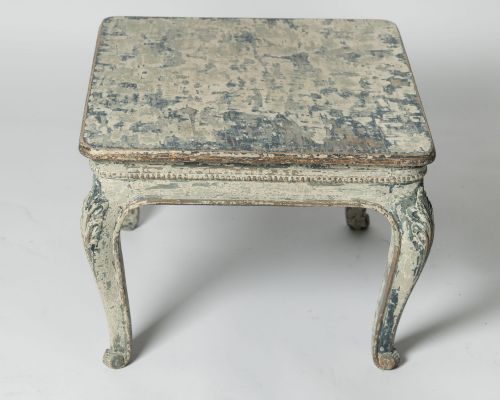
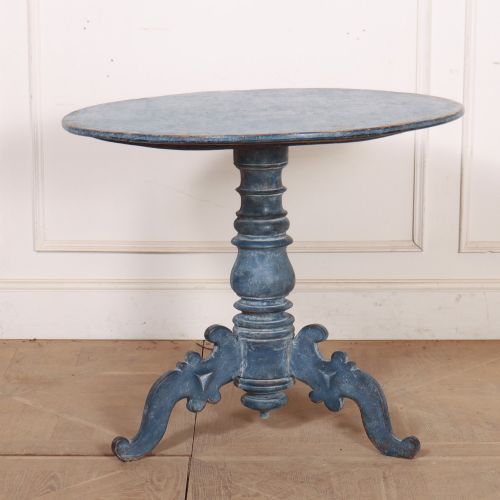
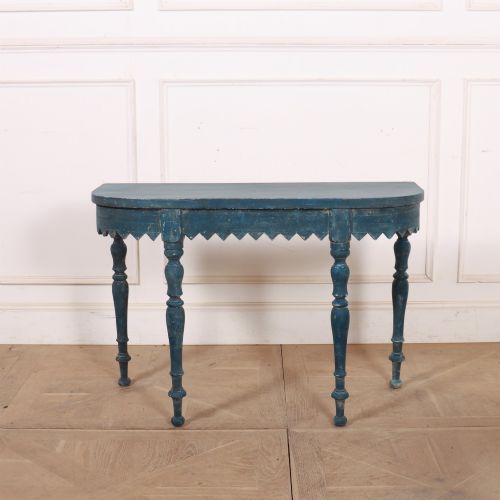


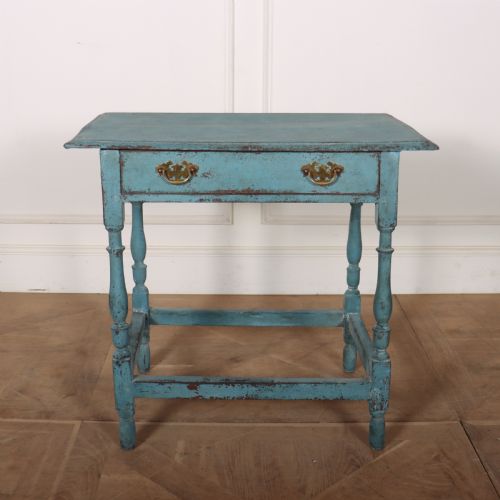

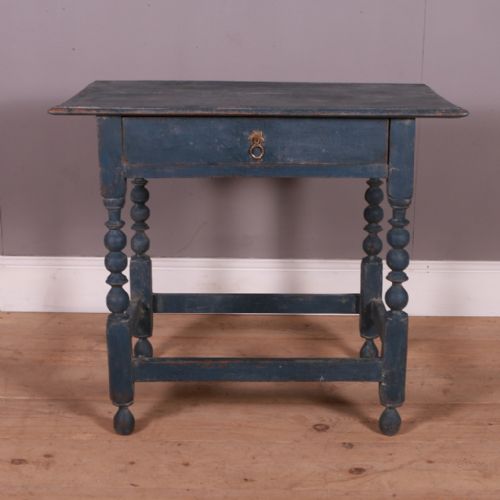


Distressed Blue Occasional Table
A distressed blue occasional table brings soft colour and useful surface area to a corner, drawn from eighteenth-century and nineteenth-century country traditions.
Distressed Blue Occasional Table
A distressed blue occasional table spans lamp tables, side tables, console tables, gueridons, and drop leaf tables. These small tables provide compact surfaces for daily use while adding a distinct painted finish to a room.
Dated examples stretch from the eighteenth century through to the early twentieth century, encompassing periods such as Georgian and Gustavian. Most tables show the wear of decades through aged blue paint surfaces.
How they were made
Carpenters constructed these tables using solid pine and timber, shaping frames with traditional joinery suited for domestic utility. Tops range from simple wooden boards to fitted marble inserts.
Surfaces received layers of paint, often in blue hues, which aged naturally over generations of use. Brass hardware appears on select forms, adding functional detail to drawers or drop leaf mechanisms.
Distressed Blue Occasional Table Retail Price Guide 2026
Typical asking prices for distressed blue occasional table among the pieces listed under this phrase on Sellingantiques today, from the lower quarter to the upper quarter. They describe what is for sale here now, not the wider market.
Several tables survived centuries of daily domestic service only to spend their retirement holding modern mobile phone chargers.
What varies in quality
Quality rests in the integrity of the timber frame and the character of the painted surface. Tables retain more value when their blue paint shows genuine age and patina rather than modern distressing.
Proportion and regional detail distinguish finer examples, such as the curved lines of Gustavian pieces or the restrained elegance of Georgian console tables. Original marble tops and intact brass fittings elevate the standing of a piece.
The Distressed Blue Occasional Table Glossary
- Gueridon
- A small French round table supported by a central column or several legs. These surfaces served historically for holding lights or decorative objects.
- Drop leaf table
- A table with hinged flaps on the sides that fold down to save space. Raising the leaves extends the surface area for occasional use.
- Gustavian
- The Swedish interpretation of French neoclassical design, characterised by pale painted finishes and restrained classical ornamentation. This style dominated Swedish craft during the late eighteenth and nineteenth centuries.
- Console table
- A table designed to stand against a wall, frequently fixed with brackets or supported by front legs. These narrow pieces fit easily into hallways and reception rooms.
- Patina
- The surface texture and coloration developed by wood and paint over long periods of handling and exposure. It serves as an indicator of genuine age.
Distressed Blue Occasional Table: Frequently Asked Questions
What is a distressed blue occasional table used for?
These tables provide a convenient surface for lamps, books, or decorative objects in living spaces and bedrooms. Their compact dimensions allow them to fit into corners and narrow gaps where larger furniture will not go.
Beyond utility, they introduce a distinct colour and aged texture to interior schemes. The painted blue surfaces complement both neutral backdrops and bolder room designs.
How do I date an antique painted table?
Dating relies on construction methods, timber types, and the style of the legs and apron. Eighteenth-century and nineteenth-century pieces display hand-cut joinery and signs of historical wear that machine-made items lack.
Paint analysis also helps, as older pieces carry multiple layers beneath the surface coat. Specific regional styles, such as Gustavian or French provincial, point to particular decades of manufacture.
Are marble top tables practical for daily use?
Marble tops offer a durable, heat-resistant surface that handles daily placement of cups and lamps with ease. The stone adds weight and stability to smaller lamp tables and gueridons.
Care involves wiping spills promptly to prevent staining, particularly on older marble. The contrast between cool stone and painted timber remains a defining feature of these pieces.
What is the difference between a side table and a lamp table?
Side tables generally offer slightly more surface area and can stand against walls or beside seating. Lamp tables are specifically proportioned to hold a table lamp and small accessories.
Both forms overlap significantly in antique listings, sharing similar heights and construction materials. Choosing between them depends on the specific space available in a room.