
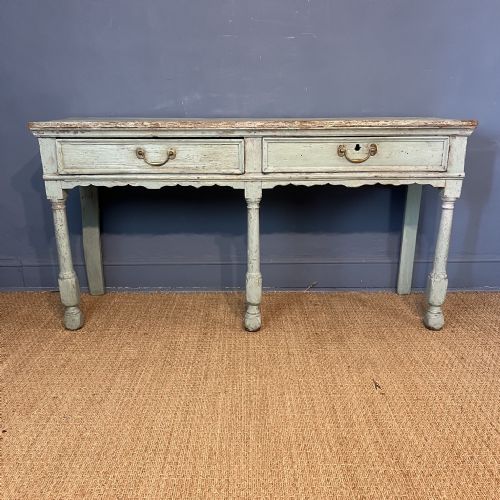
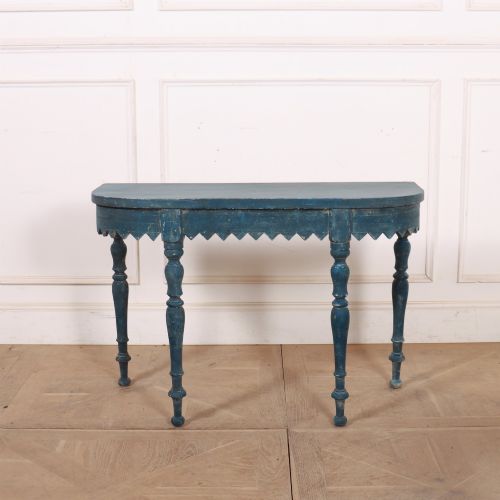


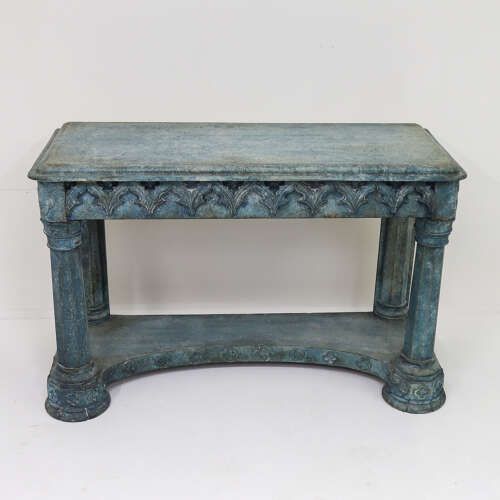


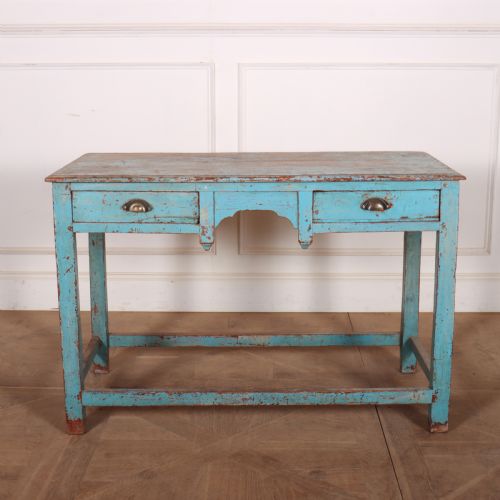


Distressed Blue Console
These distressed blue console pieces bring painted wood character to a room, offering surface depth and historical form that structural pine tables lack.
Distressed Blue Console
A distressed blue console brings painted timber surfaces and utilitarian forms into domestic spaces, drawing on eighteenth and nineteenth-century traditions. When you search for a distressed blue console, you encounter side tables, serving surfaces, and washstands finished in worn blue pigments.
The examples gathered here span English country pieces, French provincial designs, and Swedish pine tables. Most items rely on pine or mixed wood construction treated with historic or decorative paint layers.
The selection ranges from simple lamp tables to imposing Gothic revival console tables and dresser bases. Each piece offers a narrow footprint suited to hallways or reception rooms.
How they were made
Construction relies primarily on solid pine and timber, shaped into trestles, potboard bases, and bow ends using traditional joinery. Artisans built these tables to withstand daily labour in kitchens, dairies, and country houses.
Surfaces received layers of paint, often applied over decades of use, creating the characteristic distressed blue appearance seen on these tables. Marble inserts occasionally augmented wooden tops, particularly on washstands and specialised serving pieces.
Listings feature pine and painted wood constructions alongside marble tops and brass details, spanning the eighteenth and nineteenth centuries.
What varies in quality
Quality rests in the integrity of the timber frame, the originality of the painted surface, and the balance of proportions. Tables retaining untouched historic blue paint hold greater visual weight than those with later decorative finishes.
Execution of detail separates standard utility furniture from sophisticated examples, such as Gothic carvings, serpentine fronts, or integrated brass fittings. The depth of the colour and the natural wear of the wood define the character of the piece.
The Distressed Blue Console Glossary
- Console table
- A table designed to stand against a wall, frequently secured to it or supported by decorative brackets and front legs. These tables often feature narrow depths suited to hallways and reception spaces.
- Dresser base
- The lower section of a traditional kitchen or dining room storage unit, comprising drawers and cupboards beneath a flat top. They provide robust surface space and substantial timber construction.
- Potboard
- A lower open shelf built into the base of a dresser or table, traditionally used for storing pots and pans. This feature anchors the legs and adds structural rigidity.
- Bow end
- A convex, curved cabinet or table end that softens rectilinear furniture layouts. This shape requires precise carpentry to curve the timber framing.
- Washstand
- A domestic table designed to hold a basin and jug for washing, often fitted with a marble top to resist water damage. They frequently date from the nineteenth century.
Distressed Blue Console: Frequently Asked Questions
What is a distressed blue console used for?
These tables function effectively in hallways, living rooms, and dining areas as surface space for lamps, books, and decorative objects. Their narrow profiles allow them to occupy circulation spaces without blocking passageways.
They also serve as serving tables or display surfaces, adding colour and historical texture to neutral interiors.
How do I care for a painted wooden table?
Protect the painted surface from excessive moisture and direct heat by using coasters and mats. Dust regularly with a dry cloth and avoid harsh chemical cleaners that can strip historic or decorative paint layers.
Maintain stable indoor humidity to prevent the underlying pine timber from expanding or contracting excessively.
Are these tables from the eighteenth or nineteenth century?
The pieces span multiple periods, ranging from eighteenth-century designs to late nineteenth-century examples. Dating relies on construction methods, timber selection, and stylistic details such as Gothic Revival or Queen Anne influences.
Each period imparts distinct proportions and edge profiles to the tables.
What is the difference between a console and a lamp table?
Console tables are generally longer and shallower, designed specifically to sit flush against a wall in a hallway or reception room. Lamp tables are more compact, often square or circular, intended to sit beside seating.
Both forms utilise painted pine and timber construction across the available selection.