



Distressed Blue Carving
Distressed blue carving encompasses aged, painted wooden objects and furniture carrying layers of historic pigment.
Distressed Blue Carving
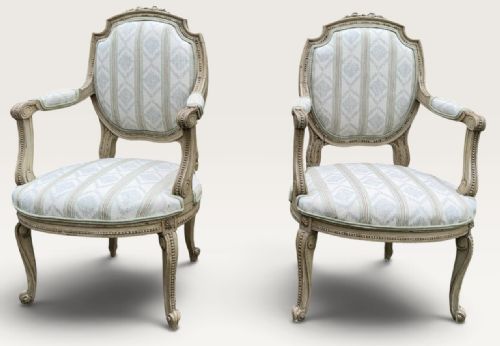
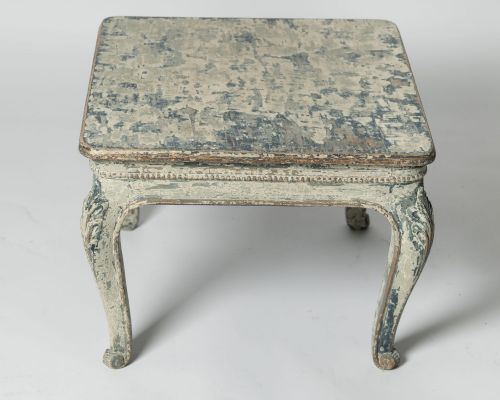
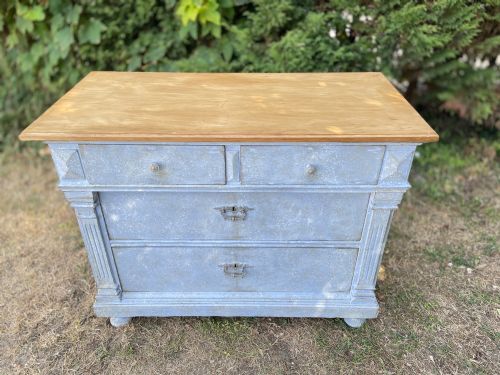
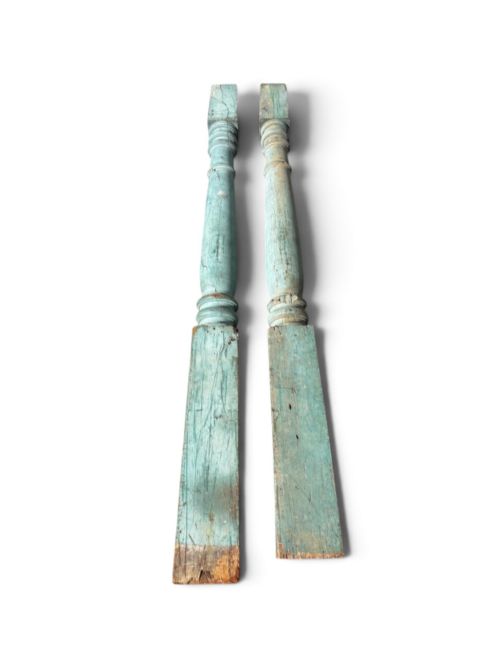
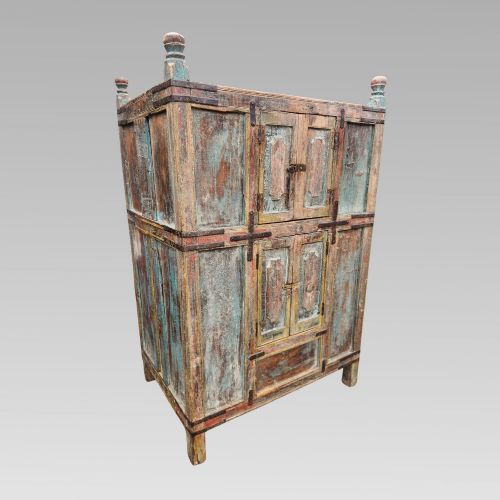
Distressed blue carving covers painted wooden furniture and architectural elements spanning from the eighteenth century through to the early twentieth century. These items range from French armchairs and commodes to Swedish tables, Italian consoles, and Indian architectural fragments.
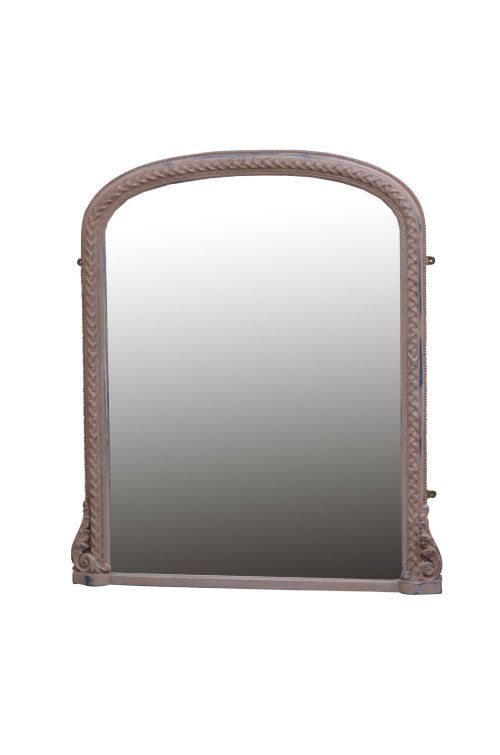
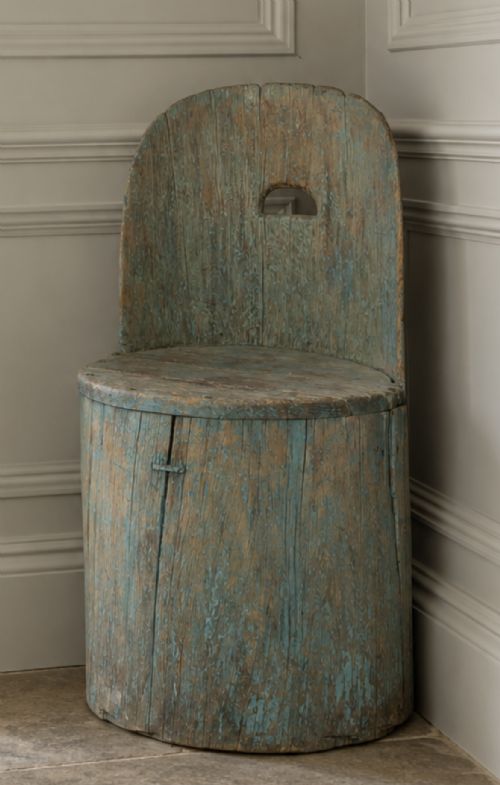
The aesthetic centres on weathered, layered paint surfaces applied to carved timber forms. Buyers frequently encounter French Provincial armchairs, commodes, and painted mirrors alongside Scandinavian tables and architectural pieces.
Origins stretch across France, Sweden, Italy, Spain, Germany, England, and India. The unifying thread across these disparate regions and styles is the carved wooden structure finished in a worn, painted surface.
Materials and construction methods
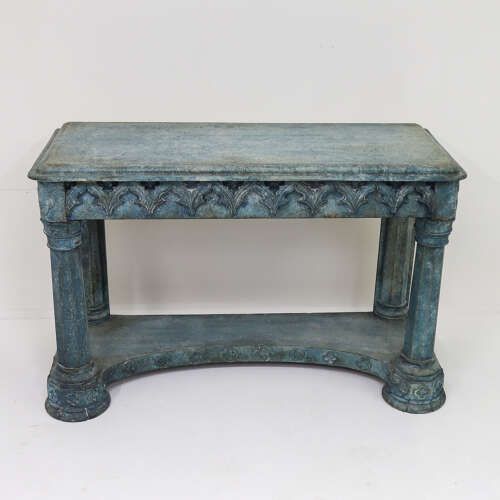
Carpenters and joiners utilised solid timbers including pine, beech, and various hardwoods to construct the foundational forms. These pieces often feature detailed hand carving, from architectural columns and roof decorations to flowing Louis XV scrollwork and Gothic tracery.
Surfaces received layers of paint, sometimes laid over gesso, which weathered naturally over decades or centuries of use. Marble tops appear on several console and lamp tables, pairing stone with painted wooden bases.
Regional styles span French Provincial, Swedish Gustavian, Gothic Revival, and traditional Indian architectural forms.
Judging quality in painted and carved pieces
Quality rests in the integrity of the original carved detail and the character of the painted surface. Authentic age reveals itself through the natural wear of multiple pigment layers rather than uniform factory distressing.
Proportion and structural joinery distinguish superior cabinet work and seating from simpler utility pieces. Well-executed carving retains crispness beneath layers of historic paint, while secondary woods and hardware reflect the standards of the period.
The Distressed Blue Carving Glossary
- Gesso
- A plaster-like mixture applied to wood as a smooth base for paint or gilding. It frequently underlies the painted finishes on decorative tables and mirrors.
- Commode
- A low chest of drawers or cabinet originating in France. Examples often feature serpentine fronts and painted or marble surfaces.
- Fauteuil
- An open-armed upholstered armchair with exposed wooden sides originating in France. These chairs frequently display carved details and painted finishes.
- Gueridon
- A small decorative round table supported by a central pillar or column. They commonly feature marble tops and painted wooden structures.
- Console
- A table designed to be fixed against a wall, often supported by ornate brackets or legs. Gothic and Baroque examples demonstrate heavy carving.
Distressed Blue Carving: Frequently Asked Questions
How do I clean a painted wooden surface?
Dust gently with a dry, soft cloth to prevent disturbing the fragile historic paint layers. Avoid commercial polishes and water, which can damage aged gesso and pigment.
Test any conservation cleaning products on a hidden area first. Professional advice is recommended for pieces with flaking or unstable paint.
Are these pieces suitable for everyday use?
Sturdy tables, chests, and architectural elements function reliably in modern interiors. Seating requires careful weight distribution depending on the age and condition of the underlying wooden frame.
Placement away from direct heat sources and strong sunlight protects the historic timber and painted finishes from further drying or cracking.
How can I tell original paint from later decoration?
Original paint shows natural craquelure, consistent wear patterns, and subtle variations in tone accumulated over decades. Examination under magnification reveals historic layers beneath surface dirt.
Later repainting often feels flat or lacks the organic integration with the wood grain found in period finishes. Compare the wear on high-contact areas with sheltered crevices.
What is a serpentine front?
A serpentine front curves outward in the centre and inward at the sides in a gentle 'S' shape. This technique adds visual movement to chests of drawers and console tables.
Cabinet makers utilised this form to demonstrate advanced skill in shaping both solid wood and applied painted finishes.