
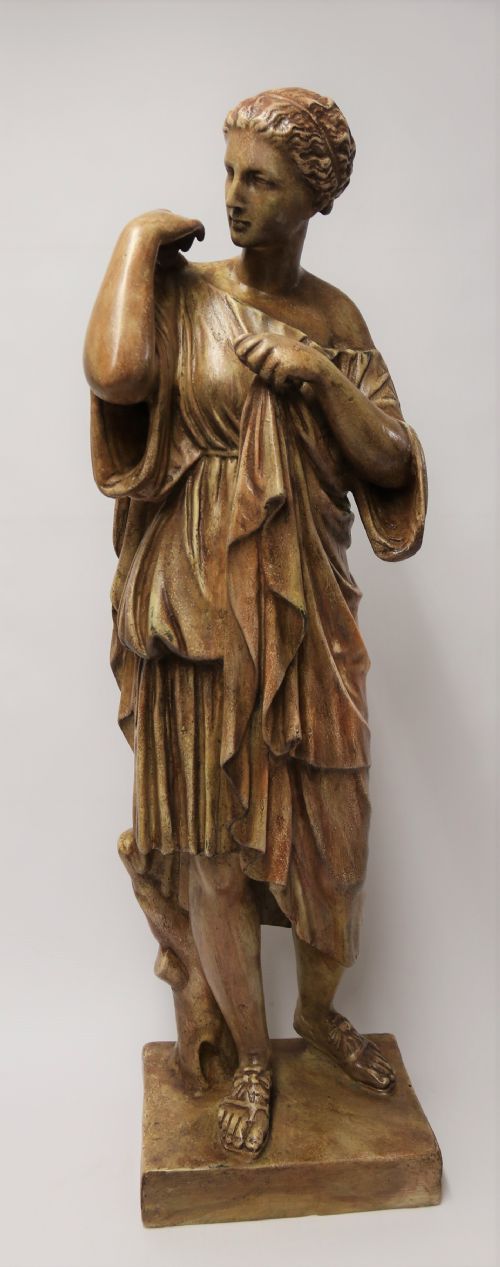





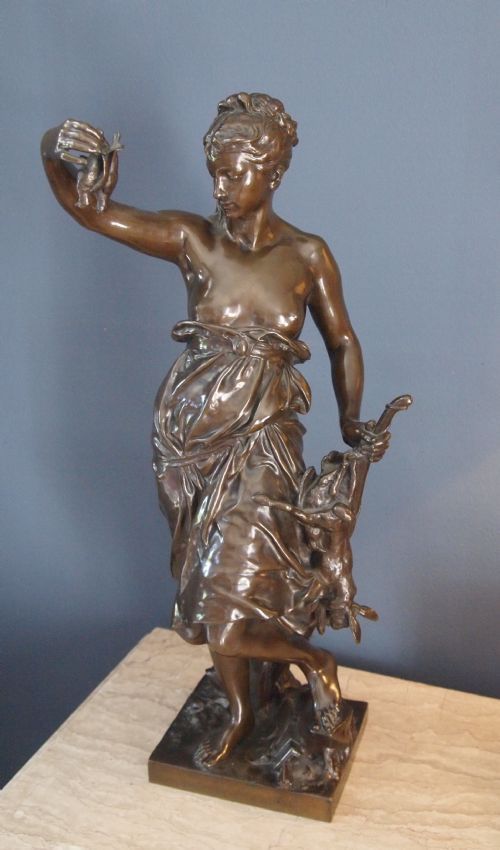

Diana the Huntress Figure
A diana the huntress figure brings classical mythology into your room, cast in bronze or modelled in soft-paste porcelain.
Diana the Huntress Figure
When you search for a diana the huntress figure, you encounter depictions of the ancient goddess of the hunt, typically shown with her bow, quiver, and hound. These pieces range from eighteenth-century soft-paste porcelain figurines to nineteenth-century bronzes and twentieth-century Art Deco sculptures.
You are most likely to meet nineteenth-century bronze castings and Grand Tour marbles on this page, alongside Georgian porcelain and Art Deco interpretations. The forms vary from small mantel clock mounts and wall reliefs to substantial freestanding sculptures and sugar sifter spoons.
The style shifts across the periods represented here, moving from the ornate curves of Rococo and Neoclassical porcelain to the streamlined geometries of Art Deco bronzes. Each version captures the goddess in motion or repose, reflecting the aesthetic priorities of its decade of creation.
How they were made
Foundry-cast bronze and carved marble dominate the heavier sculptural works, utilising traditional lost-wax techniques and hand-finishing to render the bow, arrows, and drapery. Bronzed copper and spelter also appear as alternative metal mediums for figures produced in the nineteenth and twentieth centuries.
Porcelain examples rely on soft-paste bodies shaped in moulds, then painted with enamel colours and gilded before undergoing kiln firing. These ceramic pieces often incorporate patch marks or gold anchor details specific to their eighteenth-century factories of origin.
What varies in quality
William Duesbury & Co·Pierre Le Faguays·Louis Ernest Barrias·Francis Higgins
The Diana the Huntress Figure Glossary
- Soft-paste porcelain
- A type of ceramic body fired at lower temperatures than hard paste, popular in eighteenth-century English factories for figures. It presents a slightly warmer tone and a softer glaze.
- Grand Tour
- A nineteenth-century tradition where travellers collected classical antiquities and smaller bronze or marble replicas in Italy. These souvenirs often replicated famous statues like Diana of Versailles.
- Patch period
- An era in eighteenth-century porcelain production characterised by unglazed circular patches on the base left by kiln props. It helps date early Derby figures.
- Gold anchor mark
- A factory mark utilised by Chelsea porcelain works during their later period to denote high-quality wares. It appears painted in gold on the base or rear of the figure.
- Spelter
- A zinc alloy utilised as a cheaper alternative to bronze for sculptural figures, particularly during the Art Deco period. It takes paint and patination well to simulate heavier metals.
Diana the Huntress Figure: Frequently Asked Questions
How do I identify a Grand Tour bronze?
Grand Tour bronzes were produced in Italy and France during the nineteenth century as souvenirs for travellers visiting classical sites. They frequently replicate famous museum sculptures such as the Diana of Versailles.
Look for a dark brown or green patination and careful chasing that mirrors ancient statues. Their bases often consist of polished black marble or onyx.
What is the difference between porcelain and bronze figures?
Porcelain figures, such as those from eighteenth-century English factories, offer bright enamel colours and fine facial details modelled in clay. Bronze figures provide greater durability and a heavier metallic presence.
Ceramic pieces suit cabinet display where light can catch the glaze, while metal sculptures command stronger presence on desks or mantelpieces.
How should I clean my metal sculpture?
Dust bronze and spelter figures gently with a soft, dry brush to prevent accumulation in the crevices of the bow and drapery. Avoid applying water, chemical cleaners, or metal polish, which can strip the historic patination.
Preserving the original surface skin maintains the visual integrity and character developed over the decades or centuries.
Are Art Deco figures different from earlier ones?
Art Deco figures produced around nineteen-thirty embrace stylised geometry and streamlined forms rather than strict classical academic proportions. They frequently pair bronze or spelter with stepped marble bases.
Earlier nineteenth-century interpretations lean closer to naturalism and traditional mythology, whereas the later pieces reflect modern aerodynamic design.