
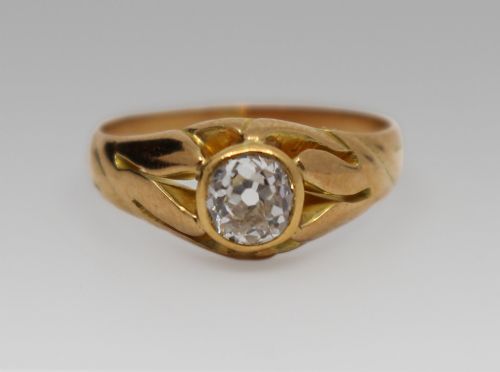
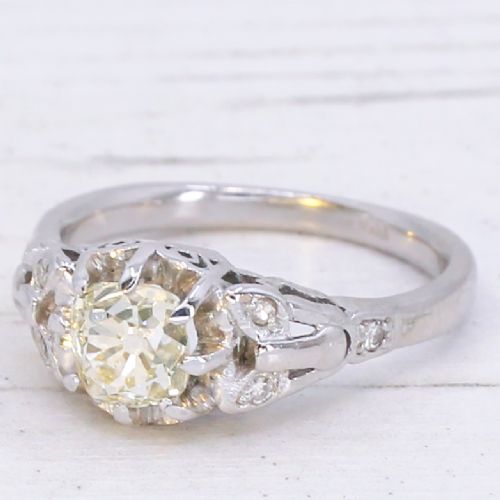
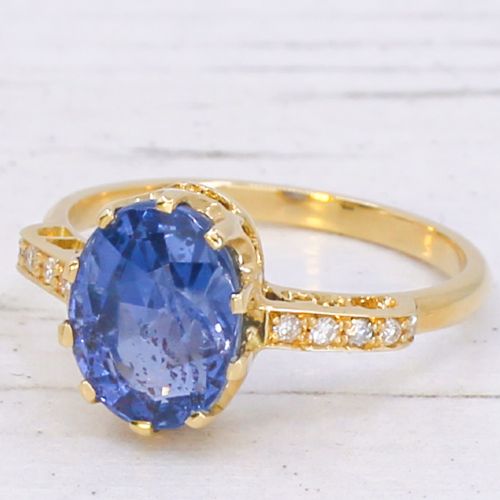
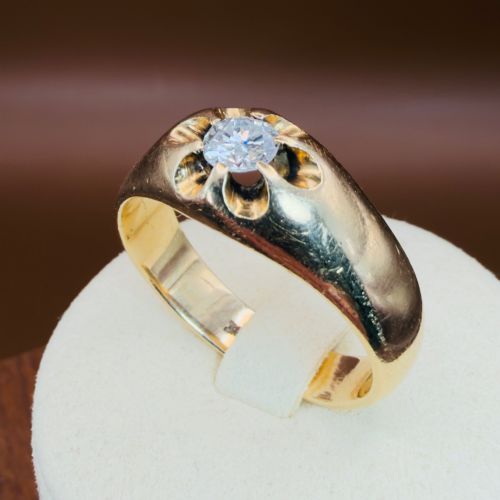
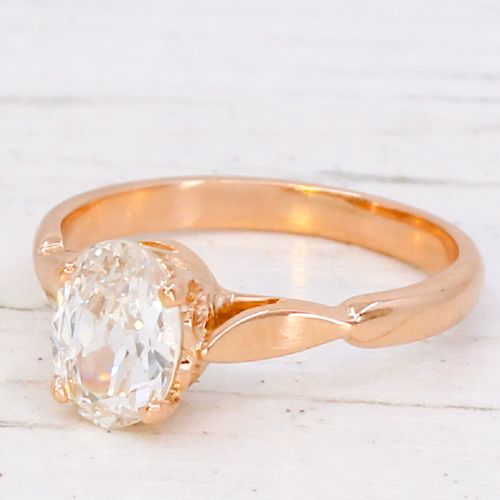
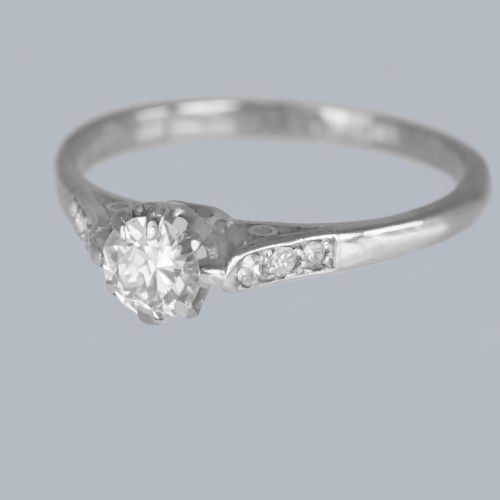
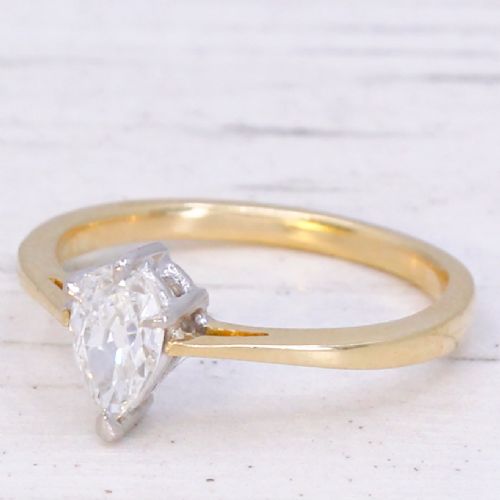
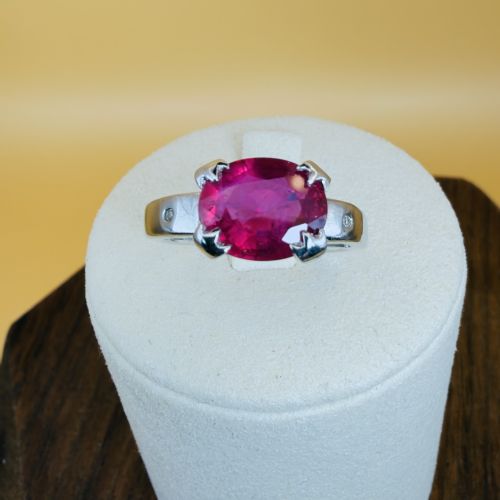
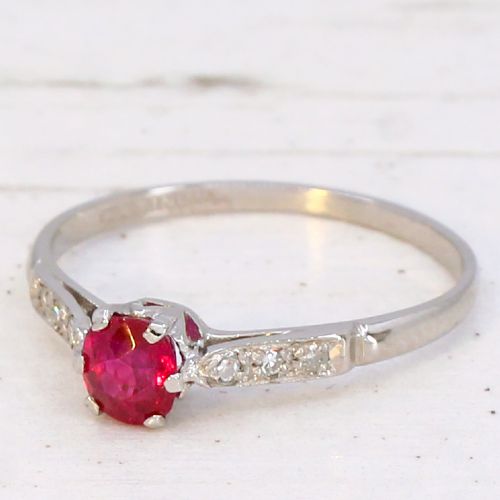
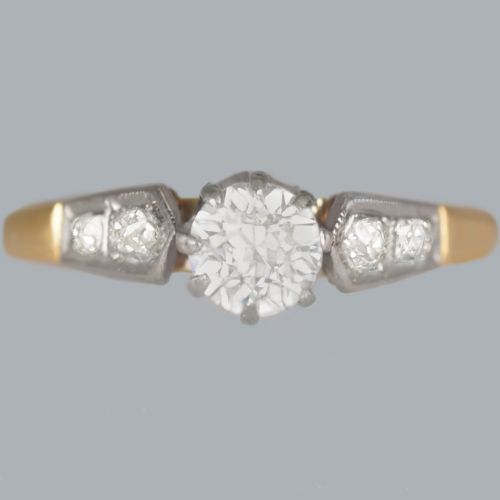
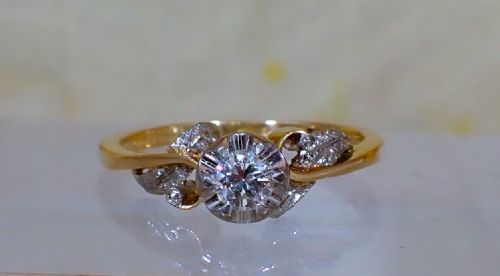
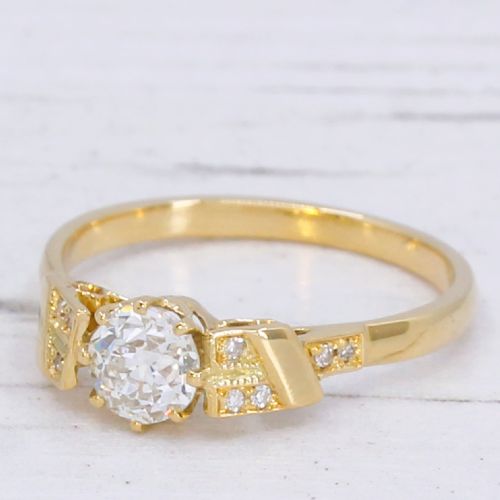


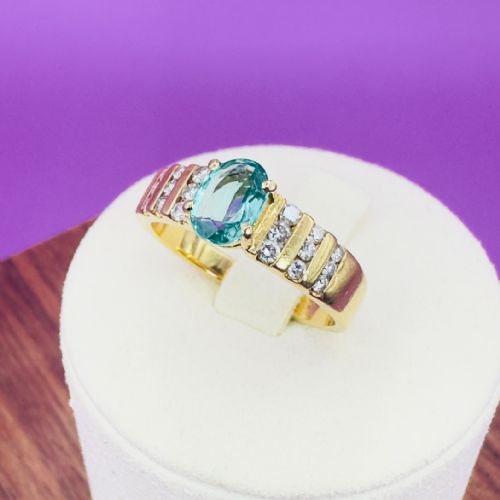
Diamond Solitaire Band
A diamond solitaire band offers a single, striking stone set to catch the light, bringing historic character straight to the hand.
Diamond Solitaire Band
When searching for a diamond solitaire band, a buyer encounters rings centred around a single prominent stone, spanning eras from the late Victorian period through the Edwardian years and Art Deco designs into the mid-twentieth century.
The selections on this page most frequently present pieces fashioned during the 1920s, 1930s, and 1950s, utilising platinum or various gold alloys to support stones cut by hand in older styles.
These rings function primarily as engagement rings or dress rings, showcasing the distinct facets of old cut diamonds, old European cuts, and brilliant cuts within secure settings.
How they were made
Goldsmiths constructed these bands using platinum or combinations of platinum heads upon yellow, white, or rose gold shanks, providing durable security for the central diamond.
Stones were cut by hand rather than by modern machinery, resulting in characteristic shapes such as old mine cuts, old European cuts, and transitional cuts with distinctive open culets and softer facet edges.
Settings often incorporated intricate details like millegrain borders, knife-edge bands, or accent shoulder diamonds set flush into the metal.
Several rings conceal tiny diamond chips tucked into their shoulders, offering a secret sparkle just for the wearer.
What varies in quality
The distinction between tiers of these rings lies in the integrity of the setting work and the proportion of the central stone relative to the band.
Master goldsmiths achieved refined claw work and precise metal thickness that protected the girdle of the diamond without overpowering its visual presence.
Wear and tear on the claws and the crispness of handmade decorative metalwork significantly influence the enduring character and structural soundness of each piece.
The Diamond Solitaire Band Glossary
- Old European Cut
- A round diamond cut popular from the late nineteenth century through the art deco period, featuring a small table, high crown, and large facets that produce a characteristic blocky pattern of light.
- Millegrain
- A decorative technique involving a row of tiny raised metal beads along the edges of a setting, frequently seen on platinum and gold mounts from the early twentieth century.
- Culet
- The small facet at the very bottom of a gemstone, which on antique cut diamonds often appears visibly large when viewed through the table.
- Platinum
- A dense, strong white metal widely utilised in Edwardian and art deco jewellery for its ability to hold delicate stone settings securely.
- Transition Cut
- A diamond cut used during the mid-twentieth century that bridges the older hand-cut styles and the mathematically standardised modern brilliant cut.
Diamond Solitaire Band: Frequently Asked Questions
How do I identify an old cut diamond?
Old cut diamonds typically display smaller tables, steeper crowns, and larger, visible facets when examined under magnification. Their centres often feature an open culet rather than meeting at a single sharp point.
These characteristics give the stones a softer, warmer scintillation in candlelight compared to the bright, uniform flash of a modern brilliant cut.
Are these rings suitable for daily wear?
Most antique and vintage rings constructed with platinum or eighteen-carat gold provide adequate durability for everyday life. Platinum settings offer particular strength for securing heirloom stones.
Owners should nonetheless take care to avoid exposing delicate millegrain work or antique claws to heavy impacts or abrasive chemicals.
What periods are most common for these rings?
The pieces available predominantly originate from the early decades of the twentieth century, specifically spanning the Edwardian era, the 1920s, the 1930s, and the mid-century 1950s. Art deco designs feature prominently among these selections.
Victorian examples also appear, showcasing lower-carat gold alloys and distinct nineteenth-century mounting styles.
Can these rings be resized easily?
Resizing depends primarily on the metal of the shank and the presence of shoulder stones or engraving that might be disrupted along the band. Solid gold and platinum shanks generally allow jewellers to alter the diameter safely.
Buyers should consult a specialist who understands antique mounting techniques to ensure structural integrity remains intact after adjustment.