





Platinum Twist Ring
A platinum twist ring winds graceful curves of bright white metal around the finger, carrying diamonds, rubies, or sapphires across decades of changing design.
Platinum Twist Ring
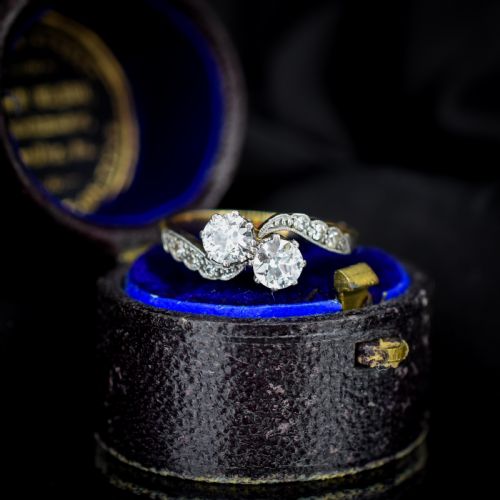
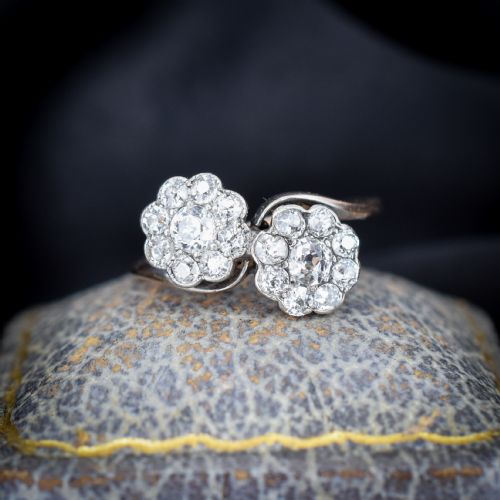
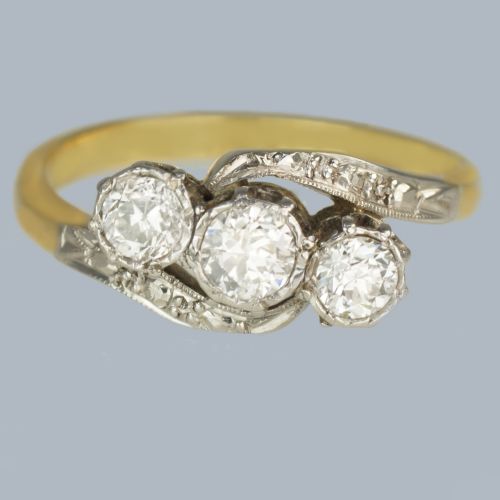
A platinum twist ring brings together sweeping metalwork and stones in forms frequently described as crossover, bypass, or toi et moi designs. These pieces span the Edwardian era, the 1920s Art Deco period, the 1940s Retro style, and mid-century modern design.
The materials paired with platinum in these rings include 18ct gold, yellow gold, and combinations of both metals alongside diamonds, black diamonds, opals, rubies, sapphires, emeralds, and aquramarines.
Edwardian examples showcase old cut diamonds in delicate settings, while Art Deco pieces introduce geometric lines. Later 1940s and 1950s pieces continue the fluid movement of the twist form using platinum and gold.
Quality factors in twist rings
The distinction between examples rests on the calibre of the central stones, whether diamond, ruby, emerald, or sapphire, and the precision of the metalwork shaping the twist. Heavier platinum and gold weights combined with well-matched gemstones elevate an example.
The fluidity of the crossover or bypass line and the integration of shoulder stones demonstrate the skill involved in constructing the ring.
Listings feature platinum twist rings from the Edwardian period, 1920s, 1930s, 1940s, and 1950s, paired with 18ct gold.
The Platinum Twist Ring Glossary
- Twist ring
- A ring design where the metal band curves and crosses over itself in a continuous movement. This form often frames one or more central gemstones.
- Toi et moi
- A two-stone ring style translating to you and me, where two main gems sit side by side in the twist. This French term appears frequently in Edwardian and antique pieces.
- Bypass
- A ring configuration where the ends of the band pass each other rather than meeting centrally. It creates an asymmetric wrap around the finger.
- Old cut
- A diamond facet arrangement typical of antique and Edwardian jewellery, featuring a smaller table and higher crown. These stones exhibit distinct hand-polished proportions.
- Trilogy
- A three-stone setting representing a past, present, and future narrative. These stones integrate into the curving lines of a twist mount.
Platinum Twist Ring: Frequently Asked Questions
What is a platinum twist ring?
A platinum twist ring is a piece of jewellery featuring a band that curves and crosses over itself. These rings often incorporate diamonds, rubies, sapphires, or emeralds.
The form spans Edwardian, Art Deco, and mid-century periods, combining platinum with 18ct yellow or white gold.
How do I date a platinum twist ring?
Dating relies on the stone cuts, such as old cut diamonds in Edwardian pieces, and the geometric motifs of Art Deco rings from the 1920s and 1930s.
Markings on the metal band and the specific style of the crossover or bypass setting also indicate the decade of manufacture.
Are these rings suitable for daily wear?
Platinum provides a durable setting for everyday use, holding gemstones securely within its curving structure. Combining platinum with 18ct gold is common across the listed periods.
Care should be taken with softer stones like opals, while diamonds and sapphires tolerate regular wear well.
What gemstones appear in these rings?
Diamonds form the primary stones in many examples, appearing as solitaires, two-stone toi et moi layouts, and trilogy arrangements.
Coloured stones including rubies, sapphires, emeralds, black diamonds, and aquramarines also feature prominently alongside the platinum metalwork.