
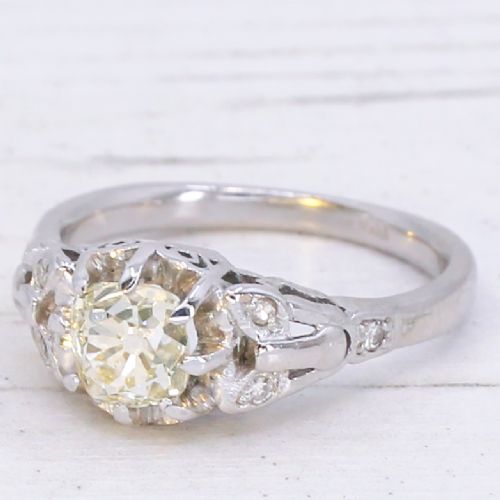
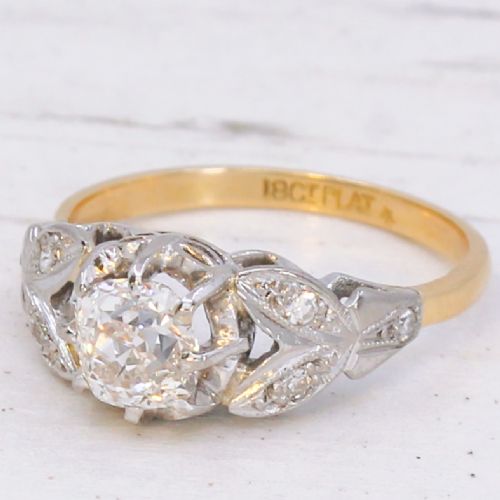
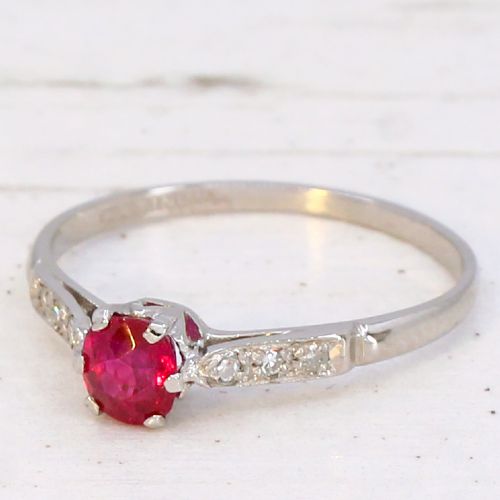
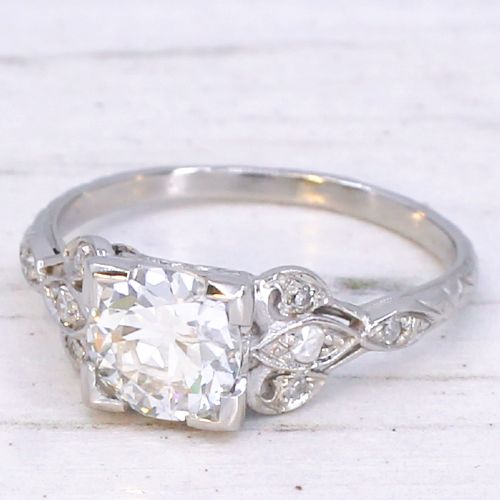
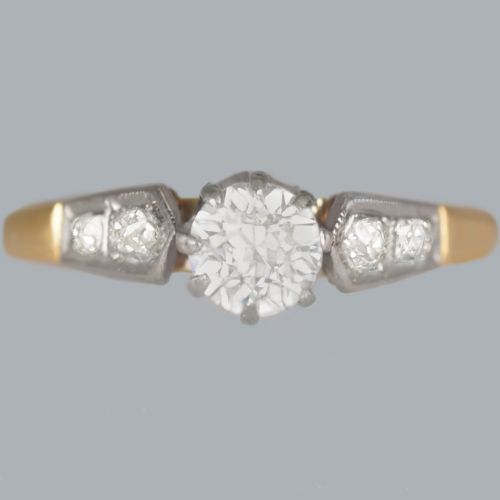
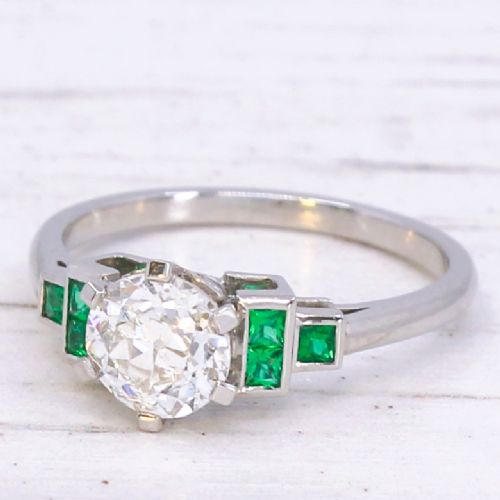
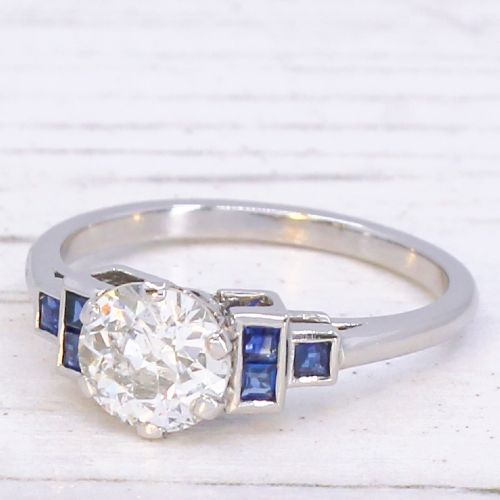


Platinum Shoulder Diamond Ring
When you search for a platinum shoulder diamond ring, you are looking at enduring craftsmanship designed to showcase central stones with accent gems along the band.
Platinum Shoulder Diamond Ring
A platinum shoulder diamond ring centres on a primary gemstone, frequently supported by smaller diamonds integrated into the band itself. These pieces appear across multiple decades, with significant representation from the Art Deco period, Edwardian era, and mid-century modern phases.
The format accommodates solitaires alongside three-stone configurations and coloured gems like sapphires, emeralds, and rubies. While platinum dominates the metalwork, combinations involving yellow gold and white gold occur frequently across the inventory.
Materials and Construction Techniques
Platinum serves as the structural foundation for many of these rings, providing the strength required to secure stones with delicate metalwork. Goldsmiths combined this dense metal with 18ct gold and yellow gold to create contrasting tones, particularly during the Edwardian and Art Deco periods.
Gemstones within these mountings display historical cutting styles such as old cut, old European cut, transitional cut, and rose cut. Jewelers set these stones by hand into channels, bezels, and claw settings along the shoulders to complement the main focal gem.
Several pieces quietly pair severe geometric platinum mountings with whimsical foliate shoulder leaves, proving past makers appreciated a touch of nature.
Factors Determining Quality
The calibre of a platinum shoulder diamond ring rests upon the clarity, cut, and carat weight of the central stone relative to the accent gems. Master lapidaries achieved superior light return through precise hand-cutting, which elevates pieces featuring certified diamonds.
Structural integrity of the metalwork also dictates overall grade. Higher tier examples demonstrate crisp foliate engraving, secure prong work, and balanced proportions between the central setting and the decorative shoulder design.
The Platinum Shoulder Diamond Ring Glossary
- Shoulder
- The upper portion of the ring band as it transitions upward to meet the central setting. This area often hosts accent diamonds or engraved foliate motifs.
- Old European Cut
- A historic precursor to the modern brilliant cut featuring a small table, high crown, and a large culet facet. It creates a distinctive pattern of light return under candlelight.
- Platinum
- A dense, durable, and naturally white precious metal utilised in fine jewellery for its strength in securing delicate gemstone settings without tarnishing.
- Transitional Cut
- A diamond cutting style bridging old cut stones and modern brilliant cuts, prevalent from the nineteen-twenties through the nineteen-forties.
- Solitaire
- A ring design featuring a single primary gemstone, which in these pieces is frequently enhanced by diamond details integrated directly into the shoulders.
Platinum Shoulder Diamond Ring: Frequently Asked Questions
What defines a shoulder diamond ring?
A shoulder diamond ring incorporates smaller diamonds or decorative gemstone work set directly into the band adjacent to the main stone.
This design draws the eye along the finger and frames the central setting with additional sparkle.
How can I identify an Art Deco ring?
Art Deco pieces typically display geometric symmetry, strong lines, and platinum settings that emphasise the central diamond or coloured gemstone.
These rings frequently date from the nineteen-twenties and nineteen-thirties, showcasing meticulous metal fabrication.
Are these rings suitable for daily wear?
Platinum provides exceptional durability and secure prongs, making these antique and vintage rings robust enough for regular use.
Routine inspection by a professional jeweller helps ensure the smaller shoulder stones remain firmly set.
What is an old cut diamond?
Old cut diamonds are hand-faceted stones shaped before modern mathematical proportions were standardised in the mid-twentieth century.
They exhibit distinct facet patterns and a charming visual depth unique to historical periods.