


1930s Gold Engagement Ring
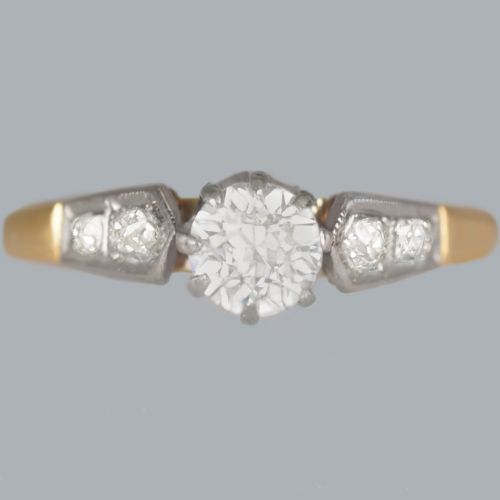
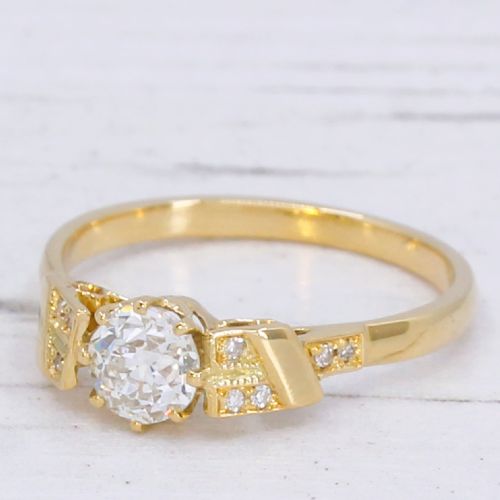
A 1930s gold engagement ring brings geometric lines and hand-cut stones together into a distinctive piece defined by the Art Deco style.
1930s Gold Engagement Ring
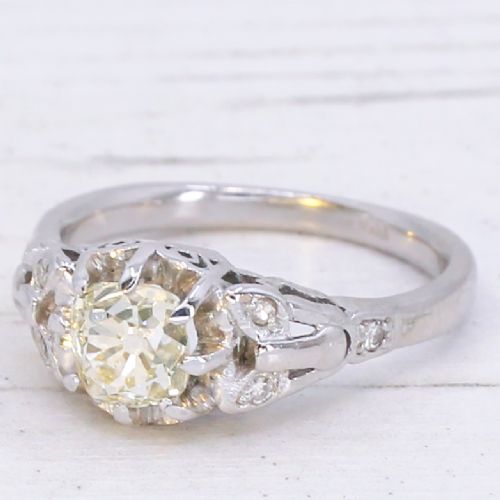
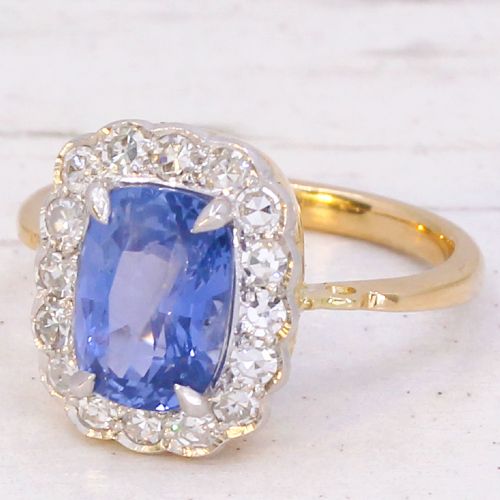
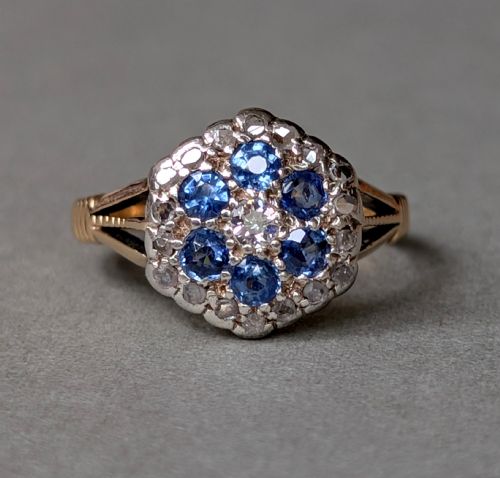
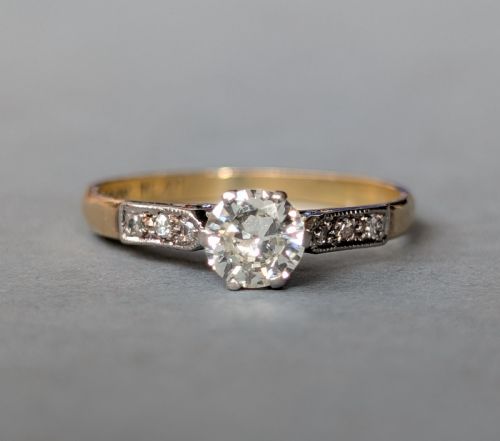
Solitaire and cluster configurations dominate the forms available on this page, often accompanied by diamond shoulders or accent gems. Alongside central diamonds, sapphire, ruby, and emerald stones appear frequently as focal points or striking borders.
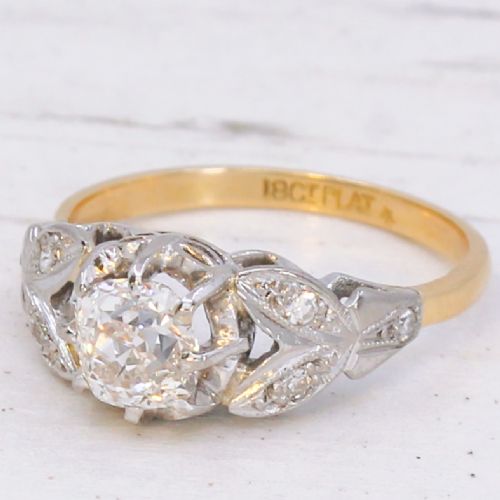
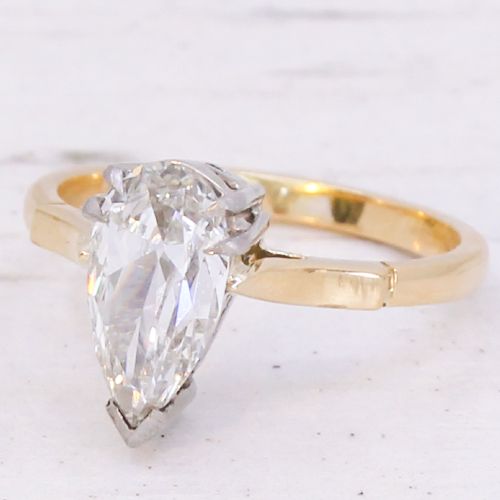
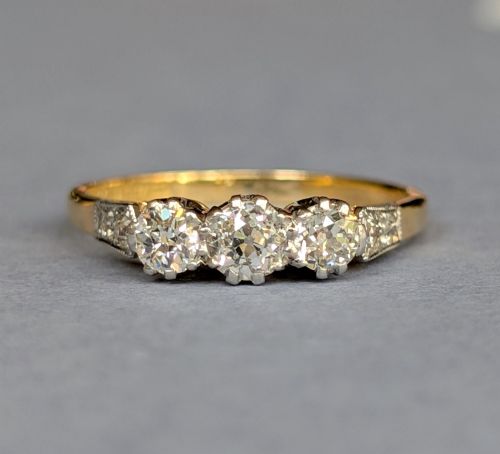
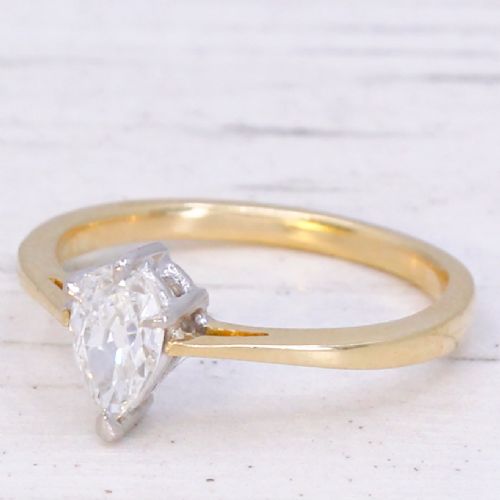
Many examples combine 18ct yellow gold shanks with platinum settings to enhance the brilliance of the stones. This dual-metal construction remains a hallmark of surviving pieces from the decade.
How they were made
Jewellers utilised 18ct yellow gold, 18ct white gold, and platinum to fabricate these mounts, frequently combining gold bands with platinum top settings. Platinum offered the structural strength required to hold intricate geometric arrangements securely without bulk.
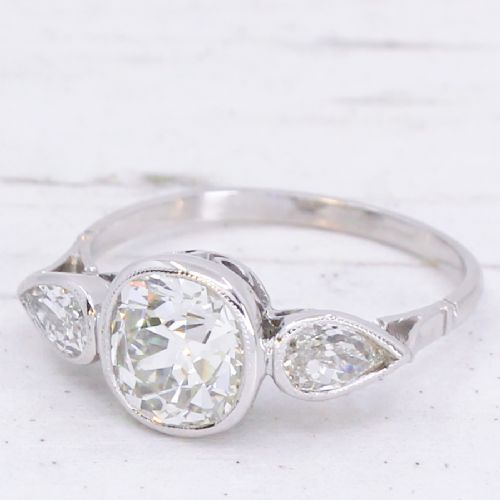
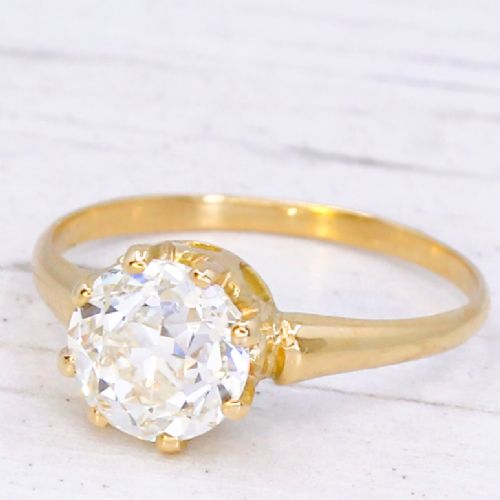
Stones were shaped by hand into old European cuts, old cushion cuts, and old pear cuts, yielding softer facets than modern brilliant cuts. These hand-cut diamonds and coloured gemstones were then set carefully into claw, bezel, or channel mountings.
Some rings manage to squeeze a sapphire, a ruby, and diamonds into a single tiny platinum cluster.
What varies in quality
The quality of a ring rests on the stone selection, proportion, and the precision of the metalwork. Hand-cut diamonds with distinct character and well-matched cluster gems elevate a piece significantly above standard commercial output.
The finesse of the Art Deco platinum or gold gallery work determines the overall distinction of the ring. Crisp geometric detailing and secure, balanced settings separate finer examples from simpler work.
The 1930s Gold Engagement Ring Glossary
- Art Deco
- A design style spanning the 1920s and 1930s characterised by symmetry, geometric patterns, and clean lines. This aesthetic heavily influences the mountings of the period.
- Old European cut
- An early round diamond cut featuring a small table, high crown, and large open culet. These stones catch candlelight with a distinct charm.
- Toi et Moi
- A ring style featuring two main gemstones seated side by side to represent two souls intertwined. French for you and me, this form appears in diamond pairings.
- Trilogy ring
- A ring set with three stones symbolising the past, present, and future. These often feature a larger central diamond flanked by two smaller stones.
- Cluster ring
- A design grouping a central gemstone surrounded by a border of smaller stones. This arrangement maximises visual impact and colour contrast.
1930s Gold Engagement Ring: Frequently Asked Questions
How do I identify a 1930s engagement ring?
Look for characteristic Art Deco geometric motifs, platinum-topped gold settings, and hand-cut stones like old European cuts.
The overall architecture of the mounting usually points clearly to the design conventions of the 1930 era.
What metals were used in the 1930s?
Jewellers predominantly used 18ct yellow gold, 18ct white gold, and platinum for fine ring manufacture.
It was common practice to combine yellow gold shanks with platinum claw or bezel settings to showcase white diamonds effectively.
Are coloured gemstones common in these rings?
Coloured stones appear frequently alongside traditional diamonds in the form of sapphires, rubies, and emeralds.
These gems are typically arranged as vibrant central stones or as bright cluster borders framing a diamond.
How should I wear an antique gold ring?
Wear the ring with care during daily activities, removing it before heavy manual work or swimming.
Routine checks by a jeweller will ensure the claw settings holding the old-cut stones remain secure over time.