
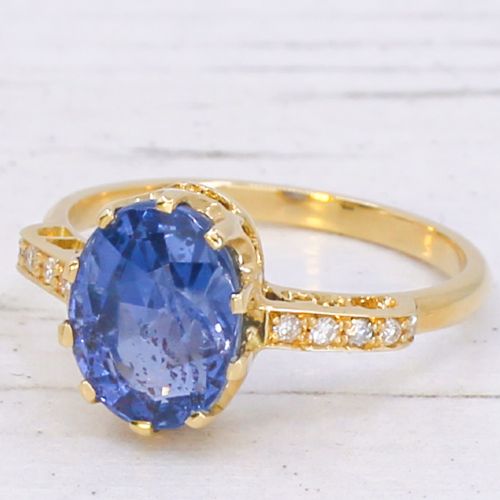
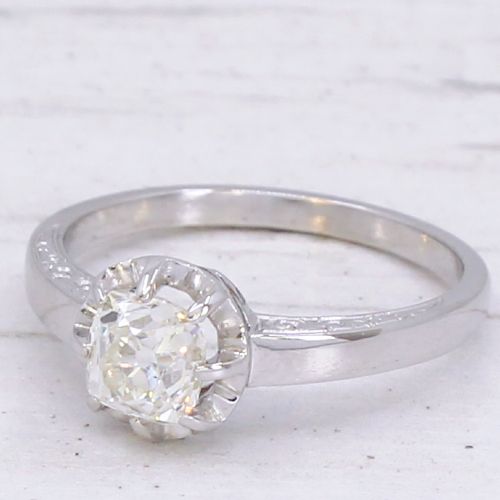


1950s Solitaire Ring
A 1950s solitaire ring delivers mid-century design with a single central stone that captures light entirely on its own.
1950s Solitaire Ring
A 1950s solitaire ring concentrates attention on a single primary gem mounted centrally upon a precious metal band. The selection here spans the mid-century period, reflecting the distinctive aesthetic priorities of the nineteen fifties.
Engagement rings and fine dress rings dominate the selection, often presenting traditional diamond centre stones alongside alternative gems. These pieces embody mid-century modern and retro design sensibilities while retaining a focused silhouette.
Materials and Construction Techniques
Platinum and gold serve as the foundational metals for these pieces, appearing in white, yellow, and rose variations. Stones are secured using traditional claw settings and prongs that maximise light exposure through the pavilion.
Gemstones include old cut, transitional cut, and old European cut diamonds, alongside unheated Ceylon sapphires and Colombian emeralds. Craftsmanship relies on hand-finished metalwork typical of mid-century high jewellery workshops.
The selection encompasses mid-century modern, retro, and 1950s high jewellery stylistic categories.
Distinctions in Quality and Execution
The fineness of a piece rests upon the calibre of the central stone and the precision of its metal mount. Superior examples exhibit exceptional clarity and weight in the primary gem, supported by robust yet delicate prong work.
The architectural balance of the shoulders and the purity of the platinum or gold alloy further separate standard production from high-level mid-century craftsmanship.
Boucheron
The 1950s Solitaire Ring Glossary
- Solitaire ring
- A ring featuring a single prominent gemstone mounted on a band without accompanying side stones. This design emphasises the focal gem above all else.
- Old cut diamond
- A diamond cut by hand during the late nineteenth or early first half of the twentieth century. These stones possess smaller tables and larger culets compared to modern brilliants.
- Transitional cut
- A diamond faceting style bridging old cut stones and modern brilliant cuts. It retains high crown heights while adopting standardised proportions.
- Unheated sapphire
- A sapphire that has undergone no thermal enhancement to improve colour or clarity. Natural stones of this type command significant attention from collectors.
1950s Solitaire Ring: Frequently Asked Questions
How do old cut diamonds differ from modern stones?
Old cut diamonds are shaped by hand rather than automated machinery, resulting in distinct faceting patterns with smaller tables and deeper pavilions.
This historic cutting style creates a softer, candlelit sparkle rather than the sharp brilliance seen in contemporary diamonds.
Which metals were used in the nineteen fifties?
Platinum and various shades of gold, including yellow, white, and rose gold, form the structure of these mid-century rings.
Platinum was frequently chosen for its strength in securing large diamonds, while yellow gold provided warmth for coloured gemstone settings.
How should a vintage ring be worn daily?
Daily wear requires basic care, such as removing the ring during heavy manual labour to protect the platinum or gold prongs.
Regular inspection of the setting ensures the central diamond or gemstone remains firmly secured within its original mount.