



Transitional Cut Diamond
A transitional cut diamond bridges the gap between old cut sparkle and modern brilliant precision, capturing a distinct period of lapidary history.
Transitional Cut Diamond
A transitional cut diamond search phrase leads buyers to jewellery primarily originating from the Edwardian era, the Art Deco period, and the mid-century decades. These items span rings, earrings, engagement rings, pendants, and bracelets created to showcase the specific faceting of the stones.
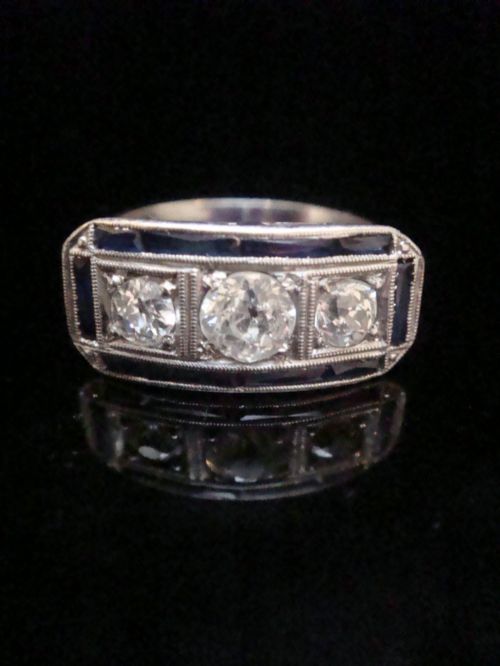
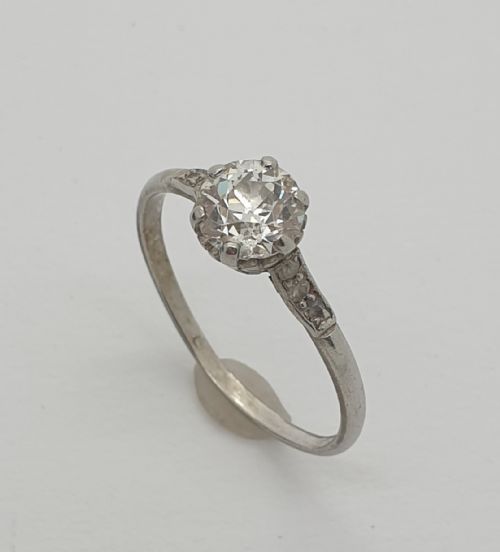
The version most commonly met on this page is the ring, often configured as a solitaire, cluster, or multi-stone piece. These mountings pair the central stones with platinum, white gold, or yellow gold, sometimes accompanied by sapphires or rubies.
Materials and construction
Items rely heavily on platinum and various forms of gold, including 18ct yellow gold, 18ct white gold, and 14ct gold, to securely house the stones. Platinum provides the structural strength needed for intricate Edwardian and Art Deco settings without adding excessive bulk.
Diamonds are cut with characteristics that sit between the older antique European cuts and the modern brilliant cut, displaying smaller tables and slightly larger culets. Metalwork techniques involve detailed bezel settings, claw settings, and plaque or bombe configurations.
Listings span the Edwardian period, 1920, 1930, 1940, 1950, and 1960.
Quality variations in stones and settings
The quality of a piece depends heavily on the precision of the stone cutting and the symmetry of its facets, which dictate how light returns through the diamond. Stones with optimal proportions balance the open culet of older styles with the brilliance of later standards.
Execution of the metalwork also defines the upper tier, where hand-finished platinum galleries, precise millegrain edges, and secure settings demonstrate superior craftsmanship compared to simpler production methods.
The Transitional Cut Diamond Glossary
- Art Deco
- A design style spanning the 1920s and 1930s characterised by geometric lines, symmetrical patterns, and frequent use of platinum alongside diamonds and coloured gemstones.
- Edwardian
- A period of jewellery design noted for delicate platinum work, garland motifs, and lacy openwork structures.
- Bombe
- A ring style featuring a rounded, dome-shaped profile that rises prominently from the finger, often densely set with diamonds.
- Toi et Moi
- A ring design featuring two main stones placed side by side, symbolising two souls intertwined.
Transitional Cut Diamond: Frequently Asked Questions
What is a transitional cut diamond?
A transitional cut diamond is a stone cut during the evolution from antique styles to the modern round brilliant. These stones retain charming optical traits like smaller tables while moving towards modern symmetry.
They appear frequently in Edwardian, Art Deco, and mid-century jewellery settings.
How do I date these pieces?
Dating relies on stylistic clues like geometric Art Deco motifs or delicate Edwardian platinum work. Metal choices such as platinum or 18ct white gold also offer strong chronological markers.
Maker marks and overall manufacturing techniques help narrow down the decade of production.
Are these rings suitable for daily wear?
Most rings from these periods utilise durable metals like platinum and 18ct gold, making them robust enough for regular use. Standard care and occasional professional checks keep the settings secure.
Engagement rings and wedding bands from these eras were built for everyday life.
What metals are typically used?
Platinum is the predominant metal for finer pieces, valued for its strength and bright finish. Gold in 18ct yellow, 18ct white, and 14ct varieties also appears across the selections.
Combinations of platinum heads with gold shanks are common in mid-century items.