



Transitional Cut Ring
When you handle a transitional cut ring, you hold the fascinating bridge between the old-world charm of European cuts and the precise brilliance of modern diamonds.
Transitional Cut Ring
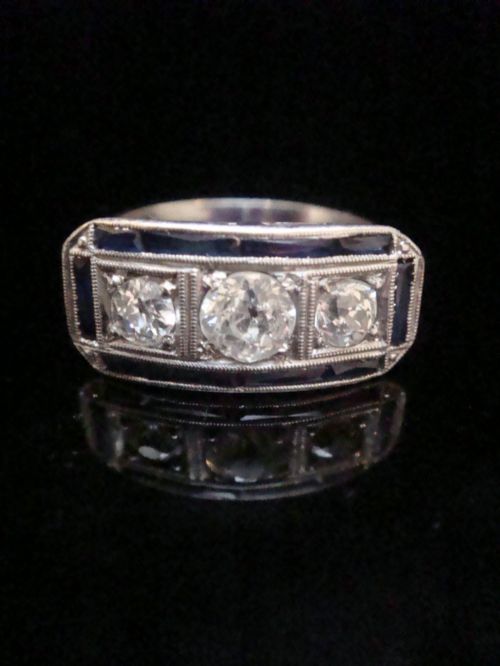
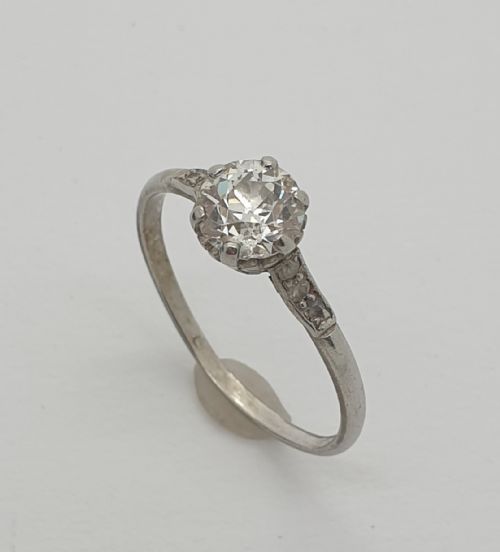
A transitional cut ring centres on a diamond facet arrangement used predominantly during the early-to-mid twentieth century, bridging the older old European cut and the modern brilliant cut.
Most examples you encounter on this page span the Art Deco and Mid-Century periods, taking the form of engagement rings, solitaires, clusters, and multi-stone settings.
The mounting metals frequently combine platinum with white gold, yellow gold, or eighteen-carat gold, often accented by calibre-cut sapphires or rubies.
How they were made
Goldsmiths utilised platinum and gold alloys, casting or hand-fabricating intricate galleries and settings designed to secure diamonds alongside supporting gemstones like sapphires.
The stones themselves were shaped by hand and early machinery, resulting in characteristic smaller tables, larger culets, and steeper crown angles compared to modern brilliant diamonds.
Listings span the Edwardian, Art Deco, and Mid-Century periods, predominantly featuring platinum, yellow gold, and white gold.
What varies in quality
The distinction between tiers rests on the optical performance and proportions of the central diamond, alongside the delicacy and integrity of the metalwork surrounding it.
Fine examples display precise symmetry in their facet distribution and minimal inclusions, while maintaining original settings that show crisp millegrain edges and secure structural joints.
The Transitional Cut Ring Glossary
- Transitional cut
- A diamond facet style bridging the old European cut and the modern brilliant cut, typically featuring a smaller table and slightly larger culet. This geometry creates a distinct pattern of light return cherished by collectors.
- Bombe
- A ring style characterised by a rounded, dome-shaped profile that rises prominently from the finger. This volumetric mounting allows clusters of diamonds and precious metals to catch light from multiple angles.
- Millegrain
- A decorative technique featuring a row of tiny raised metal beads along the edge of a setting. It adds a refined, textural border typical of fine vintage jewellery.
- Solitaire
- A ring featuring a single prominent gemstone, usually a diamond, set as the sole focus of the piece. This design emphasises the individual stone's cut and proportions.
Transitional Cut Ring: Frequently Asked Questions
How can I tell the period?
Dating relies on stylistic clues in the metalwork, such as geometric Art Deco motifs or streamlined Mid-Century forms, alongside the specific characteristics of the diamond cut. Platinum and white gold mountings are especially common in these decades.
Examining the gallery construction and secondary gemstones like sapphires or rubies provides further context for placing the piece within its historical era.
Were these used as engagement rings?
Many examples on the market were originally created as engagement rings, spanning solitaire, cluster, trilogy, and toi et moi configurations. Their durability made them suitable for daily wear.
Today, buyers frequently choose them for the same purpose, valuing the distinct personality and historical weight of the central stone over standard modern equivalents.
How do I care for my ring?
Care involves gentle cleaning with warm soapy water and a soft brush to remove everyday oils from beneath the diamond setting. Avoid harsh chemical cleaners that might affect the gold or platinum metalwork.
Routine inspection by a professional jeweller ensures that the claws holding the transitional cut diamond and any accent stones remain secure and tightly seated.