




18ct Rose Gold
These pieces of 18ct rose gold bring together warm nineteenth-century warmth and mid-century design, offering wearable history that catches the light differently from yellow gold.
18ct Rose Gold
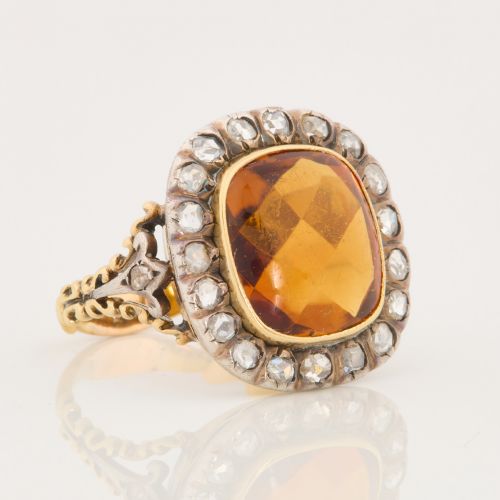
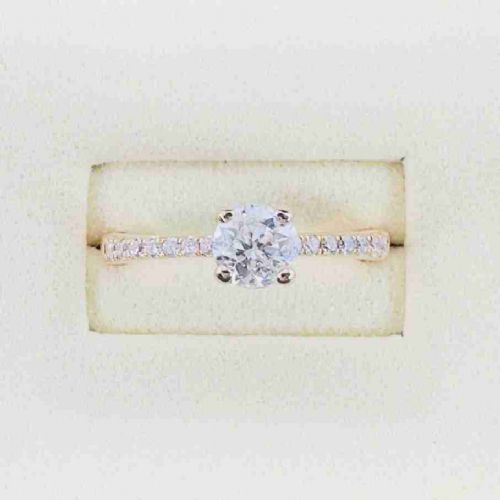
When you search for 18ct rose gold, you find an array of rings, pendants, earrings, and brooches spanning from the Victorian era through the Edwardian period and into the mid-twentieth century. The material carries a distinct blush hue that marks out pieces from the nineteenth and early twentieth centuries alongside later vintage designs.
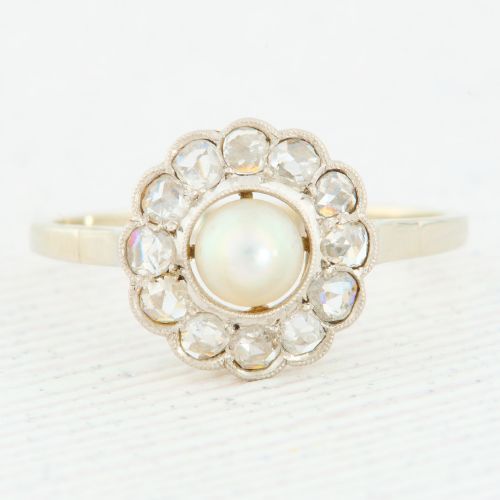
Cluster rings set with diamonds, amethysts, or rubies alongside drop earrings and French medals form the core of what appears on this page. Makers across the decades utilised this alloy to frame gemstones like sapphires, emeralds, and pearls in floral motifs or geometric Art Deco settings.
You will encounter pieces from Georgian and Victorian workshops, French ateliers of the Belle Epoque, and mid-century makers like Andrew Grima. Each era brought its own character to the metal, shifting from heavy foliate scrollwork to clean modernist lines.
Materials and Construction
The alloy combines gold with copper to achieve its characteristic pink or red tone, frequently paired with platinum settings for diamonds in Edwardian and Art Deco pieces. Master jewellers mounted rose-cut and old-cut diamonds directly into silver-topped gold or directly onto the pink metal body.
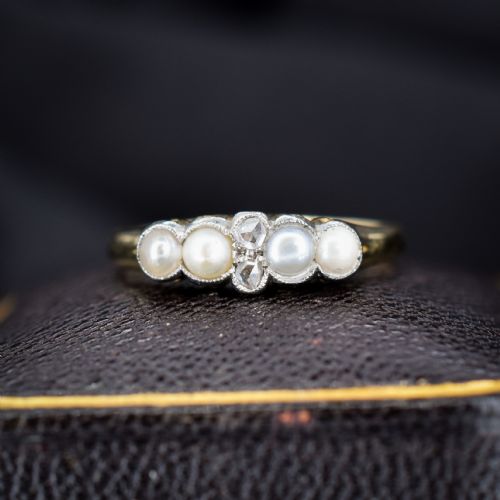
Enamel work, including blue enamel and plique-à-jour, appears alongside seed pearls and natural gemstones secured with fine claw or bezel settings. Hand-carved snakes, floral sprays, and hinged drops demonstrate the high standard of bench work common to these periods.
Several Victorian serpent rings stare back at you with tiny rose-cut diamond eyes designed to symbolise eternal love.
Judging the Standard
Quality rests on the crispness of the hand-engraving and the structural integrity of the mounts holding fragile stones like seed pearls and rose-cut diamonds. Pieces that retain their original fitted boxes and crisp hallmarks show a higher degree of preservation from their original period.
The subtlety of the alloy's colour balance and the precision with which gemstones are matched within a cluster separate standard production from exceptional examples. Balance in design, such as symmetrical floral clusters or well-proportioned drop earrings, defines the better end of the range.
Andrew Grima·IWC·Longines·Omega·Ulysse Nardin·Roberto Coin
The 18ct Rose Gold Glossary
- Rose-cut diamond
- A vintage diamond cut featuring a flat base and a domed crown with triangular facets that resemble an opening bud. This style predates the modern brilliant cut and produces a soft, candlelit sparkle.
- Plique-à-jour
- An enamelling technique where the enamel is applied without a backing, creating a translucent stained-glass effect that lets light pass directly through the design.
- Old-cut diamond
- A hand-faceted diamond shape from the nineteenth or early twentieth century with a small table, high crown, and open culet. These stones were cut by hand under lamplight to maximise brilliance.
- Cluster ring
- A ring design featuring a central gemstone surrounded by a border of smaller stones, frequently diamonds or pearls. This configuration maximises visual impact on the hand.
- Guilloché
- A decorative technique where a precise, intricate pattern is mechanically engraved into a metal surface beneath translucent enamel.
18ct Rose Gold: Frequently Asked Questions
How do I care for antique 18ct rose gold jewellery?
Clean these pieces gently using warm water, mild soap, and a soft brush to protect delicate seed pearls and old-cut diamonds.
Avoid harsh chemical dips and ultrasonic cleaners, especially on pieces with enamel or foiled gemstones.
Can I wear an 18ct rose gold ring every day?
Solid gold rings from the Victorian and Edwardian eras are durable enough for daily wear provided the settings remain secure.
Have a professional inspect the claws and band annually to ensure stones do not loosen over time.
How can I tell Victorian rose gold from modern pieces?
Victorian and Edwardian pieces often display distinct hand-carved details, regional hallmarks, and closed-back settings or silver-topped gold mounts.
The copper alloy mix in older items also tends to show a deeper, warmer blush compared to contemporary pink gold formulations.
What is the history of rose gold in antique jewellery?
The metal gained widespread popularity in nineteenth-century Russia, leading to the early term Russian gold, before spreading across Victorian Britain and France.
Jewellers favoured its warm tone to complement coloured gemstones and natural pearls in romantic and sentimental designs.