
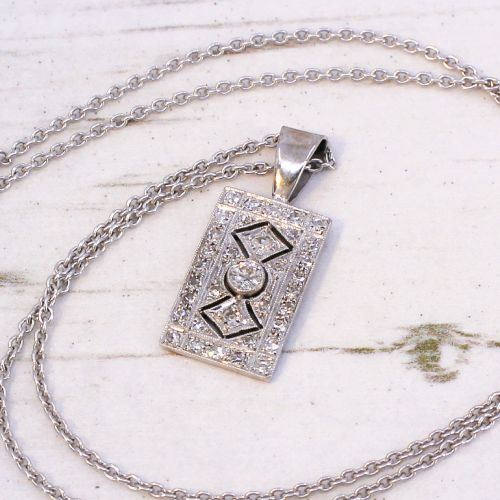
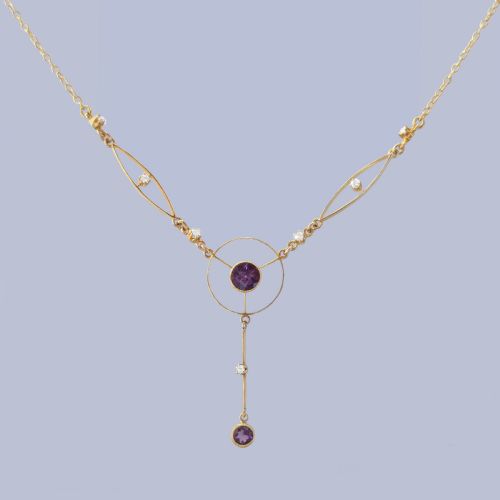
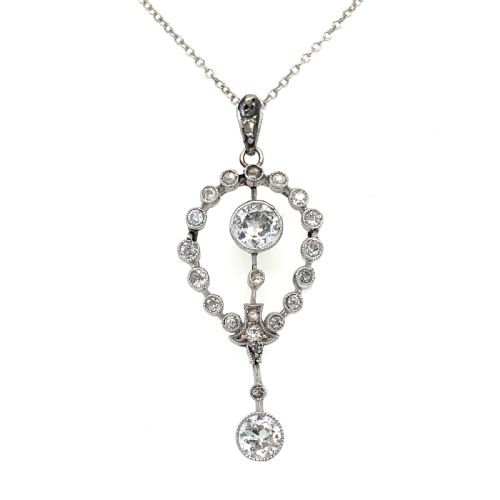
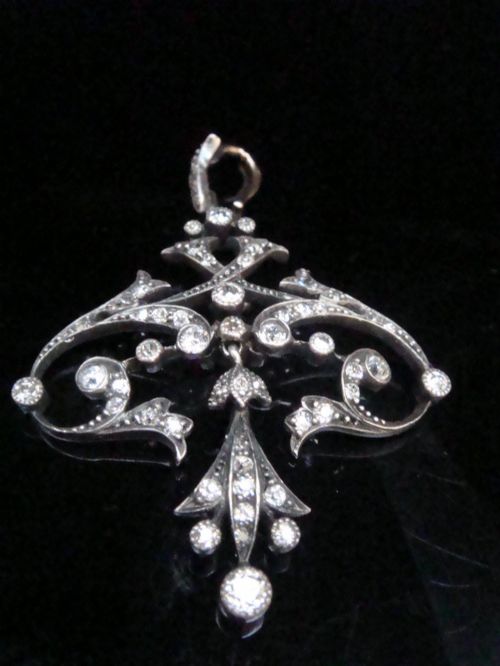




Diamond Drop Pendant Necklace
A diamond drop pendant necklace suspends precious stones from delicate chains, offering historic elegance and enduring sparkle.
Diamond Drop Pendant Necklace
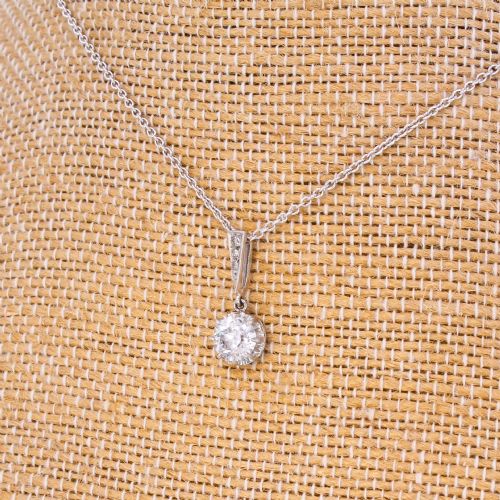
A diamond drop pendant necklace combines central gemstones with suspended motifs designed to catch the light with movement. Pieces matching this diamond drop pendant necklace search span Victorian, Edwardian, Art Nouveau, Art Deco, and mid-century periods.
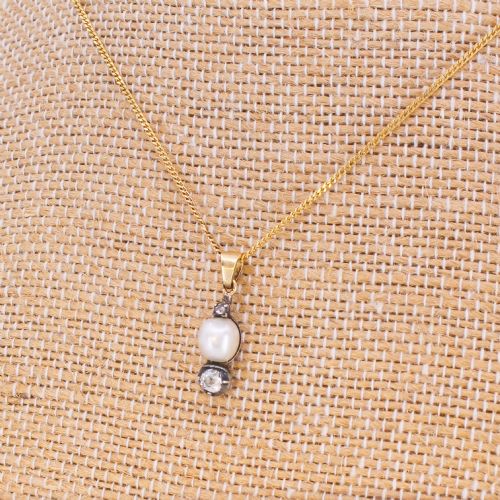
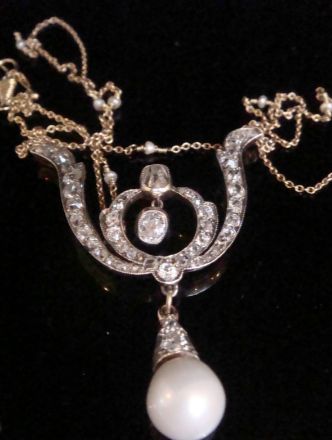
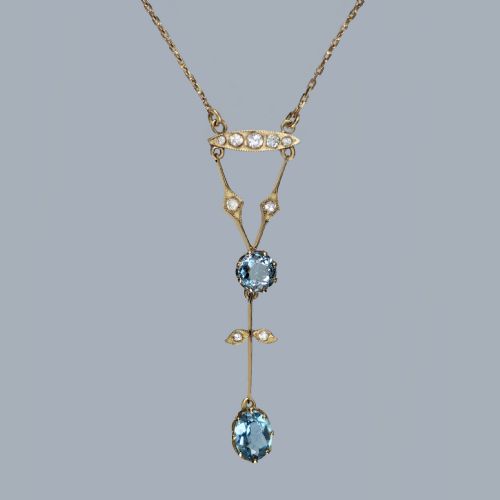
Early twentieth-century examples frequently employ platinum alongside gold to mount old cut diamonds above pearls or aquamarines. The selection on this page demonstrates how makers balanced central stones with articulated drops.
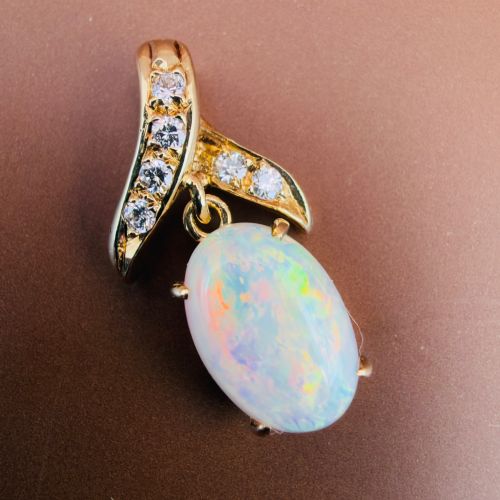
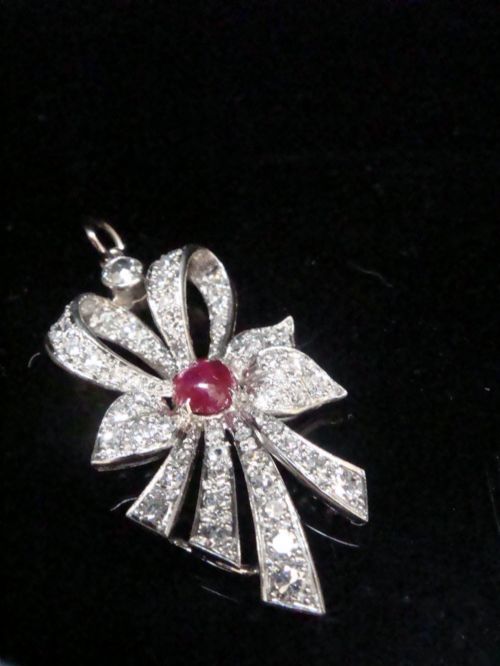
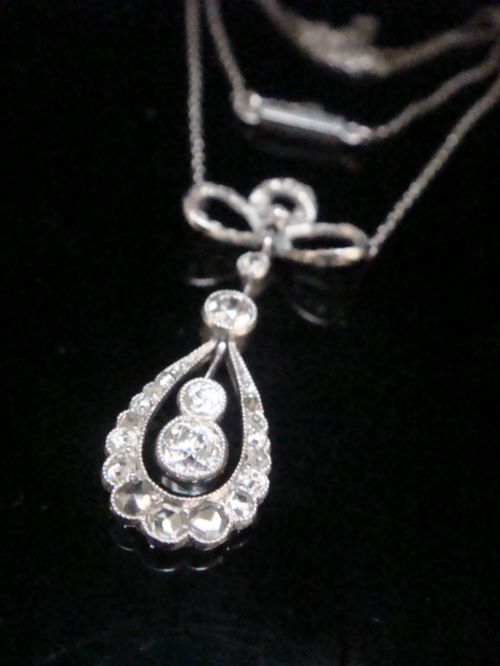
Formations range from strict geometric Art Deco lines to flowing Edwardian bows and lavalieres. Buyers encounter both minimal solitaire drops and elaborate multi-stone clusters featuring sapphires, emeralds, and opals.
Materials and construction methods
Makers utilised platinum extensively during the Edwardian and Art Deco eras for its strength in holding intricate openwork settings. Yellow and white gold in various purities also provided sturdy foundations for gemstone arrangements.
Goldsmiths set old cut diamonds alongside natural pearls, aquamarines, rubies, and emeralds using claw, bezel, and pave techniques. Articulated joints between sections allowed the pendant drops to sway independently on their chains.
One listed pendant incorporates a tiny elephant cluster alongside standard diamonds and emeralds.
Distinctions in craftsmanship and materials
Superior examples display balanced proportions between the suspended drop and the supporting chain, with fine attention to the reverse of the setting. The precision of hand-cut millegrain edges and the symmetry of platinum wirework mark finer output.
Gemstone selection dictates overall character, with untreated emeralds, clean aquamarines, and well-matched old cut diamonds elevating the piece. The integrity of original boxes and the absence of later alterations preserve historical authenticity.
Eduard Foehr
The Diamond Drop Pendant Necklace Glossary
- Old cut diamond
- A hand-faceted diamond cut before modern machine standards, typically featuring a smaller table and higher crown.
- Lavaliare
- A pendant necklace featuring a central stone or ornament from which a further drop hangs loose.
- Millegrain
- A decorative technique involving a row of tiny raised metal beads along the edges of a setting.
- Platinum
- A dense, durable white metal favoured for fine Edwardian and Art Deco jewellery construction.
- Cluster pendant
- A central gemstone surrounded by a ring of smaller accent stones, frequently diamonds.
Diamond Drop Pendant Necklace: Frequently Asked Questions
What periods do these pendant necklaces represent?
The pieces span several distinct historical eras, including Victorian, Edwardian, Art Nouveau, Art Deco, and mid-century modern periods. Each era brought unique aesthetic preferences and mounting techniques to the jewellery.
Craftsmen of the early twentieth century favoured platinum and intricate wirework, whereas later decades introduced cleaner lines and different gold alloys.
How do old cut diamonds differ from modern ones?
Old cut diamonds were shaped by hand rather than by computer-guided machinery, resulting in distinct facet patterns and softer edges. These stones often display a warm, subtle glow under candlelight.
Their proportions reflect the lighting conditions of the periods in which they were cut, giving each stone an individual character.
What gemstones accompany the diamonds in these pendants?
Makers frequently paired diamonds with aquamarines, sapphires, emeralds, opals, amethysts, and natural pearls. These coloured stones served as vibrant focal points within platinum or gold settings.
Combinations varied from soft pastel aquamarines in Edwardian pieces to bold emeralds and contrasting onyx in Art Deco designs.
How should antique pendant necklaces be worn?
These delicate historic chains and articulated drops require careful handling during daily wear and storage. Pairing them with appropriate necklines allows the pendant to hang without catching on fabrics.
Keeping the piece in a dedicated box when not in use helps protect the delicate settings and historic chains from accidental strain.