
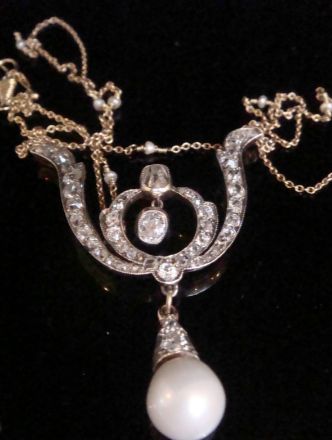
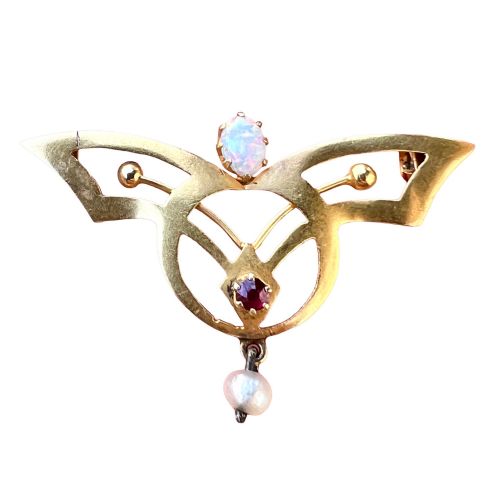
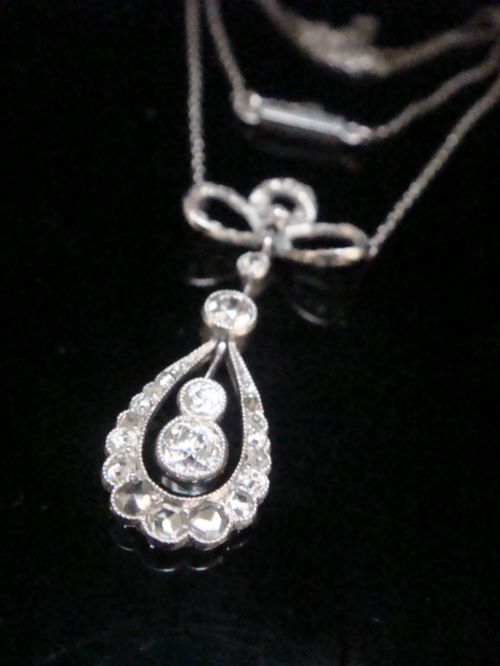


Edwardian 18ct Gold Pendant
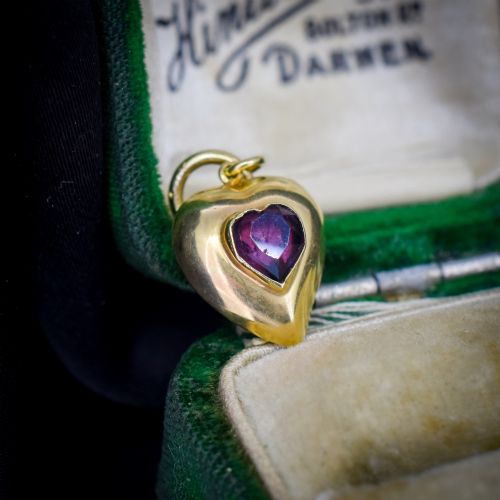
An edwardian 18ct gold pendant brings together fine high carat metalwork and precious gemstones, offering the delicate lapidary artistry prized by collectors of early twentieth century jewellery.
Edwardian 18ct Gold Pendant
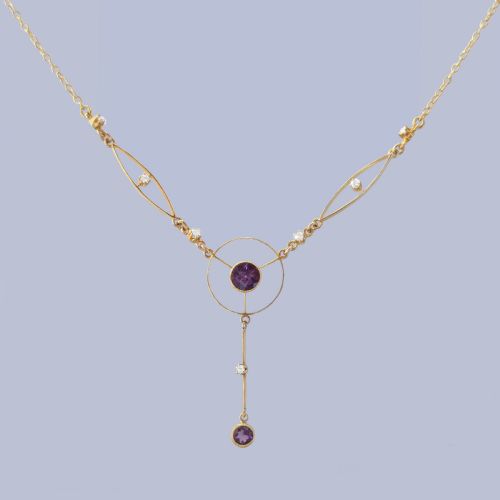
An edwardian 18ct gold pendant sits centrally in this category, accompanied by closely related forms such as lockets, lavalier necklaces, and multi-use brooch pendants. These pieces capture the stylistic transition from ornate Victorian designs through fluid Art Nouveau curves to the symmetrical geometry of the early twentieth century.
Yellow gold forms the foundation of the earliest examples, while white gold and platinum emerge prominently in pieces associated with the Belle Epoque and later Edwardian periods. Gemstones such as diamonds, sapphires, pearls, and amethysts define the surface colour and light of these drops and necklaces.
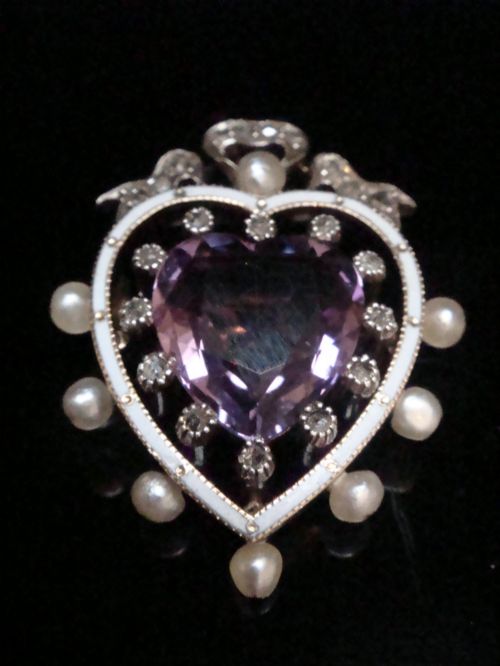
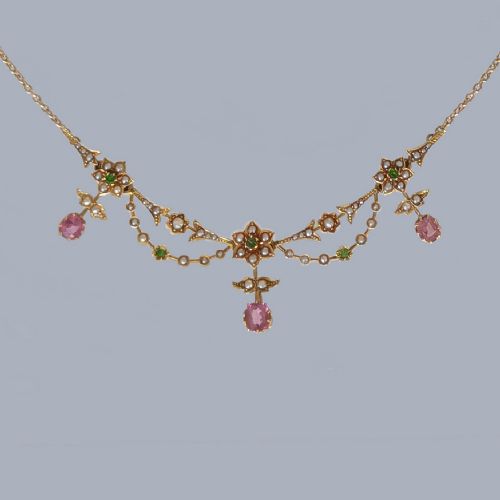
Buyers will encounter varied configurations, including heart lockets, sunburst motifs, ribbon bows, and fringed drops. The selection spans both British workshop production and continental French ateliers operating around the nineteen-tens.
Materials and Construction
Goldsmiths utilised 18ct yellow and white gold alongside platinum to fabricate lightweight yet secure settings that could support intricate stone arrangements without excess bulk. Guilloche enamel and fine openwork frames added visual depth to lockets and charms.
Gemstones including old cut diamonds, natural pearls, and coloured stones were hand-set in bezels, collets, or millegrain edges, a technique where small beads of metal are raised to secure the stone and soften its outline.
Listings feature 18ct gold, white gold, and platinum paired with diamonds, sapphires, rubies, amethysts, and natural pearls across Edwardian and Victorian periods.
Quality Variations
The standard of a piece rests upon the crispness of the metal fabrication, particularly the delicacy of openwork frames and the precision of millegrain borders. Superior examples display harmonious proportions between the central gemstones and the supporting gold or platinum mounts.
The integrity of the piece depends on whether delicate elements like guilloche enamel and seed pearls remain intact and undisturbed by later repairs. Original gemstone matches, such as evenly matched natural pearls or well-chosen old cut diamonds, distinguish finer workshop output from more modest production.
The Edwardian 18ct Gold Pendant Glossary
- Millegrain
- A decorative jewellery technique involving a row of tiny metal beads along the edge of a setting, creating a soft textured border around diamonds or coloured stones.
- Old Cut
- A diamond faceting style common in the nineteenth and early twentieth centuries, characterised by a smaller table, higher crown, and open culet that catches candlelight.
- Guilloche
- An ornamental engraving technique where a precise, intricate geometric pattern is mechanically etched into a metal surface before being covered with translucent enamel.
- Lavalier
- A necklace featuring a pendant or drops suspended freely below a central chain or neckpiece, popular during the Edwardian era.
- Briolette
- A drop-shaped gemstone faceted all over with triangular or diamond-shaped cuts, often drilled near the top for suspension as a pendant.
Edwardian 18ct Gold Pendant: Frequently Asked Questions
How do I care for an edwardian 18ct gold pendant?
Clean these delicate items gently using a soft cloth and warm soapy water, avoiding harsh ultrasonic cleaners that can dislodge pearls or damage enamel.
Store each piece individually in a lined box to prevent scratches between the gold mounts and harder gemstones.
Are these pendants marked with hallmarks?
Many British pieces feature standard assay office stamps and carats denoting 18ct gold, though continental items often carry distinct national marks or eagle stamps.
Faded or partial marks are common on antique jewellery due to decades of gentle wear and polishing.
How can I tell an Edwardian piece from a Victorian one?
Edwardian designs generally favour lighter white metals like platinum and white gold, incorporating airy openwork, garlands, and ribbon motifs.
Victorian pieces tend to use heavier yellow gold settings with more substantial, solid construction and darker gemstone palettes.