

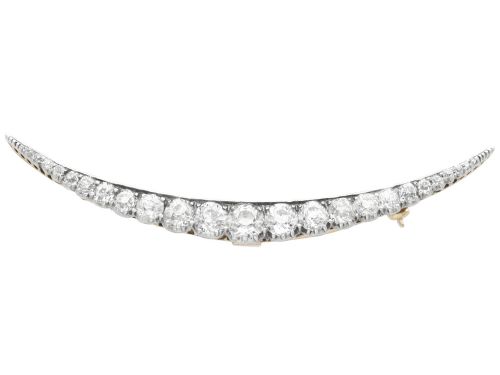
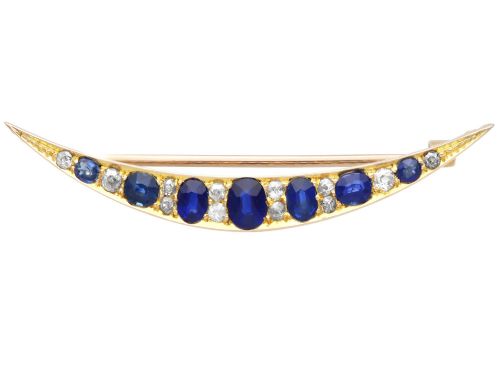
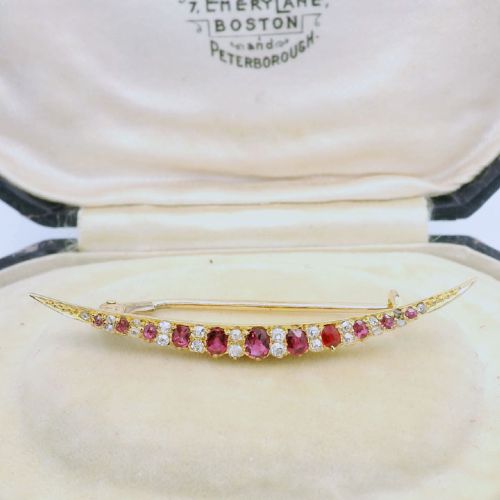


Diamond Crescent Brooch
A diamond crescent brooch is a stellar piece of jewellery that captures the celestial fascination of the late nineteenth and early twentieth centuries.
Diamond Crescent Brooch
A diamond crescent brooch is a distinctive ornament shaped like a moon, designed to pin to garments or lapels with historical charm. When you search for a diamond crescent brooch, you encounter pieces originating primarily from the Victorian and Edwardian eras, stretching from around eighteen eighty into the nineteen twenties.
The forms on this page include simple gem-set crescents, floral bar combinations, and convertible pendants that transition from dress ornaments to neckwear. Gems such as rubies, sapphires, turquoises, and pearls frequently accompany the diamonds along the curved body.
Materials and construction
These pieces utilise metals ranging from fifteen-carat and eighteen-carat yellow gold to platinum, rose gold, and silver-topped gold settings. Platinum and silver additions on the face of yellow gold mountings enhance the brilliance of the stones by providing a bright, white background for the diamonds.
Gems are typically set by hand using period techniques, securing rose-cut and old-cut diamonds alongside rubies and sapphires into the curved metal framework. The construction often accommodates complex multi-stone layouts, blending high-carat gold bases with delicate prong or bezel work.
Diamond Crescent Brooch Retail Price Guide 2026
Typical asking prices for diamond crescent brooch among the pieces listed under this phrase on Sellingantiques today, from the lower quarter to the upper quarter. They describe what is for sale here now, not the wider market.
Listings feature periods from the Victorian era through the Edwardian years up to nineteen twenty, utilising platinum, silver, and gold ranging from eight to eighteen carats.
Factors determining quality
The distinction between tiers of quality rests upon the selection and weight of the central gemstones, alongside the fineness of the precious metals utilised. Heavier carat weights in rubies or sapphires and substantial diamond distributions elevate the standard of the piece.
Craftsmanship in the metalwork, such as seamless integration of convertible fittings or intricate floral bar details, demonstrates superior workshop execution. The harmony of the stones along the curve and the preservation of original settings further define the standing of each brooch.
Tiffany
The Diamond Crescent Brooch Glossary
- Old-cut diamond
- A vintage diamond cutting style characterised by a small table, high crown, and deep pavilion, designed to catch candlelight. These stones display softer, broader flashes of light than modern brilliant cuts.
- Rose-cut diamond
- An antique diamond cut featuring a flat base and a domed crown faceted with triangular planes, resembling an unopened rosebud. They possess a subtle, translucent glow.
- Conversion piece
- An item of jewellery adapted from one form to another, such as a brooch fitted with a loop to transform into a pendant. This practice allows historical pieces to find new utility.
- Paste
- A heavy, highly refractive type of glass hand-cut and polished to imitate gemstones in antique jewellery. Paste settings were valued for their own decorative merits in period pieces.
Diamond Crescent Brooch: Frequently Asked Questions
How do I wear a diamond crescent brooch?
These brooches pin securely to heavy fabrics like wool coats, structured jackets, or evening stoles where the weight of the gold and gemstones finds adequate support. Some examples feature integrated loops that allow the crescent to suspend from a chain as a pendant.
Positioning the crescent horizontally or tilted adds a classic decorative accent to lapels, collars, or shoulder seams. Ensuring the pin mechanism fastens securely protects the vintage mounting during wear.
How do I distinguish Victorian from Edwardian pieces?
Victorian brooches, dating from the eighteen eighties and nineties, frequently employ fifteen-carat or eighteen-carat yellow gold and often combine diamonds with rubies, sapphires, or turquoise in warm tones. They may incorporate silver-topped gold to enhance stone brightness.
Edwardian pieces from the nineteen hundreds onwards lean towards platinum and lighter gold foundations, often showcasing finer, airier openwork designs. The introduction of platinum allowed jewellers to create delicate, lace-like settings that typify the later period.
Were these brooches used for other purposes?
Certain examples double as hair pins or convertible pendants, reflecting the versatility expected in nineteenth and twentieth-century wardrobes. Fitted cases occasionally accompanied these multi-use items to store interchangeable fittings.
This adaptability meant a single crescent could transition from a daytime hair ornament to an evening bodice brooch or pendant. Such dual-purpose designs highlight the ingenuity of period manufacturing.
What gems accompany diamonds on these crescents?
Rubies and sapphires appear frequently alongside diamonds, often graduating in size to follow the curve of the crescent moon. Turquoise and pearls also feature in specific Victorian interpretations.
These coloured stones provide contrast to the white sparkle of old-cut or rose-cut diamonds. Burmese and Thai origins appear among the rubies and sapphires recorded in the listings.