



Victorian Moon Pin
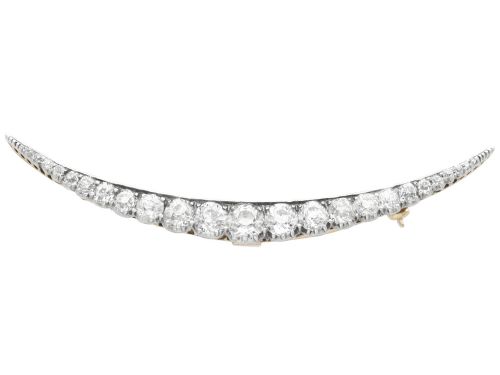
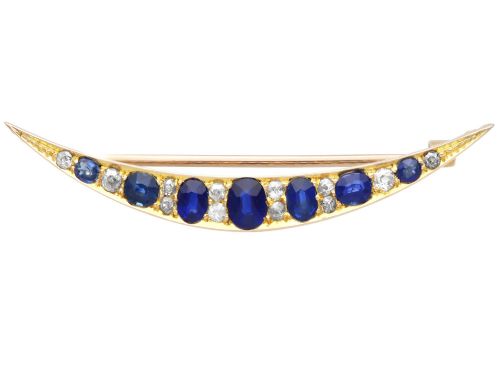
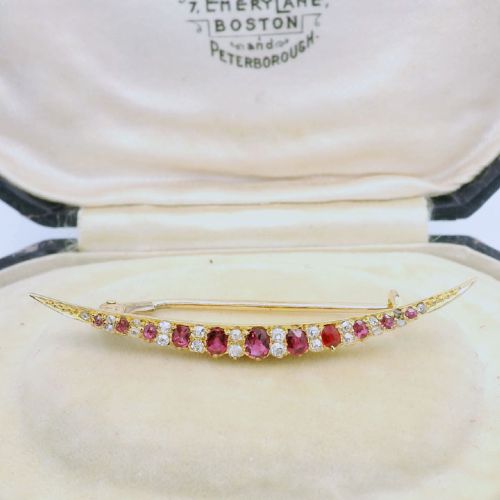
A victorian moon pin is a celestial crescent jewel set with diamonds, rubies, sapphires, pearls, or moonstones, offering enduring symbolic romance.
Victorian Moon Pin
A victorian moon pin takes the form of a crescent moon, often paired with celestial motifs like stars, swallows, or bar designs. You will most frequently encounter gold crescent brooches set with pearls and rubies or diamonds.
The pieces span the Victorian, late Victorian, and Edwardian periods, stretching from eighteen eighty into the nineteen tens. These jewels were cherished tokens of love and fidelity during the nineteenth and early twentieth centuries.
Materials and Making
Goldsmiths shaped these pieces in nine carat, fifteen carat, and eighteen carat yellow gold, alongside silver settings for specific stones. The metal provides a warm backdrop to the celestial forms.
Gemstone setters clustered natural rubies, sapphires, diamonds, pearls, seed pearls, turquoise, and moonstones along the crescent curves. Precision in claw and flush setting defines the structural assembly.
Victorian Moon Pin Retail Price Guide 2026
Typical asking prices for victorian moon pin among the pieces listed under this phrase on Sellingantiques today, from the lower quarter to the upper quarter. They describe what is for sale here now, not the wider market.
The listings span from eighteen eighty to nineteen ten, moving from Victorian through late Victorian to Edwardian eras in yellow gold.
Distinctions in Quality
The choice of precious metals and gemstone combinations dictates the tier of the piece, moving from nine carat gold with seed pearls to heavier fifteen or eighteen carat gold mounted with substantial rubies and diamonds.
The Victorian Moon Pin Glossary
- Crescent brooch
- A pin formed in the shape of a waxing or waning moon. It was a popular sentimental jewellery format in the late nineteenth century.
- Seed pearl
- A very small, natural or saltwater pearl, typically drilled and threaded or set closely together. They form delicate frothy patterns on gold frames.
- Yellow gold
- Gold alloyed with copper and silver to produce a warm yellow colour. It served as the primary metal for Victorian and Edwardian mounts.
- Bar brooch
- A narrow pin featuring a straight metal bar as the main structure, sometimes supporting a central crescent motif. It fastens securely to heavy garments.
Victorian Moon Pin: Frequently Asked Questions
How do I wear a victorian moon pin?
Pin the crescent securely to the lapel of a tailored jacket, the collar of a blouse, or the centre of a heavy wool scarf. The weight of the gold and gemstones requires sturdy fabric for proper support.
Historically, these pieces fastened shawls, cravats, and high collars. Today, they transition easily from daytime knitwear to evening wear when anchored correctly.
Were these pins worn every day?
Victorian and Edwardian owners wore these jewels frequently as personal daily adornments or tokens of affection. The durable gold and securely set gemstones suited regular use.
Despite their delicate appearance, fifteen carat and eighteen carat gold mounts withstand normal handling. Pearls and softer stones require gentle care during daily wear.
How do I tell Victorian from Edwardian pieces?
Victorian pieces often display heavier yellow gold settings and dense clusters of rubies, diamonds, and pearls. They carry a robust weight characteristic of nineteenth-century manufacture.
Edwardian examples tend towards lighter yellow gold work, sometimes incorporating platinum accents or airy seed pearl arrangements. The transition reflects shifting stylistic preferences towards lighter mounts.
What do moon pins symbolize?
The crescent moon symbolised change, female empowerment, growth, and romance in nineteenth-century jewellery design. Pairing the moon with pearls or gemstones enhanced these protective and sentimental meanings.
When combined with a swallow, the motif represented safe return and loyalty. These layered meanings made them popular gifts between romantic partners.