
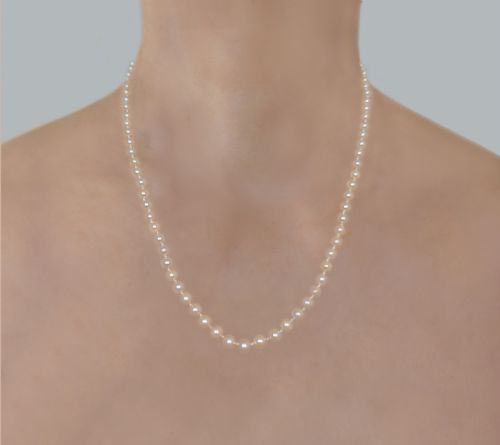
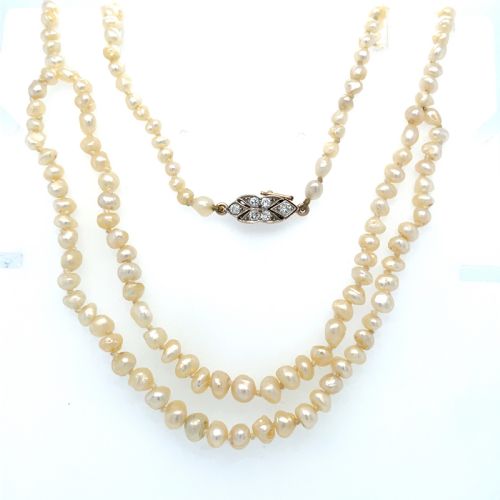
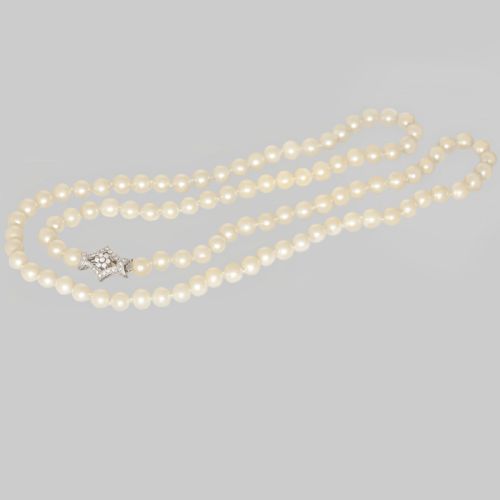


Diamond Clasp Pearl Necklace
A diamond clasp pearl necklace pairs lustrous strands with a sparkling fastener designed to be worn visibly at the front or side.
Diamond Clasp Pearl Necklace
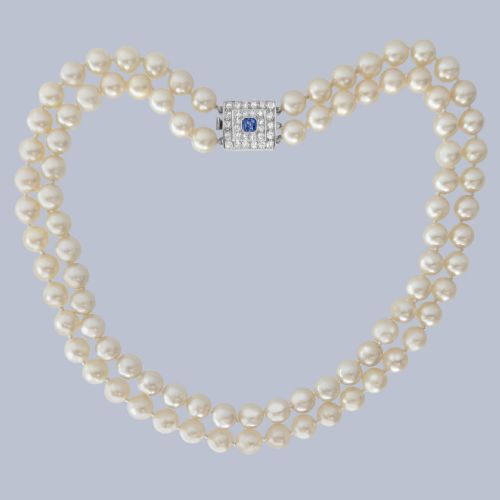
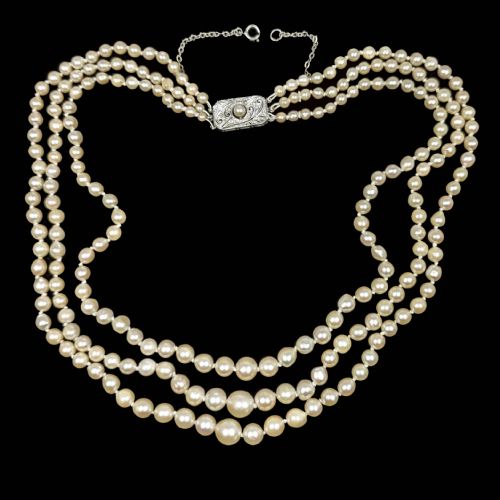
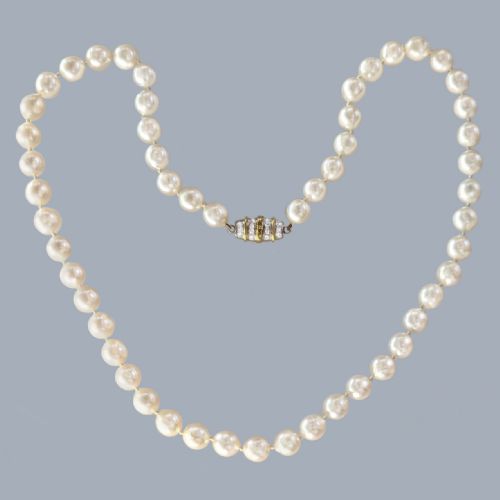
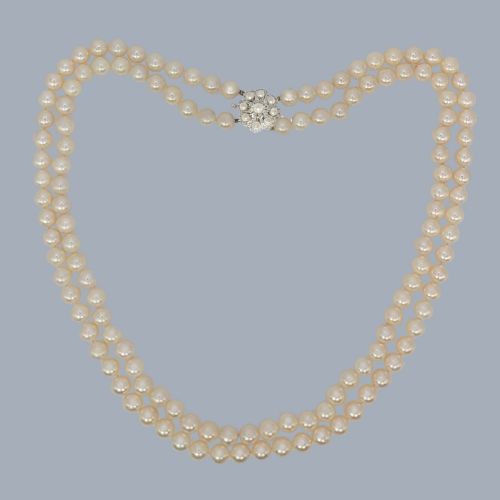
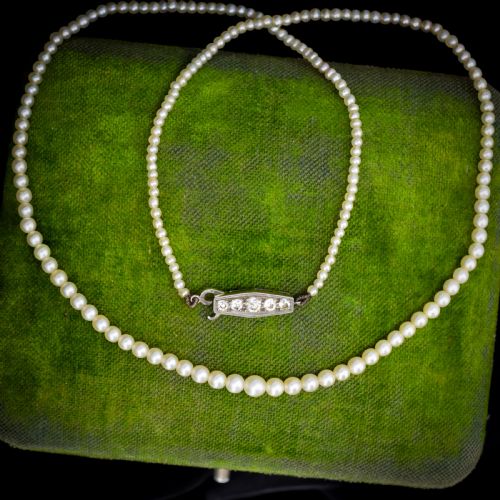
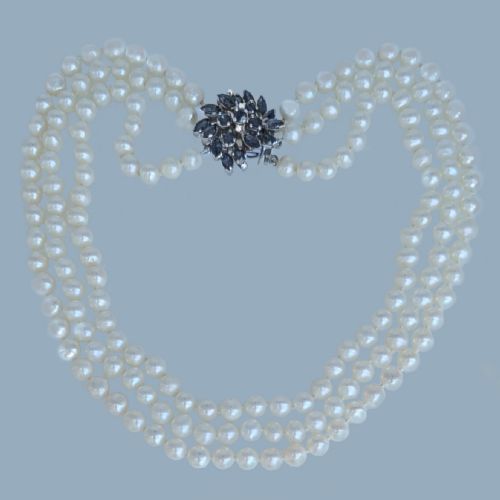
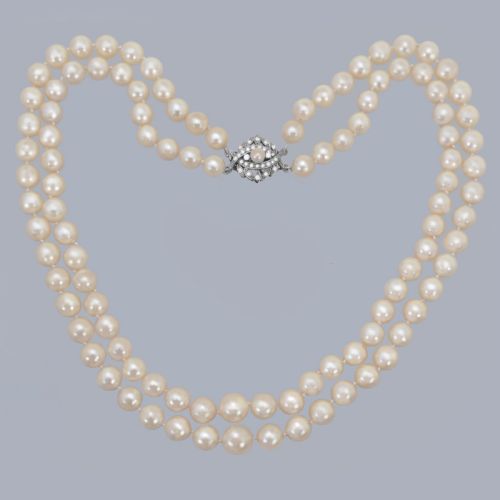
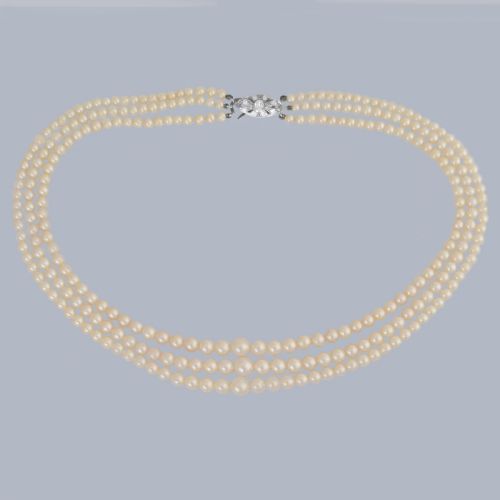
A diamond clasp pearl necklace combines organic pearls with a precious metal fastener set with diamonds, appearing across single, double, triple and multi-strand configurations. These pieces span the Edwardian era, Art Deco period, and mid-century decades, featuring lengths from short chokers to long multi-row designs.
The pearls themselves include both natural saltwater specimens and cultured varieties, sometimes paired with gemstones such as sapphires, emeralds, rubies or turquoise alongside the diamonds. The metal settings for the clasps utilise 9ct gold, 15ct gold, 18ct white gold, 18ct yellow gold, and platinum.
How They Were Made
The construction relies on drilling pearls to string them onto silk or specialised thread, frequently finished with restrung vintage strands to ensure structural security. Clasps are forged in gold or platinum and hand-set with old-cut, rose-cut or modern brilliant-cut diamonds, often incorporating box fasteners or decorative floral and geometric motifs.
Coloured gemstones like sapphires, emeralds and rubies are integrated into the clasps alongside the diamonds, utilising millegrain edges and openwork metal frames typical of Edwardian and Art Deco manufacturing techniques.
Diamond Clasp Pearl Necklace Retail Price Guide 2026
Typical asking prices for diamond clasp pearl necklace among the pieces listed under this phrase on Sellingantiques today, from the lower quarter to the upper quarter. They describe what is for sale here now, not the wider market.
Clasp materials recorded across the inventory include platinum, 9ct gold, 15ct gold, and 18ct white gold.
What Varies in Quality
Quality rests on the origin and lustre of the pearls, distinguishing between natural saltwater examples and cultured counterparts, alongside the uniformity of their grading and sizing across the strand. Gemological reports often accompany finer pieces to verify pearl origin and diamond specifications.
The craftsmanship of the clasp dictates the upper tier of the range, where complex floral, foliate or geometric designs set with substantial old-cut or certified diamonds demonstrate superior goldsmithing compared to simpler box fasteners.
The Diamond Clasp Pearl Necklace Glossary
- Cultured Pearl
- A pearl formed with human assistance by inserting a nucleus into an oyster or mollusc. These dominate mid-century and later listings.
- Old Cut Diamond
- A vintage diamond cutting style characterised by a small table, high crown and open culet, commonly found in Edwardian and Art Deco clasps.
- Rose Cut Diamond
- A diamond cut with a flat base and a domed, faceted top resembling an unopened rosebud. This cut appears frequently on antique pieces.
- Natural Saltwater Pearl
- A pearl formed organically in marine waters without human intervention. These are documented in Edwardian and early twentieth-century pieces.
- Millegrain
- A decorative jewellery technique featuring a line of tiny metal beads along the edge of a setting. It is typical of Edwardian and Art Deco design.
Diamond Clasp Pearl Necklace: Frequently Asked Questions
How do I wear a diamond clasp pearl necklace?
These necklaces are traditionally designed so that the decorative diamond fastening can be worn visibly at the front or side of the neck rather than hidden at the back.
Matching the strand length and row count to your neckline allows the jewelled clasp to serve as the focal point of the piece.
What periods do these pearl necklaces come from?
The pieces span the Edwardian era, Art Deco period of the 1920s and 1930s, and various mid-century decades including the 1940s, 1950s, and 1960s.
Each period brings distinct clasp styles, ranging from delicate Edwardian floral motifs to geometric Art Deco platinum designs and bolder mid-century white gold clusters.
Are the pearls natural or cultured?
Listings feature both natural saltwater pearls and cultured pearls, with many period pieces accompanied by gemological certificates to verify their origin.
Natural pearls are more commonly found in older Edwardian examples, while cultured varieties appear widely across 1920s, 1930s, and post-war designs.
How should I care for a restrung pearl necklace?
Pearls are organic gems that benefit from being stored flat in a soft pouch away from harsh chemicals, perfumes, and cosmetics.
Many vintage and antique necklaces are noted as recently restrung, but regular inspection of the silk thread near the clasp ensures the strand remains secure.