



Desktop Posting Box
A desktop posting box is a sturdy desk accessory designed for domestic mail, combining utility with fine timber and metalwork.
Desktop Posting Box
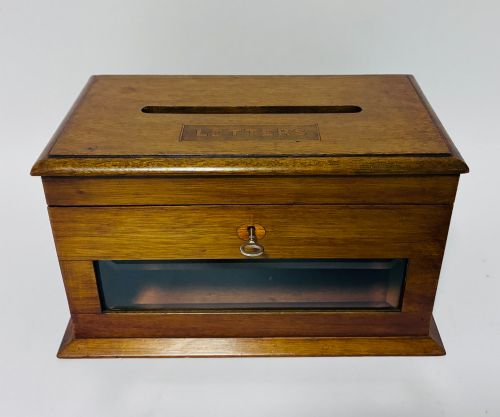
A desktop posting box provides a secure receptacle for correspondence on a writing desk or in a hallway, organising incoming and outgoing mail before collection. When searching for a desktop posting box, buyers encounter items fashioned as miniature chests, wall-mountable boxes, or inclined letter chutes designed for domestic use. The pieces listed on this page span the nineteenth and early twentieth centuries, encompassing Victorian, Edwardian, Regency, and Arts and Crafts examples.
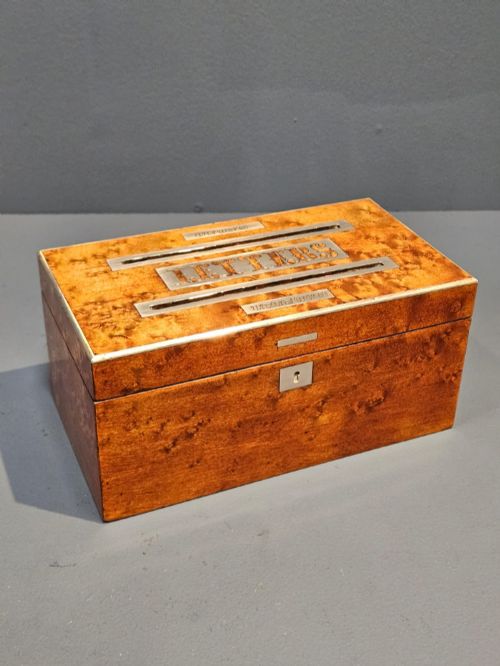
Most items on this page are constructed from timbers such as oak and mahogany, often fitted with brass mounts or glass panels. Function varies from simple lidded boxes to clever novelty pieces labelled for answered and unanswered post. Country house variants appear frequently alongside more refined French satinwood pieces, offering a tangible link to historical correspondence habits.
How they were made
Cabinetmakers constructed these boxes using dense hardwoods like oak, mahogany, and satinwood, frequently employing burr veneers to add rich grain patterns to the sloping lids and front panels. Joinery techniques ensured sturdy construction capable of withstanding daily use in busy households or hotels.
Metal fittings such as brass hinges, escutcheons, and glazed viewing panels were integrated to secure the contents and display incoming mail. Cut steel decoration occasionally adorns the exterior, reflecting the precise metalworking skills of the period.
Desktop Posting Box Retail Price Guide 2026
Typical asking prices for desktop posting box among the pieces listed under this phrase on Sellingantiques today, from the lower quarter to the upper quarter. They describe what is for sale here now, not the wider market.
Some Victorian boxes feature polite labelling to remind owners which letters still require a reply.
What varies in quality
Quality in a desktop posting box rests upon the selection of timber, the crispness of any carved detailing, and the integration of metal hardware. Superior pieces utilise finely figured burr satinwood or well-matched oak, paired with substantial brass mounts rather than plated substitutes.
Design complexity also distinguishes finer examples, such as those featuring specialised compartments for answered and unanswered letters or decorative cut steel work. The integration of glass panels and the precision of the letter slot reveal the maker's hand and the intended status of the desk accessory.
The Desktop Posting Box Glossary
- Escutcheon
- A protective plate surrounding a keyhole, often fashioned from brass to match the box hinges.
- Arts and Crafts
- A design movement favouring handcraftsmanship, simple forms, and honest construction, often seen in solid oak boxes from the period.
- Stationery box
- A desk accessory designed to hold paper, envelopes, and writing implements alongside or within the posting box.
- Correspondence
- Written communication such as letters and notes, for which these boxes provided secure storage.
Desktop Posting Box: Frequently Asked Questions
What is a desktop posting box?
A desktop posting box is a small container designed to hold mail securely on a desk or table before collection.
These pieces reflect the postal habits of past centuries, providing an organised space for daily letters.
How were these boxes used?
Household members dropped incoming or outgoing letters through the front or top slot to keep correspondence tidy.
Some variants included compartments to sort letters into answered and unanswered piles.
What materials are common?
Timbers like oak, mahogany, and satinwood form the main body of these boxes, often complemented by brass hardware.
Glass panels and cut steel decoration also appear on specific nineteenth-century pieces.
How do I identify the period?
Stylistic clues such as carved oak foliage point to the Arts and Crafts movement or Victorian era, while sleek satinwood indicates the Regency period.
Hardware styles and timber choices further clarify whether a piece dates to the eighteenth or early twentieth century.