
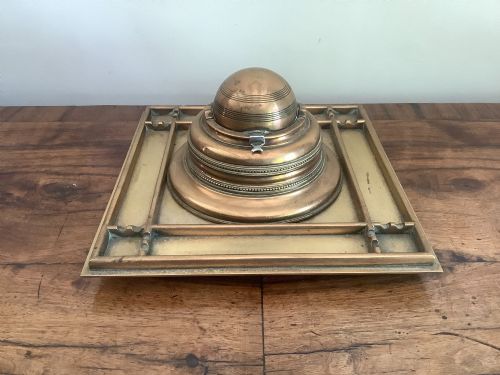


Desktop Organiser Tray
A desktop organiser tray keeps correspondence and ink in order while lending warmth and character to a working surface.
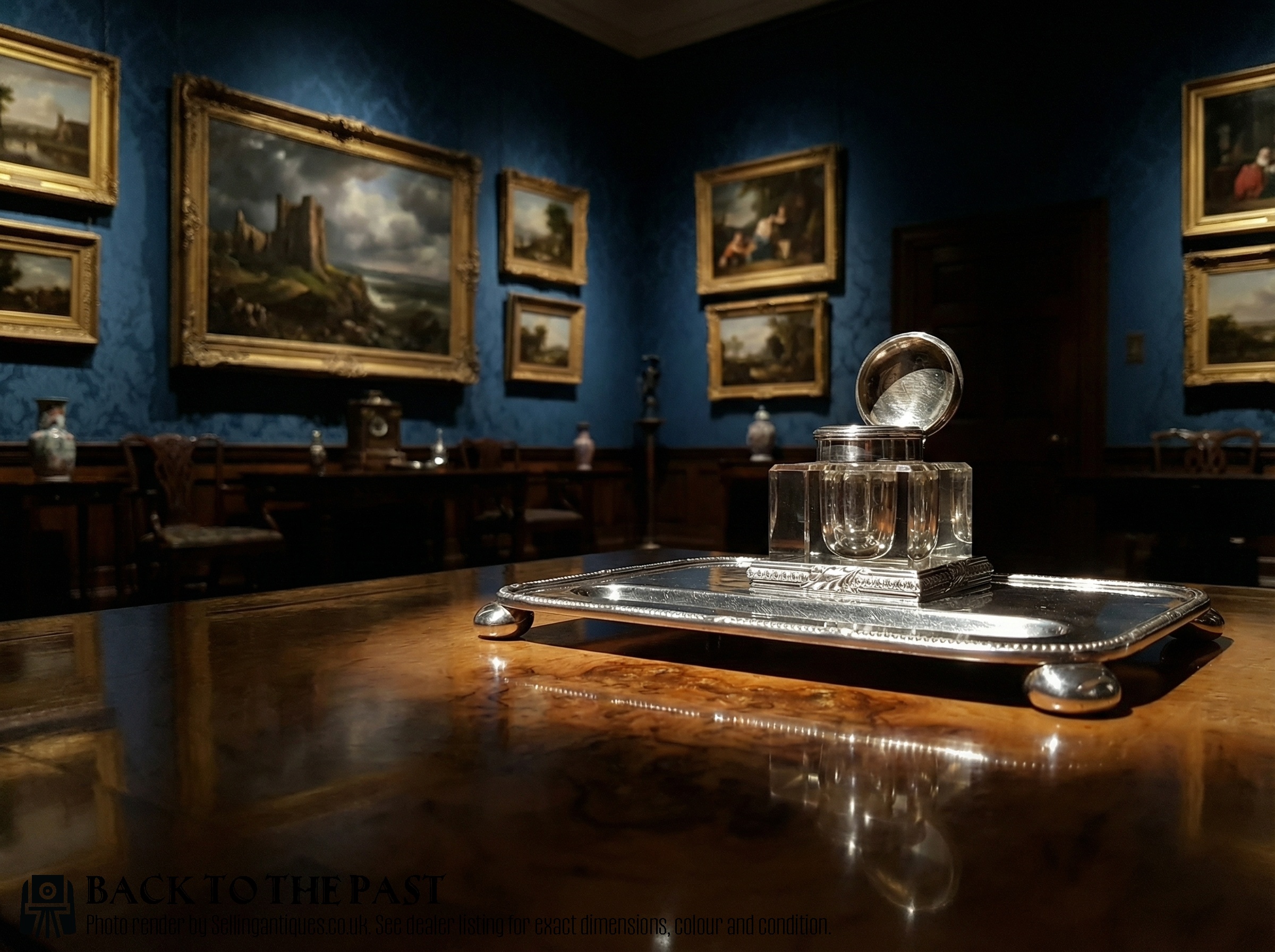
Desktop Organiser Tray
A desktop organiser tray groups desk accessories, letter racks, inkstands, and desk tidies designed to keep workspaces orderly. These desk accessories appear in forms ranging from simple wooden book carriers and two tier tidies to elaborate inkstands fitted with inkwells.
The pieces on this page span the Georgian, Regency, Victorian, and George V eras, reflecting changing demands for desk organisation. Buyers frequently encounter Victorian papier-mache desk sets alongside mahogany and coromandel wood pieces.
How they were made
Cabinet makers utilised dense hardwoods like mahogany, rosewood, and coromandel wood, often shaping them into book carriers, boxes with secret drawers, and tiered letter racks. Skilled joiners constructed these desk accessories with raised bun feet and hand carved details.
Surface decoration involved diverse techniques such as black forest wood carving, paint, and lacquer work. Artisans also applied mother of pearl inlay and brass mounts to papier-mache and ebonised wood bases.
Periods represented on this page span the Georgian, Regency, Victorian, and George V eras.
What varies in quality
Material selection and decorative complexity distinguish finer desk items from simpler utility pieces. Rich timbers like coromandel and rosewood paired with mother of pearl inlay indicate higher workshop ambition than basic mahogany.
The Desktop Organiser Tray Glossary
- Coromandel wood
- A dense, heavily figured timber prized for dark brown colouring and striking contrasting stripes. It frequently appears on luxury nineteenth century desk accessories.
- Papier-mache
- A composite material made from paper pulp or layers of paper mixed with glue, then moulded and lacquered. It provided a smooth surface for painting and mother of pearl inlay.
- Inkstand
- A desk stand holding one or more inkwells along with spaces for pens and small implements. These pieces anchor the fittings of a traditional writing table.
- Letter rack
- A desk accessory featuring upright partitions designed to hold incoming and outgoing correspondence upright. They range from simple wooden divisions to elaborate carved frames.
- Desk tidy
- A general term for compartmentalised desk trays and boxes used to corral small stationery items. These versatile vessels kept everyday writing tools close at hand.
Desktop Organiser Tray: Frequently Asked Questions
What is a desktop organiser tray used for?
These pieces served as functional containers for writing implements, inkwells, and correspondence on nineteenth and early twentieth century desks. They corralled loose items to keep the writing surface clear and organised.
Today, they perform a similar role for modern stationery, mail, and small desk accessories. Their compartmentalised designs remain practical for everyday desktop use.
How do I identify a Victorian desk set?
Victorian examples often feature dark ebonised finishes, papier-mache bodies, or rich coromandel wood inlaid with mother of pearl. Brass mounts and elaborate decorative treatments are also common.
Construction details and hardware styles help confirm the mid to late nineteenth century origin. Comparing the materials to known period pieces clarifies the dating.
Where were these trays placed?
They sat directly on top of writing tables, Davenport desks, and bureau bookcases in studies and libraries. Their placement ensured that ink and writing paper stayed immediately to hand.
Larger pieces occupied the centre of executive desks, while smaller letter racks and tidies fitted onto side tables. They formed an essential part of period interior organisation.
How do I care for antique wood and papier-mache?
Protect wooden surfaces from direct sunlight and extreme humidity changes to prevent the timber from splitting. Dust gently with a dry cloth and avoid harsh chemical polishes.
Papier-mache requires particular care to keep moisture away from the lacquered finish. Gentle cleaning preserves the delicate painted details and inlay work.