

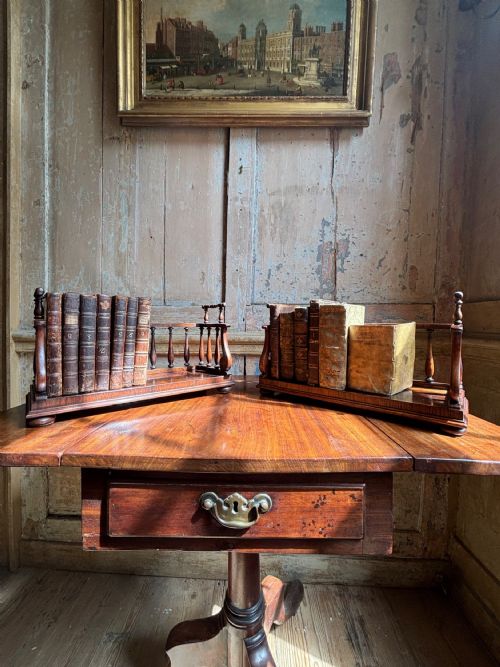


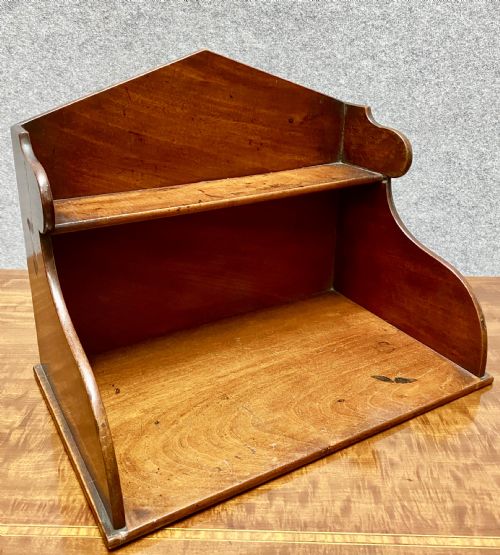


Desktop Book Organiser
These desktop book organiser pieces keep volumes tidy at hand, offering functional elegance for a well-ordered study.
Desktop Book Organiser
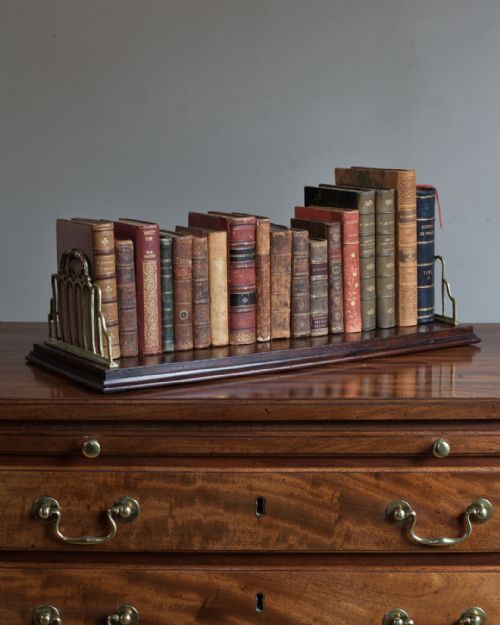
A desktop book organiser provides a compact home for reference volumes and reading materials directly upon a writing surface. Buyers seeking a desktop book organiser encounter various tabletop formats designed to keep working texts upright and accessible during study or correspondence.
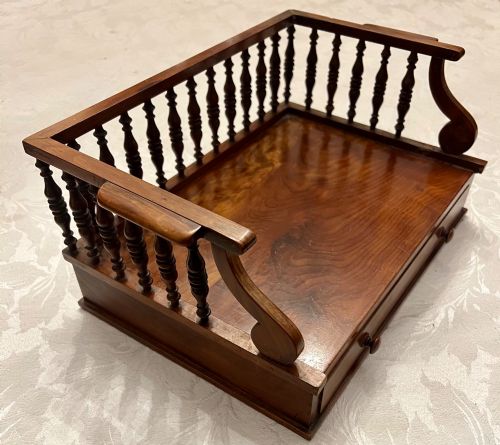
The evidence shows forms ranging from simple extending book slides and book racks to more complex desk tidies, carriers, and revolving bookcases. Period pieces span the Georgian, Regency, and Victorian eras, alongside Edwardian examples and later 1920s pieces.
Materials represented on this page include mahogany, rosewood, walnut, oak, satinwood, brass, wire, iron, and agate. Stylistic influences extend from George III and William IV designs to Victorian Gothic Revival, Art Nouveau, and Anglo-Indian work.
How they were made
Cabinetmakers utilised dense hardwoods such as mahogany, rosewood, walnut, and oak to construct these desktop pieces, often employing sophisticated joinery to ensure stability. Timber selection prioritised rich natural grain patterns that suited genteel interiors and libraries.
Metal mounts in brass and iron frequently reinforced vulnerable joints and provided functional mechanisms for extending slides or housing patented actions. Specialised items incorporated wire, agate inlay, or specialised cabinetry techniques like waterfall shelving and revolving actions.
Desktop Book Organiser Retail Price Guide 2026
Typical asking prices for desktop book organiser among the pieces listed under this phrase on Sellingantiques today, from the lower quarter to the upper quarter. They describe what is for sale here now, not the wider market.
Listings feature mahogany, rosewood, walnut, and oak alongside brass, iron, wire, and agate across Georgian, Regency, and Victorian periods.
What varies in quality
The grade of timber and the sophistication of the cabinetwork largely determine the standing of an individual piece. Finer examples display meticulous attention to grain alignment, careful patination of the wood, and integrated brass mounts that operate smoothly.
Mechanical complexity also separates standard items from superior works, particularly in extending book slides with patented actions or complex revolving desk stands. The presence of distinct stylistic details, such as Gothic Revival motifs or Anglo-Indian carving, elevates the design ambition of the object.
Gillows·Betjemanns
The Desktop Book Organiser Glossary
- Book slide
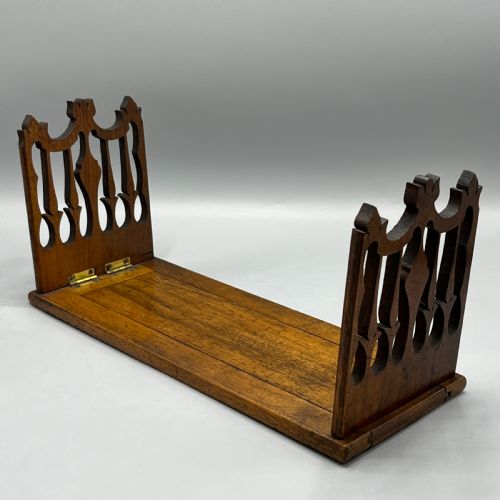
- A device designed to hold a small row of books upright on a flat surface, often featuring extending mechanisms to accommodate varying numbers of volumes. This allows the user to adjust the length as the collection changes.
- Cheveret
- A small mobile set of shelves or drawers mounted above a writing table or desk compartment. It serves to organise correspondence and reference books within arm's reach.
- Waterfall front
- A tiered arrangement of open shelves stepping downwards from back to front. This configuration improves visibility and access to the spines of stored books.
- Bible box
- A sloping-lidded tabletop box traditionally used to store sacred texts and writing materials. These sturdy wooden enclosures often double as compact desktop lecterns.
- Desk tidy
- A compartmentalised tabletop accessory intended for stationery, inkwells, and small volumes. It brings order to crowded writing surfaces through dedicated partitioning.
Desktop Book Organiser: Frequently Asked Questions
How do extending book slides work?
Extending book slides utilise a sliding mechanism, often incorporating brass tracks or scissor actions, that allows the wooden ends to move apart or together. This lets the user adjust the length of the shelf to fit a specific number of volumes.
Such mechanisms were particularly popular during the Victorian period, when patent designs by makers like Betjemanns offered smooth operation. They keep books securely upright without requiring a full bookcase.
What is the difference between a book rack and a book carrier?
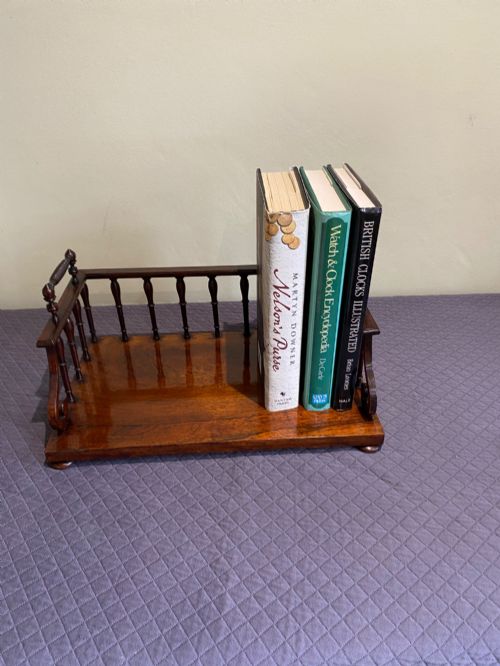
A book rack generally stays in one fixed position on a desk to hold active reading volumes upright. These often feature rigid wooden or metal ends.
By contrast, a book carrier incorporates a central handle or more portable framework designed for moving a selection of books between rooms. Both serve to organise reading materials on a flat surface.
Where were these pieces used?
These pieces sat upon writing desks, library tables, and study surfaces in period homes and offices. They kept working reference books close at hand for writers, scholars, and professionals.
Their compact sizes meant they could occupy limited space while keeping daily texts organised and visible.
How do I care for mahogany and rosewood desktop items?
Maintain the wood by keeping the pieces away from direct sunlight and sudden temperature shifts that might cause timber to dry out or split. Occasional light waxing preserves the natural sheen and protects the grain.
Avoid excessive moisture on brass mounts and wooden surfaces alike, using a soft, dry cloth for routine dusting.
How can I tell a Regency piece from a Victorian one?
Regency items often display clean classical lines, rich rosewood or mahogany timbers, and restrained brass inlay influenced by the early nineteenth century. They favor architectural simplicity and elegant proportions.
Victorian pieces frequently introduce more ornate detailing, such as Gothic Revival motifs, heavier walnut construction, or patented mechanical extensions like those seen in later desk accessories.