



Rosewood Desk Accessory
These rosewood desk accessory pieces span the Regency and Victorian eras, bringing tactile warmth and polished timber to the writing table.
Rosewood Desk Accessory
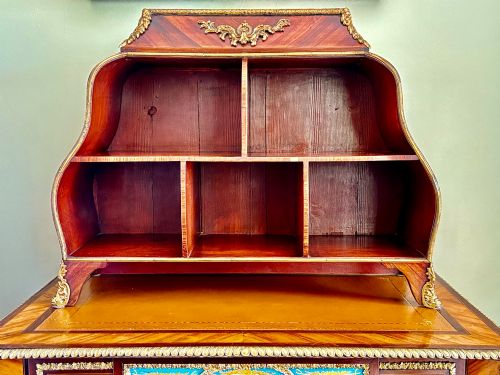
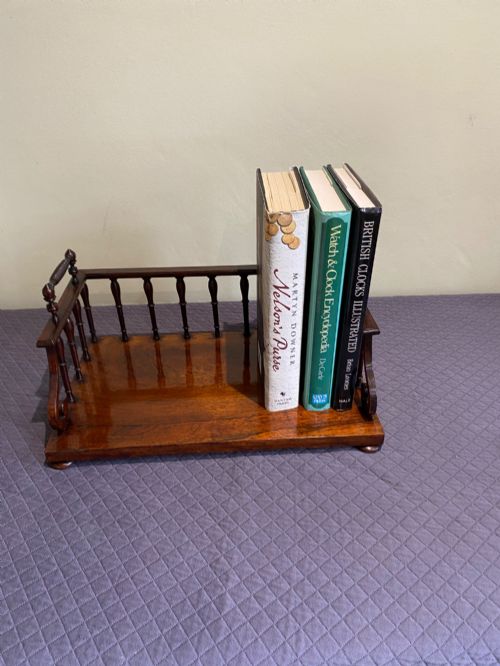
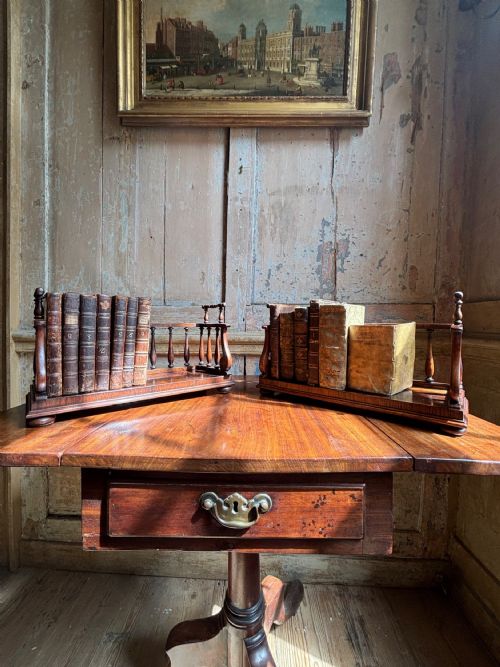
When searching for a rosewood desk accessory, a buyer encounters functional writing equipment and study pieces originating mainly from the Regency and nineteenth-century periods. These items range from book stands, racks, and slides to inkstands, writing slopes, and magnifying glasses designed for the gentleman's study or library.
Each piece served an organised workspace, holding inkwells, supporting heavy volumes, or magnifying small print. The variety reflects the diverse needs of nineteenth-century writing habits, combining utility with decorative cabinetwork.
How they were made
Cabinetmakers utilised dense tropical hardwoods, predominantly rosewood, paired with contrasting boxwood and brass stringing or inlay. These materials provided a durable surface capable of taking a high polish while offering scope for decorative brass mounts and mother-of-pearl details.
Construction techniques involved precise joinery for writing slopes and book slides, alongside fine hand-carving seen on table screen stands and Tunbridge Ware decoration. Glass inserts formed the inkwells, while silk featured in textile panel screens supported by carved wooden frames.
Rosewood Desk Accessory Retail Price Guide 2026
Typical asking prices for rosewood desk accessory among the pieces listed under this phrase on Sellingantiques today, from the lower quarter to the upper quarter. They describe what is for sale here now, not the wider market.
A nineteenth-century magnifying glass on your desk reminds you that ancestors took their small-print reading very seriously indeed.
What varies in quality
The standard of a rosewood desk accessory depends upon the crispness of the brass inlay and the precision of the boxwood stringing. Superior examples display seamless integration of contrasting metals and timbers into the dark grain of the rosewood.
Carved details, such as those on book stands or table screens, distinguish finer workshops from standard production. The depth and clarity of hand-carved elements elevate the piece from simple utility to high-status cabinetwork.
The Rosewood Desk Accessory Glossary
- Writing slope
- A portable box with a hinged, slanted writing surface that opens to reveal storage for stationery and inkwells. These pieces were essential for correspondence during travel or in rooms without a fixed desk.
- Tunbridge Ware
- Small wooden objects decorated with mosaic patterns created from thousands of tiny tinted wood blocks. This meticulous form of marquetry originated in Kent and created complex geometric or pictorial designs.
- Book slide
- An adjustable rack designed to hold a row of books upright on a desk or table. Many feature expanding mechanisms and decorative ends made from brass-inlaid hardwoods.
- Inkstand
- A tray or stand fitted to hold one or more inkwells alongside pens and sealing wax. These desk furnishings kept writing fluids contained and readily accessible.
- Stringing
- A thin strip of contrasting wood or metal inlaid into a shallow groove on a furniture surface. It creates delicate linear borders that frame panels of figured timber.
Rosewood Desk Accessory: Frequently Asked Questions
What is a rosewood desk accessory used for?
These items served practical functions in the nineteenth-century study, from holding volumes upright to providing a portable surface for correspondence.
Today, they function as decorative desktop storage or display pieces that bring period character to modern workspaces.
How do I identify a Regency piece?
Regency items often feature dark rosewood surfaces combined with precise brass inlay, stringing, and classical proportions.
They reflect the design sensibilities of the early nineteenth century, prior to the heavier ornamentation of the later Victorian period.
Are these items made of solid rosewood?
Most pieces combine solid framing timbers with stable veneered surfaces to showcase the rich grain figure of the wood.
This technique prevented warping while presenting the most decorative grain patterns on flat surfaces.
How should I care for rosewood on my desk?
Keep wooden pieces away from direct sunlight and extreme temperature fluctuations to prevent the timber from drying out.
Occasional dusting with a soft, dry cloth maintains the polished finish without building up heavy wax residues.