

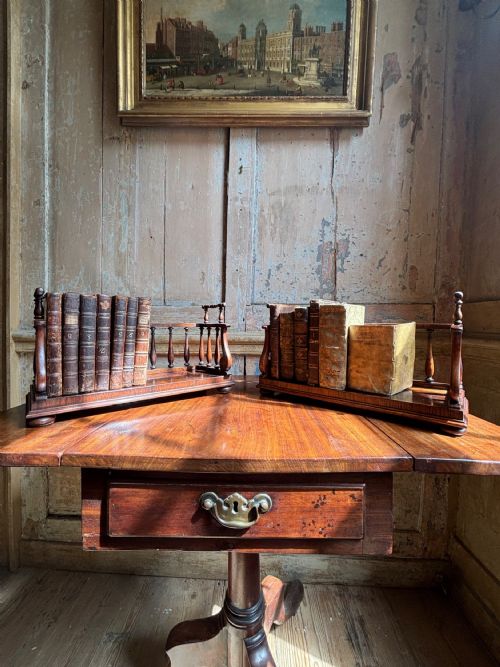


Tabletop Book Trough
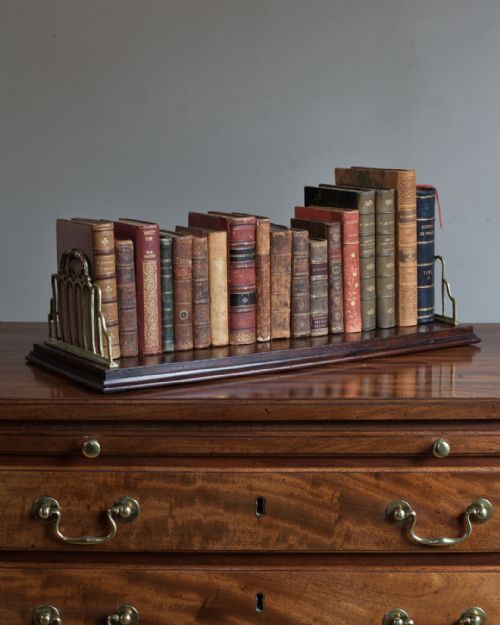
These tabletop book troughs are compact desktop accessories designed to keep volumes tidy, offering both practicality and period charm.
Tabletop Book Trough
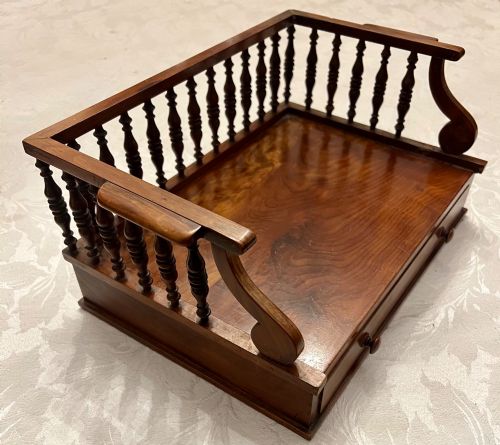
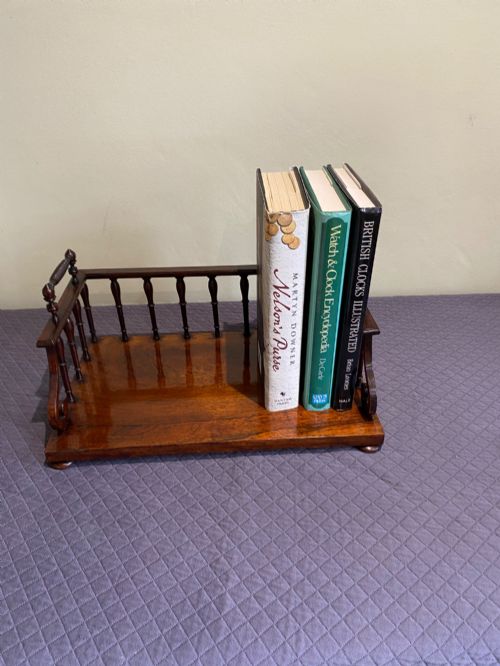
A tabletop book trough provides a neat containment for volumes on a desk or table, appearing in forms such as book stands, book slides, and portable bookshelves. When exploring a tabletop book trough, a buyer encounters pieces originating from periods spanning the eighteenth, nineteenth, and early twentieth centuries.
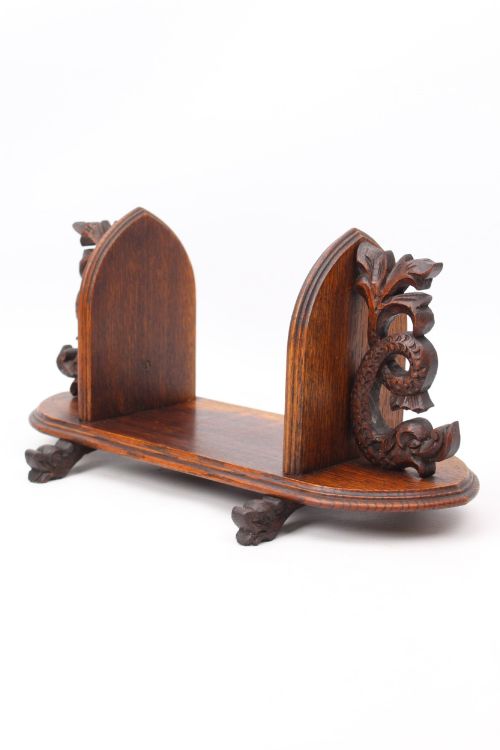
The materials and styles vary widely, ranging from Regency rosewood book carriers to Edwardian arts and crafts oak book stands and Art Deco mahogany designs. Walnut, coromandel, and wire also appear, alongside decorative techniques such as wood mosaic and brass mounts.
Many examples function simply as static troughs, while others incorporate extending mechanisms or revolving structures to suit workspace requirements. These items serve as desk accessories, desk organisers, and small bookcases tailored for domestic or study environments.
Materials and construction
Timbers such as mahogany, rosewood, oak, walnut, and coromandel form the primary structure of these pieces, selected for their grain and durability. Cabinetmakers shaped these dense woods into functional troughs, slides, and revolving stands suitable for heavy use on a desk surface.
Metal components, particularly brass, frequently reinforce corners, hinges, and extending slide mechanisms to ensure smooth operation. In specialised examples, surface decoration incorporates wood mosaic work, notably tunbridge elements, to create intricate geometric patterns across the wood.
Tabletop Book Trough Retail Price Guide 2026
Typical asking prices for tabletop book trough among the pieces listed under this phrase on Sellingantiques today, from the lower quarter to the upper quarter. They describe what is for sale here now, not the wider market.
Some nineteenth-century desk tidies incorporate horses into their decorative vocabulary, merging equine motifs with practical book storage.
Evaluating craftsmanship
The standard of a tabletop book trough rests on the selection of timber and the precision of its joinery. Superior examples display carefully matched wood grains and robust construction that withstands the daily handling of heavy volumes.
Hardware quality distinguishes finer pieces, seen in heavy brass mounts and smoothly functioning extending or revolving mechanisms. The presence of specialised decorative techniques, such as tunbridge wood mosaic, elevates a piece beyond utilitarian desk storage.
Arthur Simpson·Gillows
The Tabletop Book Trough Glossary
- Book slide
- An extending desk accessory designed to hold a variable number of volumes upright between two ends. These slides often feature mechanical adjustments.
- Book trough
- An open-topped container for holding books upright on a flat surface. It provides immediate access to frequently used volumes.
- Tunbridge ware
- A type of decorative woodwork characterised by minute mosaic patterns made from many different coloured woods. This technique adorns specific nineteenth-century book racks.
- Revolving bookcase
- A compact rotating desk or tabletop stand that allows multiple books to be stored and accessed from every angle. These typically date from the Edwardian period.
Tabletop Book Trough: Frequently Asked Questions
What is a tabletop book trough?
A tabletop book trough is a small wooden rack designed to hold a selection of books upright on a desk or table.
These pieces keep frequently used volumes close at hand while organising workspace surfaces.
How do extending book slides work?
Extending book slides feature an adjustable channel or mechanism that allows the ends to move outward.
This design accommodates a growing or shrinking row of books while keeping them securely upright.
What woods were used for these?
Cabinetmakers utilised dense hardwoods such as mahogany, rosewood, oak, walnut, and exotic coromandel.
These durable timbers provided the necessary strength to support heavy volumes during daily office or study use.
Are revolving book stands common?
Revolving book stands appear primarily in Edwardian interpretations, often associated with the Arts and Crafts movement.
Their rotating bases allow users to access a small library of volumes from a seated desk position.