
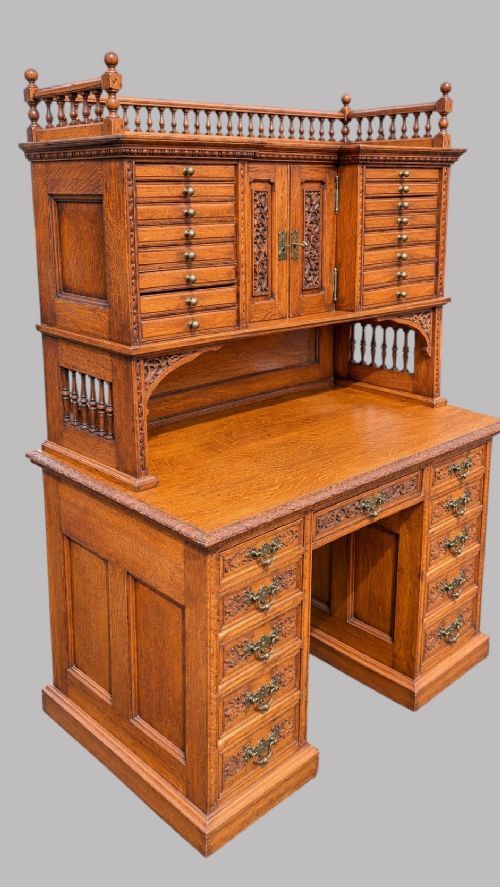
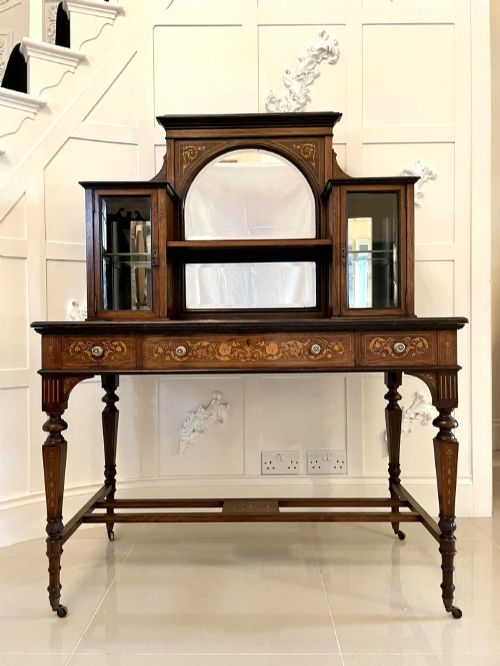
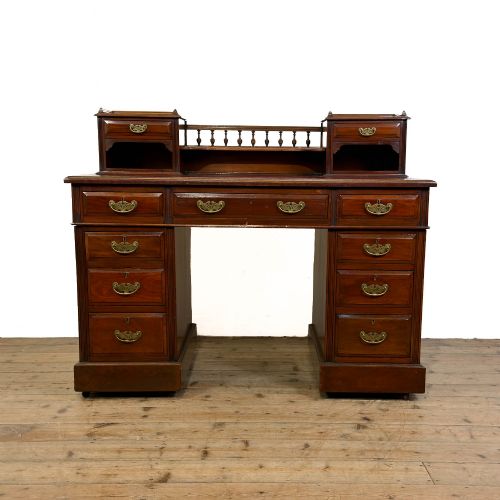
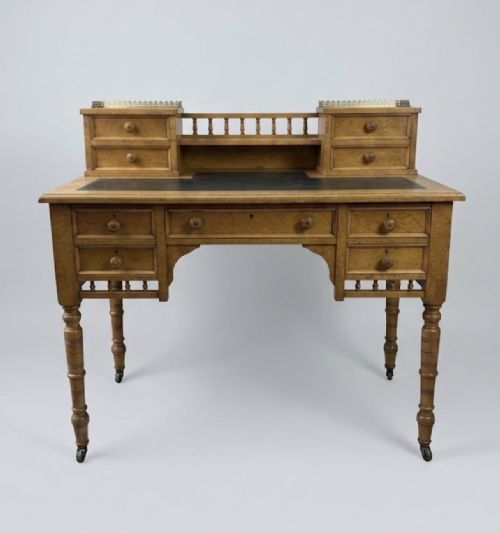

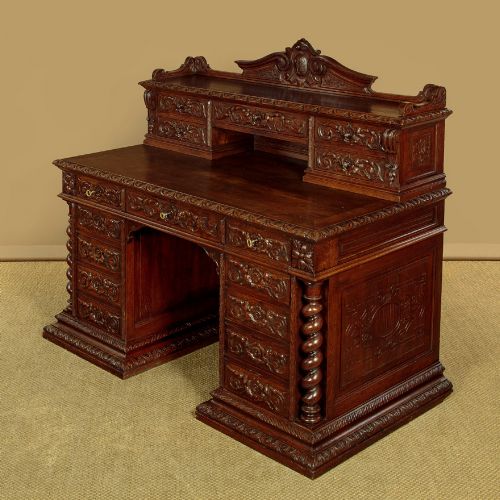


Desk with Superstructure
A desk with superstructure brings architectural presence to your study, offering tiered shelving and drawers above the main writing surface.
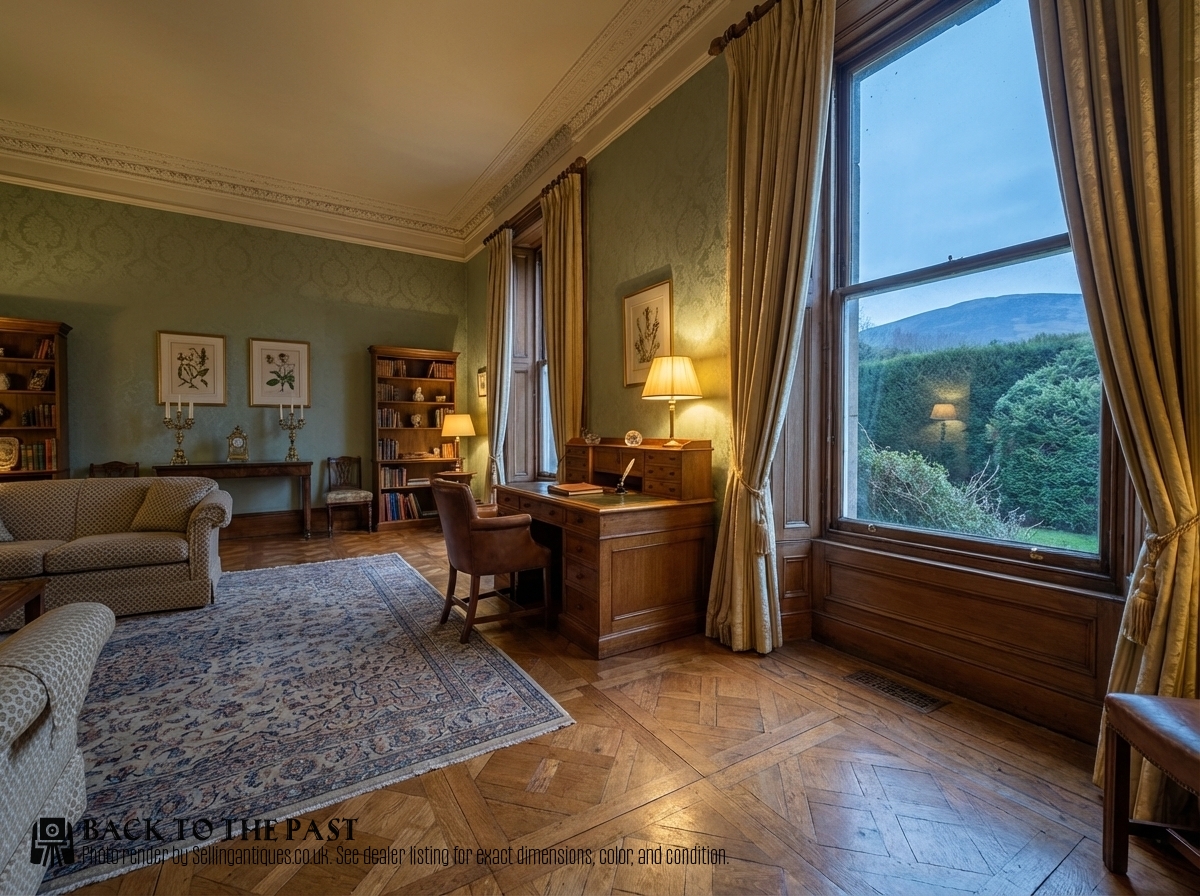
Desk with Superstructure
When you search for a desk with superstructure, you are looking at writing furniture featuring an elevated tier of compartments, shelves, cabinets, or mirrors built onto the rear of the top surface. The pieces listed here span the Victorian, Edwardian, and nineteenth-century periods, taking forms such as pedestal desks, partners desks, ladies writing tables, and bureau de dame styles.
Origin styles on this page stretch from local English workshops to French Empire, Renaissance Revival, and Italian nineteenth-century designs. Each variant provides dedicated vertical storage above the writing plane, keeping papers and implements organised within arm's reach.
How they were made
Cabinet makers constructed these pieces using solid and veneered timbers such as oak, mahogany, burr walnut, satinwood, and birds-eye maple over sturdy carcases. Superstructures were integrated directly into the upper back portion of the desk, housing small internal drawers, pigeonholes, or mirrored cabinets.
Surface ornamentation relied on timber selection, detailed carving, hand-painting, and cast brass mounts or ormolu. Inlaid brass, tooled leather writing surfaces, and glass panels were utilised to finish the detailing on finer examples from the nineteenth century.
Desk with Superstructure Retail Price Guide 2026
Typical asking prices for desk with superstructure among the pieces listed under this phrase on Sellingantiques today, from the lower quarter to the upper quarter. They describe what is for sale here now, not the wider market.
The listings show nineteenth-century and Victorian pieces formed in oak, mahogany, and burr walnut, alongside lighter Edwardian satinwood tables.
What varies in quality
The distinction between standard and superior pieces rests on the choice of timber and the complexity of the superstructure's internal joinery. Better examples employ figured woods like burr walnut and satinwood, combined with meticulous hand-carving and branded maker hardware.
Proportion and the integration of the upper tier dictate the visual success of the piece. Top-tier desks balance the weight of the superstructure with the pedestal base, maintaining structural rigidity and clean lines across every drawer and door.
Hobbs & Co.·Thomas Turner·Howard & Son·James Lamb
The Desk with Superstructure Glossary
- Superstructure
- An elevated tier of shelves, drawers, or cabinets mounted on the upper rear of a desk. This addition provides vertical storage without expanding the footprint of the piece.
- Pedestal desk
- A heavy writing desk supported by two matching pedestals of drawers resting on the floor. The central opening sits between these banks of drawers.
- Dickens desk
- A large partner or pedestal desk featuring a twin-pedestal base and a double-sided superstructure filled with pigeonholes and small drawers. It is traditionally associated with nineteenth-century clerical and private study use.
- Bureau de dame
- A small, elegant ladies writing desk often featuring delicate cabriole legs and an upper cabinet or tiered writing surface. These pieces were designed for drawing rooms and private boudoirs.
- Ormolu
- Gilt-bronze mounts applied as decorative accents to furniture surfaces. It adds metallic contrast to timber carcases, particularly on nineteenth-century French revival pieces.
Desk with Superstructure: Frequently Asked Questions
What is a desk with superstructure?
A desk with superstructure is a writing table that includes an integrated set of shelves, drawers, or a small cabinet built onto the back of the writing surface.
This upper tier adds vertical storage space for papers and stationery while keeping the main desk surface clear.
How were these desks used?
These desks served as private writing stations for correspondence, bookkeeping, and administrative tasks in Victorian and Edwardian homes and offices.
The superstructure kept reference materials and writing implements organised and visible directly above the user's hands.
How do I fit one into a modern room?
A desk with superstructure works best placed against a wall or floating in a larger room where the finished back of the superstructure remains visible.
Ensure you measure the total height including the upper tier to clear windowsills, picture rails, and overhead lighting.
How can I tell the period of the desk?
The period can be identified through timber selection, construction methods, and stylistic revival motifs such as Renaissance Revival carving or French Empire brass mounts.
Nineteenth-century examples often display hand-cut dovetails in the superstructure drawers and distinct secondary woods beneath the primary veneers.