




Desk Stationery Casket
A desk stationery casket is a desktop repository for letters and writing paper, offering a neat home for correspondence.
Desk Stationery Casket
A desk stationery casket is a desktop storage container designed to hold writing paper, envelopes, and correspondence. These pieces serve as functional organisers for the writing table, keeping correspondence tidy and close at hand.
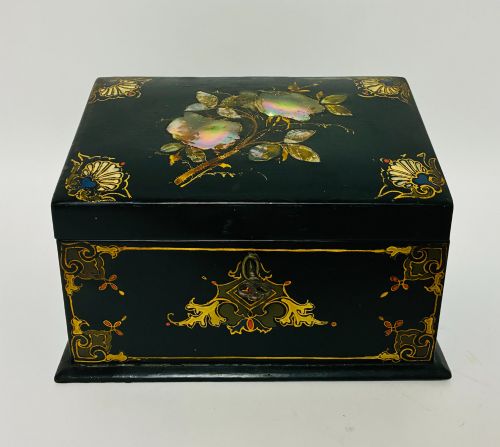
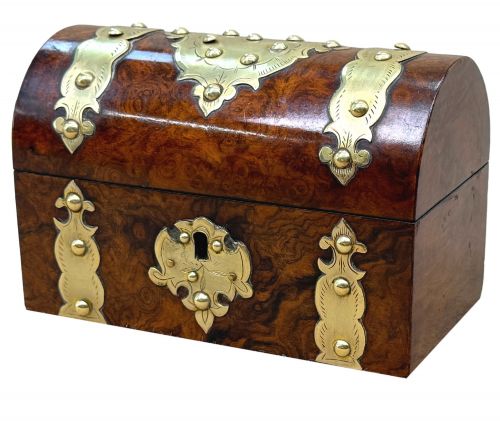
The version most commonly met on this page is the Victorian walnut or coromandel box fitted with brass mounts. These examples span the nineteenth century, including pieces from the Regency period through to the Edwardian era.
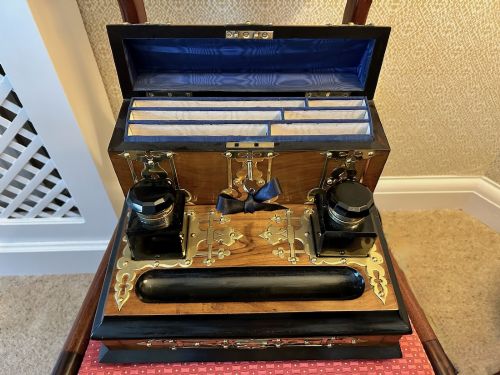
Many take the form of sloping front boxes or domed caskets that open to reveal fitted interior compartments for envelopes and stamps. Others incorporate decorative elements such as Tunbridge ware, porcelain plaques, or agate cabochons.
How They Were Made
Cabinet makers utilised dense hardwoods including walnut, burr walnut, coromandel, and pollard oak, often over a pine carcass. These timbers provided stable surfaces for intricate inlays, brass banding, and decorative mounts.
Metalwork played a structural and decorative role, with brass straps, corners, and hinges reinforcing the wooden joints. Ormolu mounts and agate cabochons were applied to enhance the exterior appearance of higher grade caskets.
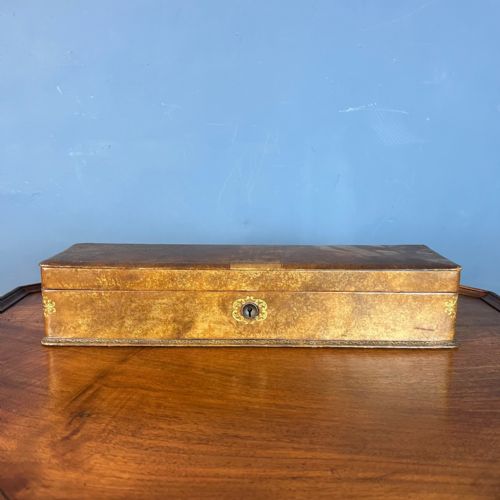
Surface decoration involved specialised techniques such as pokerwork, marquetry, and lacquer work. Interiors were frequently lined with velvet, silk, or tooled leather to protect paper and delicate writing accessories.
Listings feature Victorian and Regency periods alongside materials like burr walnut, coromandel, brass, and glass.
What Varies in Quality
The selection of timber grain heavily influences the character of a piece. Highly figured burr walnut and richly grained coromandel command attention through natural pattern alone, while plain timbers rely entirely on proportion and joinery.
Exterior hardware and mountings distinguish standard caskets from exceptional ones. Heavy cast brass handles, detailed ormolu, and inset pietra dura or porcelain plaques indicate higher workshop standards and greater financial investment during production.
Interior organisation and finishing reveal the original maker's intent. Multi-tiered stationery dividers, retained leather pockets, and matching desk accessories demonstrate a complete, bespoke commission rather than a mass-produced item.
C G Hope Hastings
The Desk Stationery Casket Glossary
- Coromandel
- A dense, heavily figured Southeast Asian timber valued for its dark brown colour and striking black stripes. It was frequently used for luxury nineteenth-century boxes.
- Stationery box
- A desktop container specifically proportioned to hold folded letters, envelopes, and writing paper in upright partitions.
- Tunbridge ware
- A form of British woodworking consisting of tiny coloured wood tiles assembled to create mosaic pictures and geometric borders on boxes.
- Ormolu
- Gilded bronze applied as a decorative mount on furniture and decorative objects during the eighteenth and nineteenth centuries.
- Pietra dura
- An artistic technique using cut and fitted polished coloured stones to create inlaid designs on marble or stone plaques.
Desk Stationery Casket: Frequently Asked Questions
What is a desk stationery casket?
A desk stationery casket is a decorative box designed to sit on a writing table to hold paper and envelopes. They keep writing materials organised and protected from dust.
These pieces became popular in the nineteenth century when letter writing was a daily activity. They range from simple wooden boxes to elaborate caskets mounted with brass and porcelain.
How were stationery caskets used?
Owners used these boxes to store headed notepaper, envelopes, sealing wax, and stamps within easy reach. The internal partitions kept different sizes of paper sorted.
Many boxes included lockable lids to secure private correspondence and important household documents from prying eyes.
How do I date a wooden stationery box?
Dating relies on timber choices, construction methods, and decorative styles. Regency pieces often feature brass inlay and rosewood, while mid-Victorian examples favour burr walnut and coromandel.
Hardware details such as brass hinges and lock mechanisms also provide clues to the decade of manufacture.
Can I use an antique stationery box today?
These boxes function well on modern desks for holding correspondence, note cards, or even modern stationery items. Their internal dividers remain practical for sorting mail.
Placing them in dry environments away from direct sunlight protects the polished wood and delicate interior linings from damage.